

Namibia conservancies get at least $2.5m from trophy hunting
The research enters a policy debate over trophy-import limits as communities depend on wildlife income for jobs, water projects and conservation.
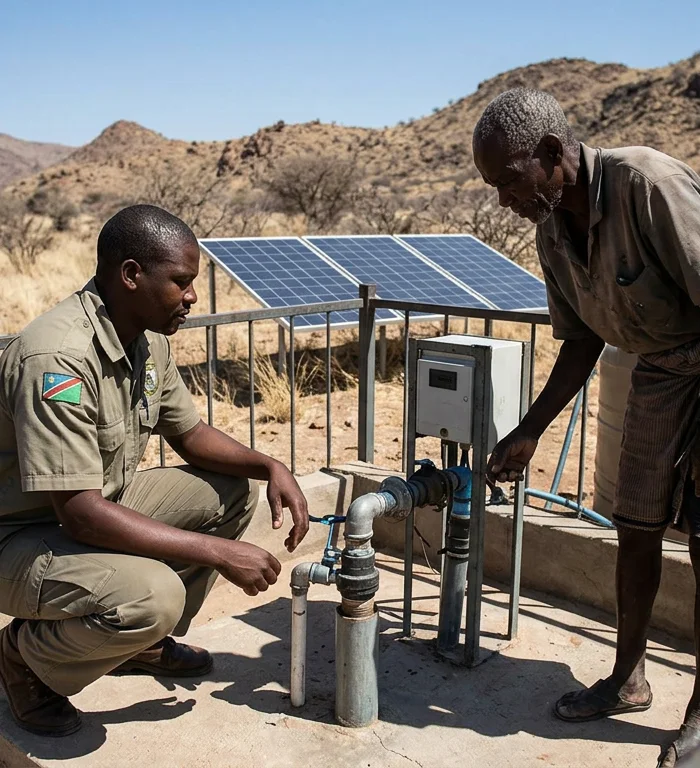
Namibian conservancy communities receive at least $2.5 million a year from trophy hunting, according to a Nov. 8 opinion article in Daily Maverick citing research by Luke Symonds-Mayes and Hayley Clements.
The opinion article said trophy hunting generates $1.75 million a year for conservancies, equal to an average 64% of their income, making import-ban proposals material for rural budgets.
Symonds-Mayes, a conservation researcher at Stellenbosch University, and Clements said their work combined audited conservancy accounts, public data from hunting operators, industry consultations and community perspectives to trace payments from hunters into Namibia’s rural economy.
The figures cover 2012 to 2019 in constant 2019 U.S. dollars. Conservancies that allow trophy hunting spent an average $1.83 million a year, including about $1 million on local wages for staff such as managers and game guards, according to the article.
The authors said more than $700,000 a year went to community benefits including infrastructure, water security, scholarships and other social development. Hunting outfitters employed an average 235 local guides, trackers, skinners, camp workers and construction workers, paying nearly $200,000 a year in local wages.
Namibia’s community-based natural resource management programme dates to the Nature Conservation Amendment Act of 1996, which gave communities on communal land conditional rights to manage and benefit from wildlife. Under the system, conservancies can sell wildlife and lease land to hunting operators, who package hunts for clients.
The article said elephant and buffalo generate more than half of conservancy trophy-hunting income. From 2012 to 2019, conservancies received an average $15,100 for one elephant, compared with an average $46,500 for a 14-day hunting package.
The authors also identified limits in the model. They wrote that employment is often seasonal and lower-skilled, while services such as marketing, equipment, taxidermy and supplies are mostly provided outside the conservancy economy. “Communities are, in the economist’s term, rentiers,” they wrote.
The research is being presented as proposals to restrict trophy imports raise concern among conservation organisations, NGOs and governments in parts of Africa, according to the article. At least 20 African countries use trophy hunting to support conservation and rural livelihoods on private, community and public land outside national parks.
The authors said roughly half of client payments leave the local economy through taxes, imported inputs and outfitter profit. Of the money conservancies spend, 72 cents of every dollar stays in local economies, according to the article.
More stories
- Monrovia mayor-designate seeks $14.5m city budget
- Iran's attacks hit 25 tankers near Strait of Hormuz
- Russia strikes Ukraine as Odesa faces electricity strain
- Bahrain reports two injuries after Iranian aerial attacks
- Baltic responders fight Sparta II fire after drone strike
- Estonia to close 5 Russia road crossings for six months
- Poland starts 2 days of mourning over 6 Krakow deaths
- Home Office faces suit over almost 1,500 EU residency cases
- Prosecutors face De Kock claim over apartheid command evidence
- Singapore lifts retirement age to 65 from 2029
Latest news
- Nvidia board gets Trump input on Jensen Huang return as CEO
- Rwanda faces budget strain from 85% electricity access push
- ICE arrests at Seattle airport draw protests and scrutiny
- AI doubts leave Asian stocks facing a new investment test
- EU rejects COP31 deal as fossil fuel divisions block pact
- Deal Sheet: Fortis shutdown costs over 400 jobs
- Germany to pay about $11 a month into child pension accounts
- Laura Brand curbs prison messages after YouTube dispute