Multifamily's $757 Billion Debt Wall Looms After Fed Hike
A massive refinancing wave is hitting apartment landlords just as the Federal Reserve tightens credit.
Atlas Newsdesk ·
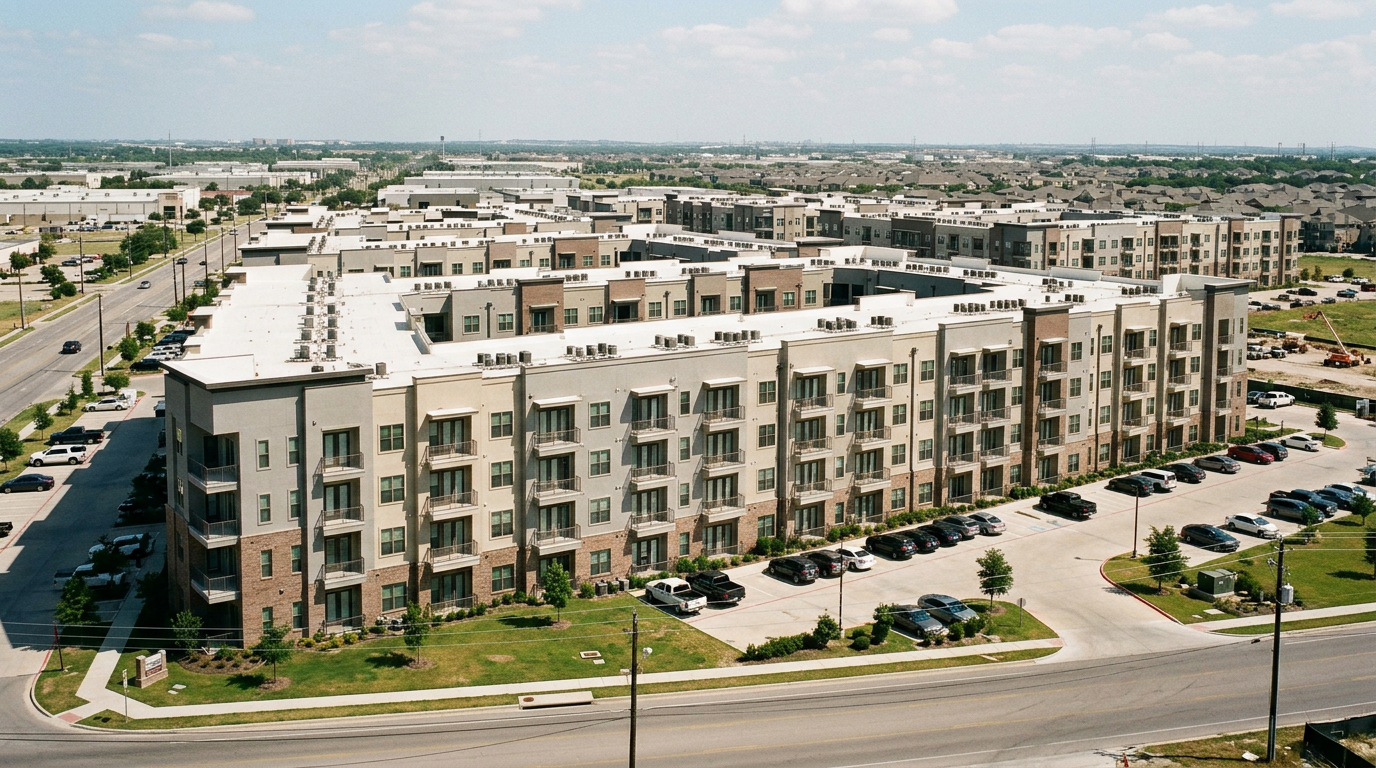
Multifamily's $757 Billion Debt Wall Looms After Fed Hike $757 billion in apartment-backed debt is set to mature by 2028, according to the Mortgage Bankers Association, with lenders now reportedly losing patience. The figure, highlighted in a Wall Street Journal report Monday, lands just days after the Federal Reserve raised interest rates for the first time since 2023, squeezing landlords who must refinance cheap pandemic-era loans at nearly double the cost. ## Background Following the pandemic, multifamily commercial real estate became the sector's favored asset class while office and hotel properties struggled. Investors chased yield in a low-rate environment, locking in loans around 3% in 2020-2021 and bidding up property values. This expansion of the acquisition multiple—the price paid relative to a property's income—was predicated on cheap debt and the expectation of steady rent growth. Newmark's Mike Wolfson described the period as one of "relative euphoria." A construction boom followed the capital, flooding Sunbelt markets like Phoenix, Denver, Atlanta, and Austin with new luxury units. That wave of supply is now hitting the market just as financing costs have risen sharply. The Fed's rate hikes have pushed borrowing costs for new loans toward 6%, turning the positive arithmetic of 2021 on its head. With supply outstripping demand in key submarkets, occupancy and rents are under pressure, creating a severe cash-flow crunch for leveraged owners. ## Why it matters The distress is not confined to the asset owners. The lenders who underwrote years of aggressive loans are now facing the consequences. As Bain Capital's head of real estate Ryan Cotton told the Journal, lenders are getting "a lot more aggressive," a shift that suggests a move from amending and extending loans to forcing asset sales or foreclosures. This could transmit stress directly into the banking system, particularly for regional lenders with heavy concentrations in commercial real estate, forcing them to increase loan-loss provisions and tighten credit across the board. On the wrong side of this trade are the property syndicators and private equity funds that used high leverage, often with floating-rate debt, to buy assets at peak 2021 valuations. These operators bet on continued low rates and robust rent growth, a wager that has soured. They now face selling into a falling market, injecting fresh equity to satisfy lenders in a refinancing, or handing the keys back to the bank. As Cityview CEO Sean Burton put it, "The chickens are coming home to roost for a lot of people." ## What to watch The market's immediate focus shifts to second-quarter bank earnings. The key observable will be any material increase in non-performing loans (NPLs) or loan-loss provisions tied to commercial real estate portfolios, with a specific focus on multifamily assets. An uptick in reported delinquencies, foreclosures, or negative guidance from publicly traded apartment REITs with heavy Sunbelt exposure by mid-August would confirm the distress is becoming systemic. Conversely, stable credit metrics would suggest lenders and borrowers are, for now, successfully negotiating workouts and extensions, delaying a full reckoning.