US Issues Ultimatum to Iran on Strait of Hormuz
The US has issued a 48-hour ultimatum to Iran to reopen the Strait of Hormuz, threatening military strikes on power plants amid escalating regional tensions.
Lauren Collins ·
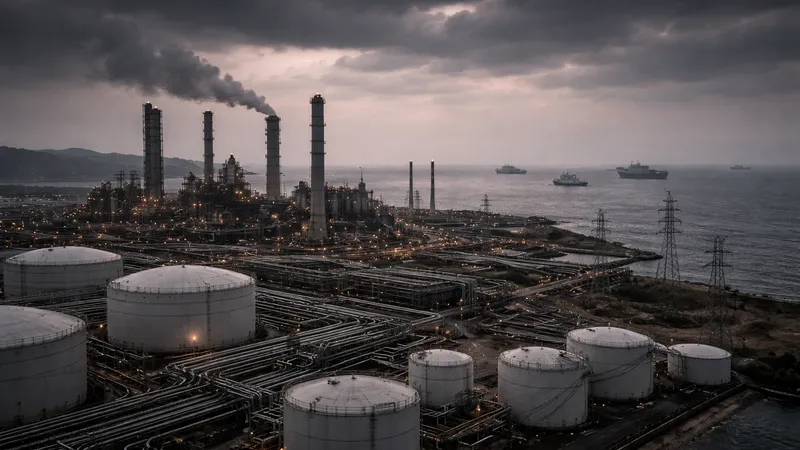
The United States has issued a 48-hour ultimatum to Iran, demanding the reopening of the Strait of Hormuz, a critical global oil transit route. Failure to comply could result in military strikes targeting Iranian power infrastructure, according to a Pentagon spokesperson. This development follows recent Iranian missile attacks against Israel and a joint British-American military installation, significantly escalating regional tensions.
This diplomatic communication, delivered through established channels, underscores Washington's stance that a naval blockade of international waters constitutes an act of war. The threat to target Iran's power grid marks a notable shift from previous responses, indicating a willingness to impact essential civilian infrastructure in addition to military assets.
Escalating Regional Conflict
The current crisis was precipitated by Iranian missile strikes in southern Israel, which reportedly caused over 120 injuries and strained local medical facilities. Concurrently, Iran launched two long-range ballistic missiles towards the joint UK-US military base located on Diego Garcia in the Indian Ocean. While these missiles did not reach their target, the incident demonstrated Iran's capacity to project power against strategic Western interests.
Strategic Importance of Hormuz
The Strait of Hormuz, a narrow passage between Iran and the Arabian Peninsula, is globally recognized as the most vital chokepoint for oil shipments. Approximately 20% of the world's daily petroleum consumption transits through this waterway, making its unimpeded flow crucial for international economic stability. A prolonged closure would likely lead to a sharp increase in global oil prices and could trigger a worldwide economic downturn.
Historically, the Strait has been a flashpoint for regional conflicts. During the 1980-1988 Iran-Iraq War, the "Tanker War" involved attacks on commercial vessels, prompting intervention by the U.S. Navy to safeguard shipping lanes. Analysts view Iran's recent actions as a direct challenge to the long-standing principle of freedom of navigation, a cornerstone of international maritime law supported by the United States and its allies.
Global Market Reactions and Outlook
Regional tensions have placed the Middle East on high alert. Israel's military chief of staff indicated that the conflict is at its midpoint, suggesting an expectation of prolonged engagement and potential expansion involving Iranian-backed groups in neighboring countries like Lebanon, Syria, and Iraq. Global financial markets have reacted swiftly to the Strait's closure, with Brent crude futures experiencing a surge of over 15% in early trading, driven by fears of a severe supply disruption.
International leaders from Europe and Asia have issued urgent appeals for de-escalation, expressing profound concern over the potential for a full-scale regional conflict. Such an outcome would have severe consequences for the global economy and regional stability, prompting diplomatic efforts to avert further escalation.
Implications
Country Impact: The ultimatum places Iran under direct military threat from the United States, potentially leading to significant damage to its national infrastructure. For Israel, the conflict's stated 'halfway point' suggests a prolonged military engagement, impacting its security and resource allocation.
Industry Impact: The global energy sector faces severe disruption, with oil prices already surging due to the Strait of Hormuz closure. Shipping and logistics industries operating in the Middle East will experience heightened risks and increased insurance costs, impacting global supply chains.
Market Impact: Global financial markets are reacting with volatility, particularly in energy commodities. A sustained closure of the Strait of Hormuz could trigger a global recession, impacting equities, bonds, and currency markets worldwide due to inflationary pressures and economic uncertainty.