Chinese laser-powered drone test uses perovskite receiver
Chinese researchers tested a perovskite optical receiver that converts directed laser light into electricity to run a drone propeller in midair.
Jason Kwon ·
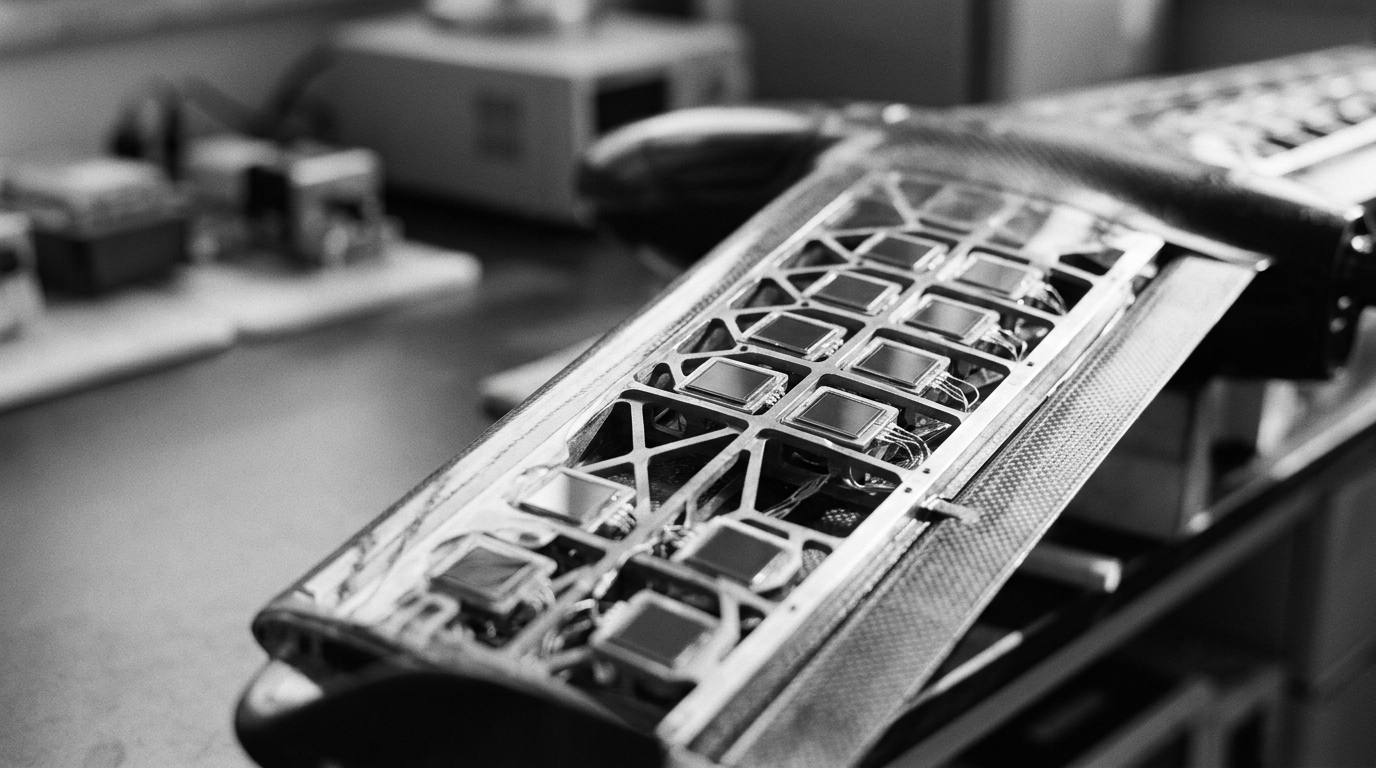
Researchers in China have demonstrated an optical receiver that can supply power to a drone’s propulsion system while the aircraft is in the air, using directed laser energy. The team said the receiver is based on perovskite solar materials and is designed to convert concentrated light from an external laser into electricity that can drive a propeller during flight.
The experiment highlights a design pathway for unmanned aerial vehicles that would reduce reliance on onboard batteries and the cycle of landing to recharge. Officials and developers have long pointed to battery mass and limited energy capacity as core constraints on how long small and mid-sized drones can stay aloft, particularly for surveillance and monitoring missions.
Perovskite receiver integrated into the wing
The system described by the researchers integrates lightweight The system described by the researchers integrates lightweight perovskite solar material directly into the aircraft’s wing structure. Instead of carrying all required energy in storage, the wing-mounted receiver functions as an optical-to-electrical interface when illuminated by a targeted laser beam. In the reported setup, the external laser supplies focused optical power, and the integrated receiver converts that light into electrical output suitable for propulsion. The stated is to shift the weight and volume burden away from traditional onboard power storage, which can limit range and payload in battery-dependent platforms. Operational gains and new vulnerabilities The ability to remain airborne without landing could increase the utility of autonomous fleets for persistent presence. The source material frames this as particularly relevant for long-duration surveillance and monitoring, where endurance is a primary determinant of mission value.
At the same time
At the same time, the approach introduces dependencies that do not apply to self-contained power systems. The source material identifies several immediate hurdles for real-world deployment: signal interference, atmospheric attenuation that can weaken the beam, and the risk that an energy beam could be intercepted without authorization.
Regulatory and deployment questions
As development moves from controlled tests toward potential applications, aviation authorities may face pressure to adjust airspace rules and oversight related to transmitting energy through open air. The source material also points to energy transmission security as a regulatory concern, given the reliance on an externally delivered beam.
The researchers’ demonstration is presented as experimental, and the source does not specify timelines for commercialization, field trials, or performance metrics such as range, altitude, or conversion efficiency. Those unknowns will shape whether the concept can scale beyond test conditions.
Why scalability matters for commercial and defense use
The source material says that if optical power delivery systems of this kind can be scaled, they could reshape how autonomous platforms are operated across commercial and defense sectors. That potential is tied to endurance: removing the need for battery recharging infrastructure could change how fleets are deployed and maintained.
For now, the work stands as a proof-of-concept showing that perovskite-based receivers can be integrated into airframes and used to power propulsion from a directed laser during flight, while leaving open significant questions about robustness, security, and governance outside the lab.
Implications
Country Impact: The demonstration by researchers in China underscores domestic momentum in experimental power-delivery approaches for unmanned aircraft. Any move beyond controlled testing would also bring national aviation oversight into focus around airspace and beam-based energy transmission security.
Industry Impact
For drone makers and operators, the concept targets a central operational constraint: limited onboard battery capacity and the weight of power storage.
If the receiver-and-laser model proves practical, it could change how endurance-focused surveillance and monitoring platforms are designed and supported.
Market Impact: The source material links scalability to both commercial and defense sectors, suggesting broad interest if continuous flight can be achieved without routine landings for recharging. However, deployment risks cited—interference, attenuation, and interception—could affect adoption timelines by raising compliance and security requirements.