

Mentored South African pupils report confidence in 73 of 100 forms
A Gauteng programme points to one way schools and universities can prepare learners before they reach first-year lectures.
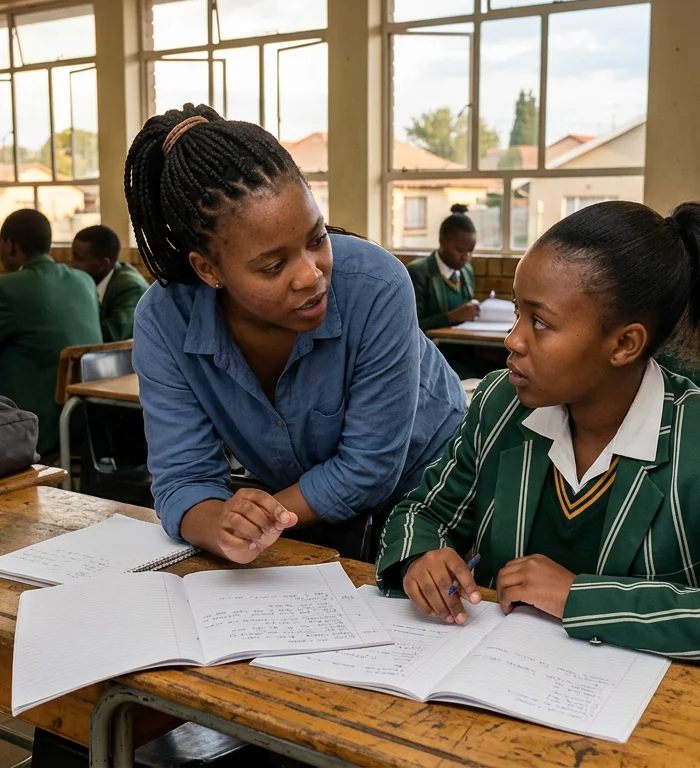
After tutoring, mentored South African pupils reported confidence in 73 of 100 self-evaluation forms, according to a study described in a The Conversation Africa article published Oct. 26.
The finding matters because more than 345,000 grade 12 learners qualified for university entrance in South Africa’s 2025 school leaving exam, 46% of those who passed and more than double a decade earlier.
The study examined the AccessEd Scholars Programme across four secondary schools in Gauteng, South Africa’s mostly urban province that has eight universities. Researchers reviewed 100 pupil self-evaluations, 20 tutor feedback forms, responses from six lead teachers, six observed tutoring sessions and 50 pupil assignments.
One pupil quoted in the study said: “I used to be scared of asking questions, but now I’m confident.” The researchers said pupils became more active in tutorials after exposure to tasks such as research methods, academic writing and research ethics.
The assignments showed 78% of grade 9 pupils and 85% of grade 12 pupils demonstrated proficiency in research and source integration, according to the article. Those assignments were completed after the programme and were not matched against a pre-programme comparison task.
The programme was launched by AccessEd ZA in 2017 with LEAP Schools, IkamvaYouth and African School for Excellence, the article said. It works with pupils in underserved South African communities and uses postgraduate students as tutors and near-peer mentors.
The study’s relevance goes beyond one intervention. South Africa’s national Department of Basic Education and Department of Higher Education and Training have been examining ways to improve the route from secondary school into further education, training and employment, according to the article.
The article disclosed that its author is a board member of AccessEd and worked on the study with Nicola Vermooten, described as a senior adviser and board member of AccessEd. That relationship is material when weighing findings about the programme.
The limitations are also clear. The study covered four Gauteng schools, did not track pupils into university and cannot show whether observed changes led to stronger performance after enrolment. The article also said the results do not mean every school needs an AccessEd programme.
The central policy issue is whether university preparation starts too late. The study argues that research, analytical writing, questioning and independent work can be introduced while learners are still at school, rather than being left to first-year university courses.
Expanding similar initiatives would require funding and cooperation among schools, universities, government and other funders, the article said. South Africa’s rising number of university-eligible learners puts more weight on whether pupils get chances to practise the academic habits universities expect.
More stories
- Russian war deaths top 460,000, Guardian says
- Monrovia mayor-designate seeks $14.5m city budget
- Iran's attacks hit 25 tankers near Strait of Hormuz
- Russia strikes Ukraine as Odesa faces electricity strain
- Bahrain reports two injuries after Iranian aerial attacks
- Baltic responders fight Sparta II fire after drone strike
- Prosecutors face De Kock claim over apartheid command evidence
- Singapore lifts retirement age to 65 from 2029
- Nigeria advocates put northern missing at 17,000
- Thai minister sees progress after Suu Kyi's first family call in over 5 years
Latest news
- Nvidia board gets Trump input on Jensen Huang return as CEO
- Rwanda faces budget strain from 85% electricity access push
- ICE arrests at Seattle airport draw protests and scrutiny
- AI doubts leave Asian stocks facing a new investment test
- EU rejects COP31 deal as fossil fuel divisions block pact
- Deal Sheet: Fortis shutdown costs over 400 jobs
- Germany to pay about $11 a month into child pension accounts
- Laura Brand curbs prison messages after YouTube dispute