Whey Protein Recovers Gold from E-Waste
ETH Zurich researchers developed a whey protein sponge method to extract 22-carat gold from e-waste, offering a sustainable recycling solution.
Jason Kwon ·
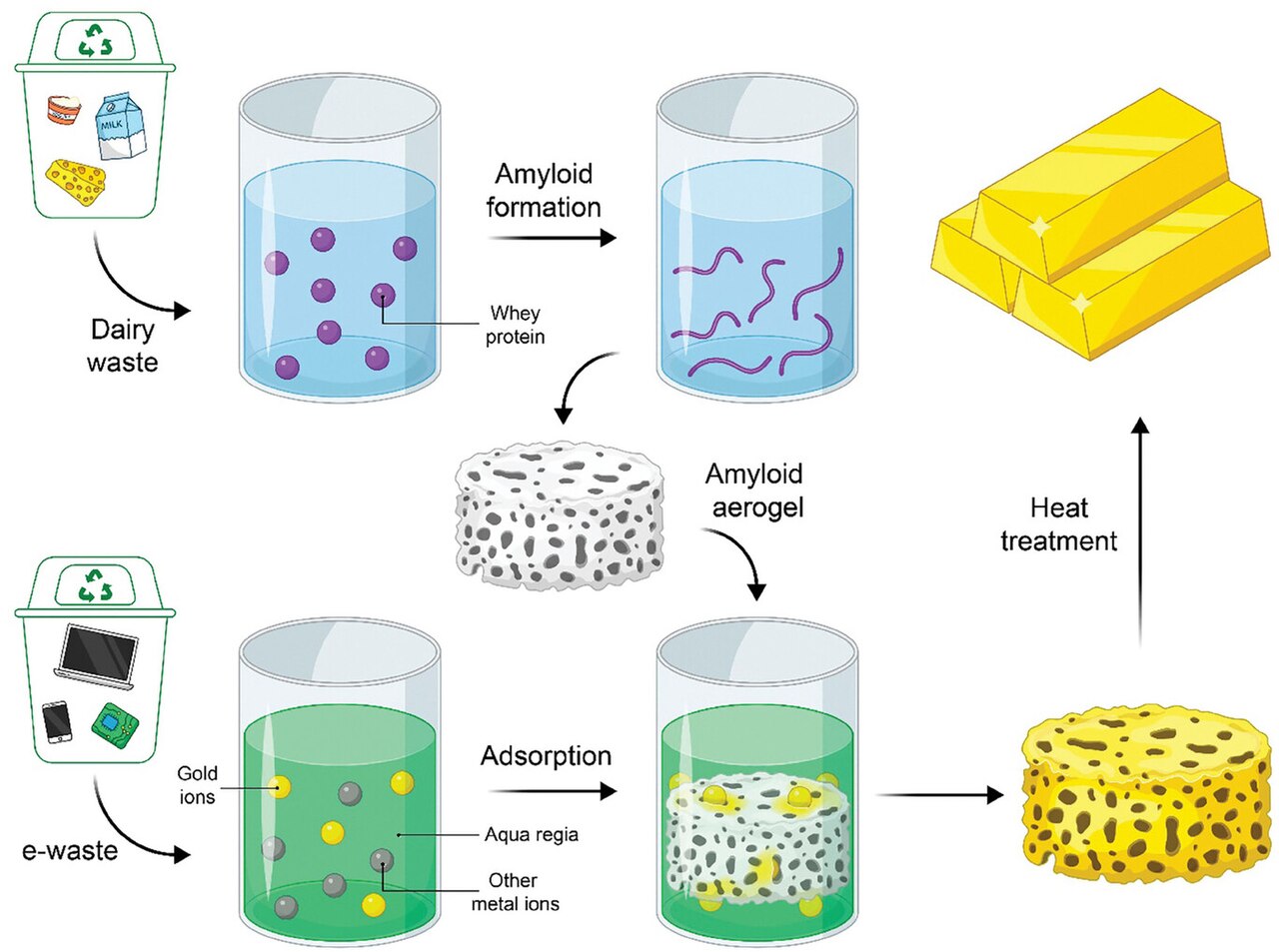
Scientists at ETH Zurich have devised an innovative method to extract 22-carat gold from electronic waste, specifically discarded computer motherboards. This new technique utilizes a sponge derived from whey protein, a byproduct of cheese manufacturing, offering a more environmentally sustainable alternative to conventional industrial recycling processes.
The research, published in the journal *Advanced Materials*, addresses the growing challenge of recovering precious metals from e-waste without the high energy consumption or hazardous chemical use typically associated with current methods. The process involves transforming whey proteins into amyloid fibrils, which then form a porous sponge structure.
Sustainable Gold Extraction Process
This protein-based sponge selectively captures gold ions from an acidic solution. Electronic components are first dissolved in this solution, allowing the gold to be isolated. The method demonstrates a significant departure from traditional e-waste recycling, which often relies on mechanical shredding followed by high-temperature smelting or strong chemical baths to separate metals.
Economic and Environmental Advantages
In a practical demonstration, the processing of 20 discarded computer motherboards successfully yielded approximately 450 milligrams of 22-carat gold. This recovered gold exhibited a purity level of about 91 percent. The economic viability of this approach is underscored by the fact that the value of the extracted gold substantially exceeds the production cost of the protein material.
Addressing E-Waste Challenges
Electronic waste represents a rapidly increasing global problem, containing valuable materials like gold, silver, copper, and palladium, alongside toxic substances. Current recycling methods often pose environmental risks due to their energy intensity and the generation of hazardous byproducts.
The new whey protein method offers a circular economy solution by repurposing a food industry byproduct to efficiently recover precious metals, thereby reducing ecological footprints and promoting resource recovery.
Future Implications for Recycling
This development could significantly impact the e-waste management sector by providing a cleaner, more efficient, and economically attractive pathway for precious metal recovery. The scalability and broader applicability of this protein-based extraction method to other types of e-waste or different metals will be key areas for future research and development.
Such innovations are crucial for fostering sustainable practices in resource-intensive industries and mitigating the environmental burden of technological advancement.
Implications
Country Impact: Countries with significant e-waste generation or limited access to advanced recycling infrastructure could benefit from a less energy-intensive and chemically hazardous gold recovery method, potentially boosting local resource recovery initiatives.
Industry Impact: The e-waste recycling industry could see a shift towards more sustainable and cost-effective methods, reducing reliance on high-temperature processes and toxic chemicals. This could also create new markets for agricultural byproducts like whey protein.
Market Impact: The market for recycled precious metals could become more robust and environmentally friendly, potentially influencing the supply chain for gold used in electronics and jewelry. Reduced environmental costs associated with extraction could also impact market pricing.