Mali defense minister killed in coordinated nationwide attacks
Mali said Defense Minister Sadio Camara died Oct. 26 after coordinated attacks hit Kati, Bamako airport area, and several cities.
Lauren Collins ·
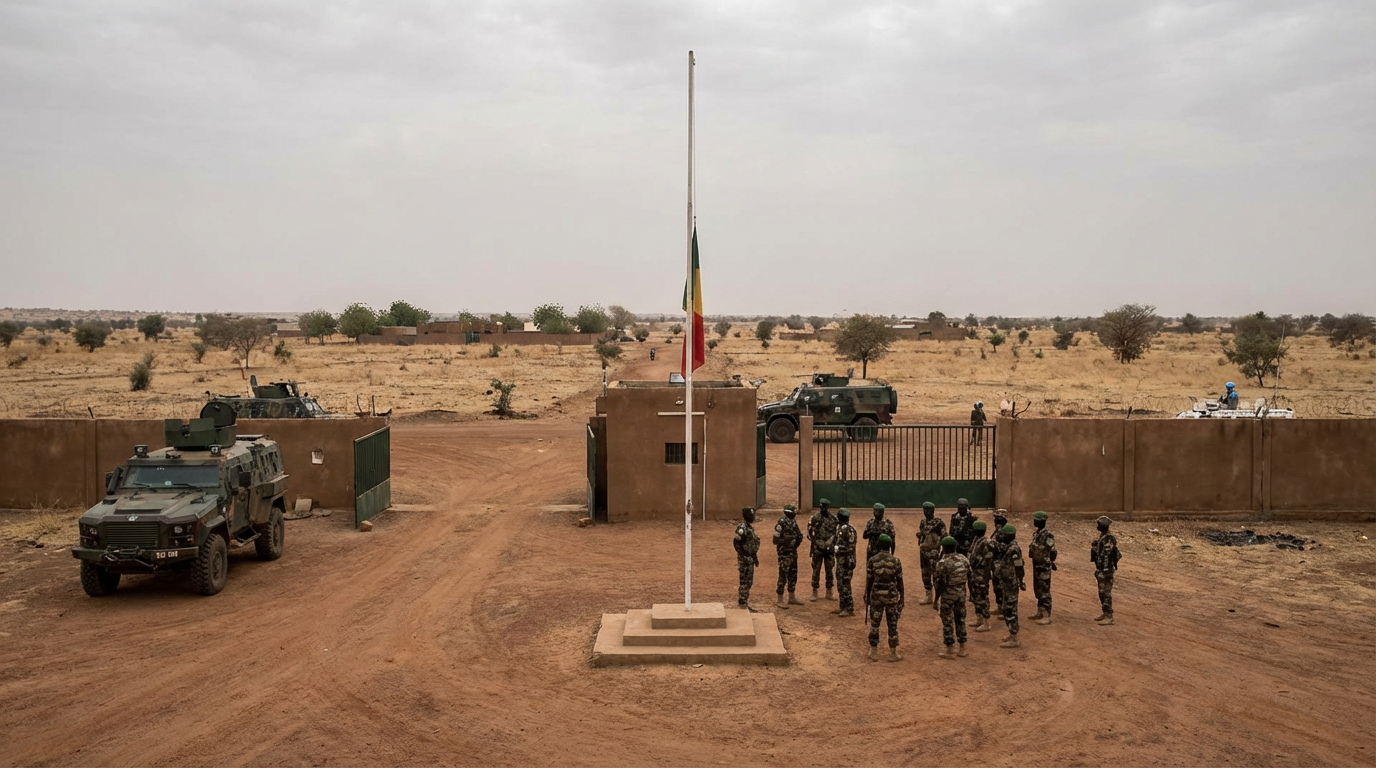
Mali’s Defense Minister Sadio Camara was killed on Saturday, October 26, after coordinated insurgent attacks struck multiple parts of the country, officials said. The assaults included an attack on his residence in Kati, about 15 kilometers north of Bamako, according to the account.
Officials said Camara was injured in a car bomb attack and then caught in a firefight at his home. He was taken to a hospital, where he later died.
The Malian government announced two days of national mourning following his death.
Multiple locations hit, including the capital region
Officials attributed the coordinated operations to the West African al-Qaida affiliate Jama'at Nusrat al-Islam wal-Muslimin (JNIM) and a Tuareg-dominated rebel group. The attacks were reported in several places, including areas near Bamako airport, as well as Mopti, Sevare, and Gao, according to the same account.
The range of targets highlighted the scale of the operation and the strain on state security forces in the capital region and in key areas farther north and east.
Conflicting claims over Kidal add uncertainty
Fighting was also reported in Kidal, described as a strategic city and a former rebel stronghold. Accounts differed on what was happening there, with conflicting reports from the Malian army and rebel groups about the city’s status.
That uncertainty was described as adding to the sense of escalation, given Kidal’s role as a focal point in Mali’s long-running conflict and its symbolic and operational importance to both the state and armed groups.
Security posture and international reaction
The attacks were reported as Mali continues to face persistent security challenges despite government efforts aimed at improving stability. The developments were also framed against Mali’s closer ties with Russia, which have been part of the authorities’ broader security posture.
Analysts cited in the account described the events as a setback for Russian influence in the region, particularly after reports that Russian mercenaries needed to withdraw from Kidal.
International reaction followed quickly. The United Nations condemned the violence and called for an international response to terrorism in West Africa’s Sahel region.
Key elements remained unclear in the information provided, including the full casualty toll across the multiple attack sites and the precise balance of control in Kidal amid the conflicting claims. Still, the reported sequence indicates that the death of a sitting defense minister during coordinated strikes marks a major moment in Mali’s conflict and a significant test for the country’s security leadership.