

Robotic Manufacturing Platform Aims to Reduce Automotive Retooling Costs
A new robotic manufacturing platform offers a flexible alternative to traditional automotive retooling, potentially lowering costs for low-volume and…
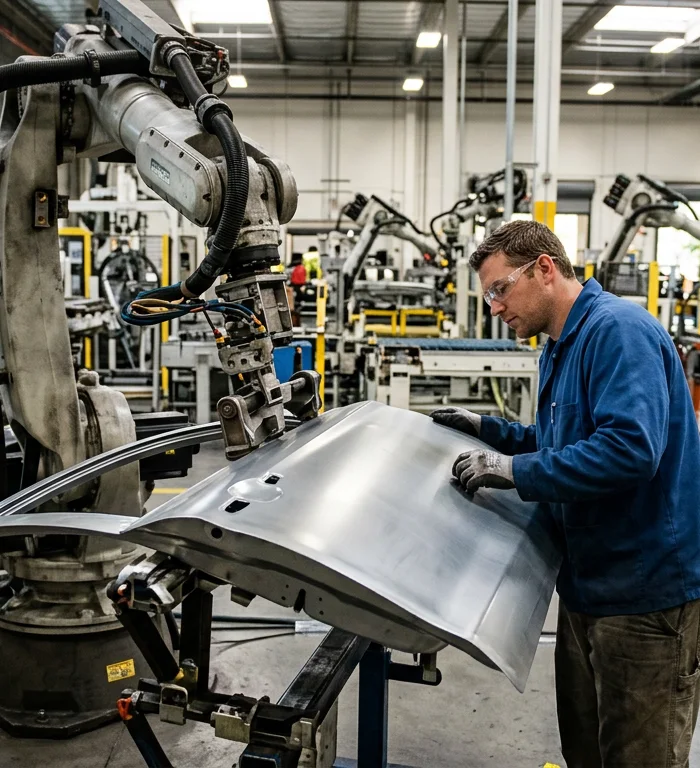
A California-based manufacturing technology firm has introduced a robotic platform designed to automate the production of customized metal body panels. The system, known as RoboCraftsman, utilizes robotic arms to either modify pre-stamped components or form entirely new panels from sheet metal. This technology is intended to provide manufacturers with the flexibility to switch between designs rapidly without the capital expenditure typically associated with traditional factory retooling.
Traditional automotive manufacturing relies on high-volume production lines that require significant investment in specialized tooling and infrastructure. These systems are optimized for mass production but lack the agility to produce limited-run or highly customized vehicle components economically. The current manufacturing model often renders small-batch production or frequent design iterations prohibitively expensive for original equipment manufacturers (OEMs).
By decoupling metal forming from fixed-die infrastructure, the platform seeks to lower the barrier to entry for low-volume production. The technology is currently being marketed to OEMs as a solution for increasing product differentiation and accelerating development cycles. The company has demonstrated the platform's capabilities through a prototype truck, signaling a shift toward more agile, software-defined manufacturing processes.
For institutional stakeholders, the adoption of such technology could signal a broader trend toward decentralized or modular manufacturing. If successfully integrated into existing supply chains, this process may reduce the financial risk associated with niche vehicle models and limited-edition production runs. Future developments will likely focus on the scalability of these robotic systems and their ability to meet the rigorous safety and durability standards required for automotive-grade structural components.
More stories
- Europe faces attribution gap after 16 cyber, physical incidents
- PIF backs Grand Theft Auto as Saudi players embrace game
- Signal limits screenshots to curb AI access to messages
- Cognition runs Devin Mac workspaces on EC2 in 6 AWS regions
- Salesforce engineers cut 600-failure triage to 90 minutes
- Türkiye Desk: GTA 6 puts console access and network demand in focus
- AI safety rules gain support after OpenAI audit push in US
- ChatGPT for Financial Services targets Wall Street banks
Latest news
- Trump prepares tariffs on China and other major exporters
- New-car buyers pay record average $50,087 in October
- Banks face ECB reserve debate over liquidity and profits
- Investors see Anthropic debut gains fade below $83 a share
- Iraq orders federal control over Kurdish-area oilfields
- Germans oppose Ukraine aid as poll shows support slipping
- Kim Jong-un receives 10 envoys after constitutional shift
- Ukraine claims Libya strike sinks Russian naval corvette