Kurdish commander Mazloum Abdi takes Syria adviser role
Mazloum Abdi’s advisory appointment marks Damascus’s next step after the SDF’s dissolution and integration into Syria’s military.
Omar Farouk ·
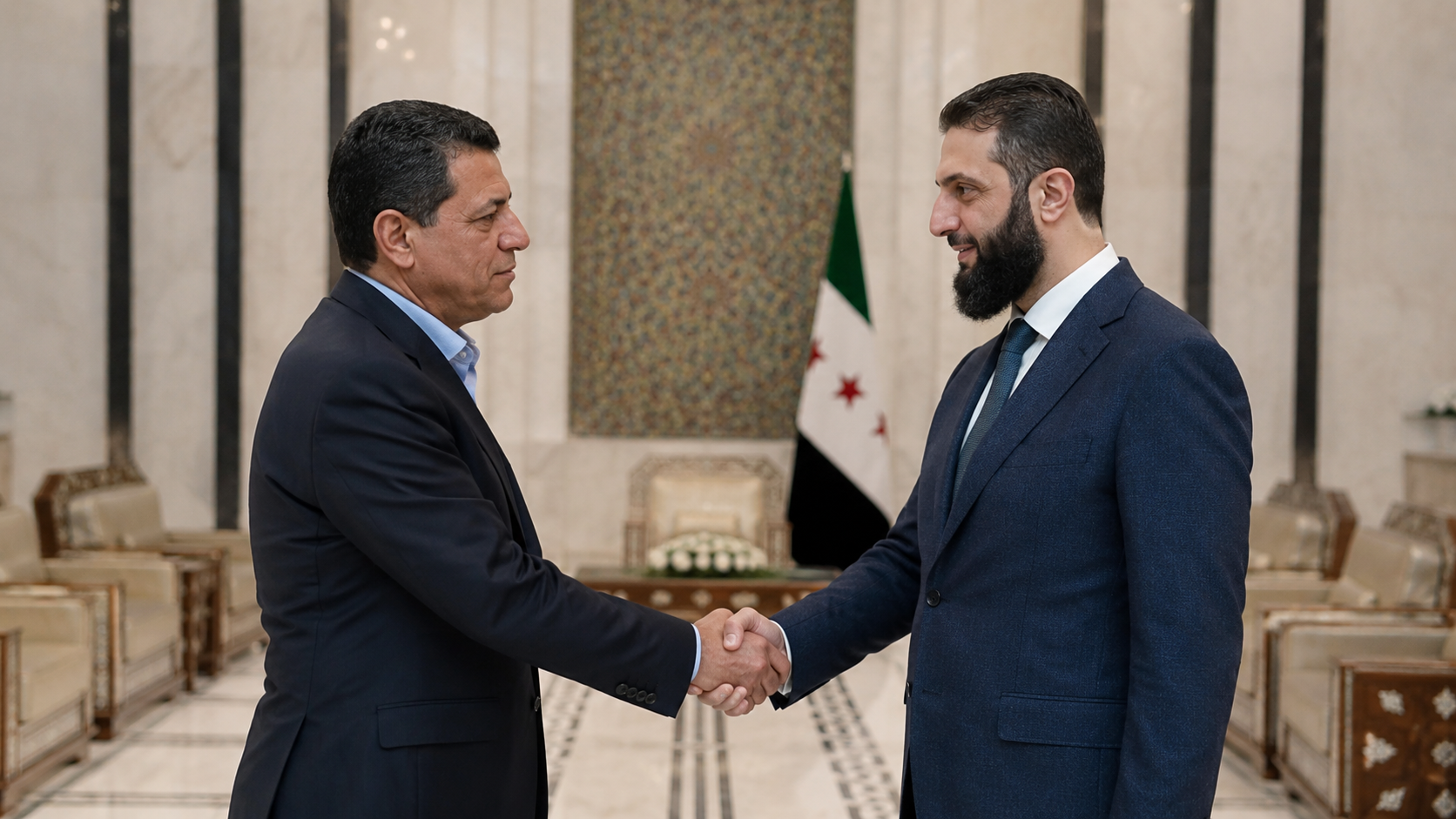
President Ahmed al-Sharaa appointed Mazloum Abdi as a presidential adviser three days after the SDF dissolved, drawing a Kurdish commander into Damascus.
The appointment was issued under Decree No. 164 on Thursday, according to Syrian state media. The decree named Abdi as an "advisor to the Presidency of the Republic," a role that places him inside the presidential orbit without giving him a cabinet portfolio.
Abdi had announced three days earlier that the Kurdish-led Syrian Democratic Forces had been dissolved and that their integration into the Syrian military was complete. That made the appointment a political marker as much as a personnel move: the commander who led an autonomous armed force is now being placed within the state structure that absorbed it.
Decree 164 formalizes Abdi's post
The advisory job is below the position al-Sharaa had put forward in January, when he proposed making Abdi deputy defense minister and nominating him as governor of Hasakah province. That earlier offer was tied to restoring state authority over the provincial capital, which had been under SDF control.
Abdi is the most senior Kurdish figure named to a state post in the current integration process. Another commander was appointed assistant defense minister for the eastern region earlier this year, according to the same official account.
The difference between the January offer and Thursday's decree shows how Damascus has narrowed Abdi's formal role while still bringing him into the presidency. The position gives him proximity to al-Sharaa, but it does not itself settle how much influence former SDF commanders will retain inside the army and interior ministry.
Raqqa fighting preceded ceasefire
The current arrangement traces back to March 2025, when al-Sharaa and Abdi first agreed that the SDF would be folded into the central government. That deal made little progress before its year-end deadline, according to the official account, and the delay preceded a military push into the northeast.
State forces entered Raqqa and Deir Az Zor in January after the missed deadline, taking both cities from the SDF. The sequence turned a slow political bargain into a military settlement, followed by a ceasefire that redrew control across the northeast.
The ceasefire placed Raqqa, Deir Az Zor and Hasakah under central government authority and committed the SDF to join the defense and interior ministries. The terms were set out in a 14-point plan, which remains the main framework for absorbing the former force into national institutions.
For Damascus, the mechanism is command consolidation: fighters, territory and local security files move from an autonomous structure into ministries controlled by the capital. For Kurdish leaders, the trade-off is representation inside state bodies in exchange for surrendering independent military authority.
YPJ remains outside army structure
One Kurdish-led force has not been absorbed. The YPJ, the women's units associated with the SDF, asked to enter the defense ministry but was told the army has no structure for women's units, according to the account provided.
That unresolved point is the clearest institutional risk in the deal. If the YPJ remains outside the state framework, Damascus will have formal control over major northeastern cities while still facing an armed-structure question inside the same political settlement.
If the 14-point plan holds, the Syrian government gains a clearer chain of command in the northeast, Abdi moves from battlefield leadership to presidential access, and other armed groups will face pressure to accept state-supervised integration. The global effect would be indirect, centered on whether foreign governments see fewer security barriers to engagement with Syria.
If the arrangement stalls, Abdi's advisory title could leave him with limited authority while former SDF networks test how much autonomy they can preserve inside state institutions. For the wider security landscape, the open issue is not only whether the SDF has dissolved on paper, but whether its commanders, units and local loyalties function under a single chain of command.