Khamenei funeral exposes Mojtaba's absence at public prayers
Khamenei funeral ceremonies opened in Tehran, highlighting Mojtaba Khamenei's absence from prayers after a reported airstrike killed his father.
Lauren Collins ·
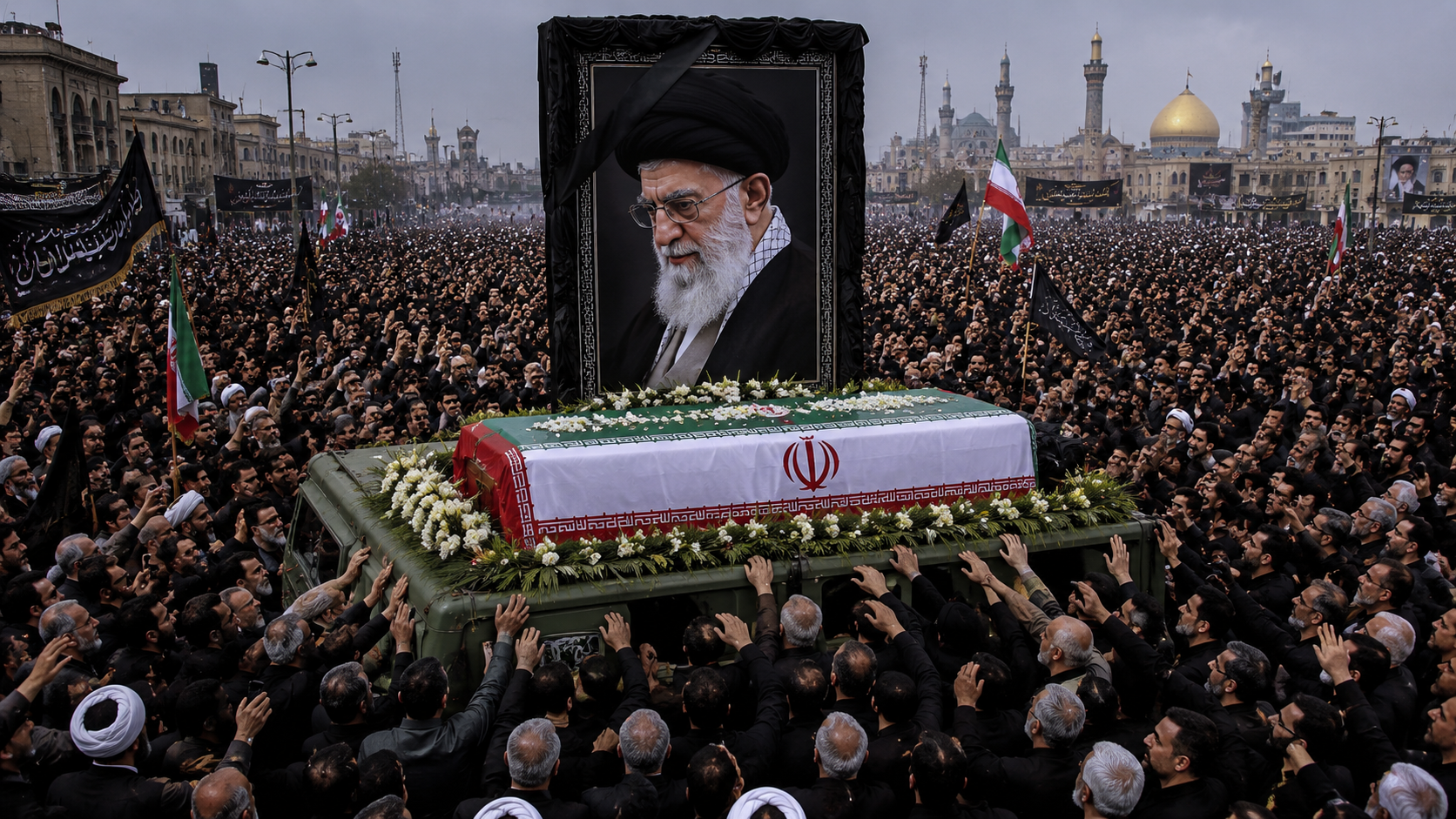
Khamenei funeral events opened in Tehran, with three sons shown at the coffins while successor Mojtaba Khamenei was absent.
Iranian state television showed Mostafa, Meysam and Masoud Khamenei standing in prayer beside coffins placed at Tehran's Imam Khomeini Grand Mosalla. The account said the service included Ayatollah Ali Khamenei and four other family members killed in the same strike.
Tehran prayers without Mojtaba
The visible absence of Mojtaba Khamenei gave the ceremony a political edge beyond mourning. He is described in the account as the son who succeeded Ayatollah Ali Khamenei as Iran's supreme leader, making his nonappearance at a highly staged public ritual harder to separate from succession optics.
The Grand Mosalla is one of Tehran's main religious gathering sites, designed for large ceremonies that blend worship, state messaging and mass participation. By placing several coffins together in its courtyard, the authorities framed the deaths as both a family loss and a national event.
The report said Ayatollah Ali Khamenei died on February 28 in an airstrike after the United States and Israel began a war against Iran. It did not provide an independently verified casualty count, the exact location of the strike or a detailed account of the military operation.
Airstrike frames succession pressure
The conflict described in the account lasted several weeks before a fragile ceasefire took hold. It left destruction across the region while Iran's theocratic system, backed by the Islamic Revolutionary Guards Corps, retained power.
For the Iranian state, the funeral week is a test of command, discipline and public symbolism. Mass processions can project continuity after a leadership shock, but they also expose how carefully the new order must manage visibility, security and internal hierarchy.
Mojtaba Khamenei's absence matters because succession in Iran is not only a constitutional question. It is also a contest over clerical legitimacy, Revolutionary Guards alignment and public acceptance among a population that has lived through repeated periods of political strain.
The account offers no explanation for why Mojtaba did not appear at the prayers. Without an official reason, the open questions are practical and political: whether security concerns kept him away, whether the ceremony was structured to elevate other family members, or whether his role is being kept deliberately less visible.
Processions widen beyond Iran
The Islamic Republic is staging a week of funeral processions, according to the account. The planned movement of Khamenei's remains to Shi'ite religious sites in Iraq expands the ceremony from a domestic ritual into a cross-border religious and political signal.
That Iraq component carries regional weight. Shi'ite shrines there are central to religious identity for millions of believers, and any official Iranian presence around them can draw attention from Iraqi authorities, armed groups, regional rivals and foreign governments monitoring the ceasefire.
If the ceasefire holds, the funeral processions could help Iran's new leadership consolidate its narrative of endurance. The macro effect would be a lower immediate risk premium around regional escalation, the direct effect would be more time for Mojtaba Khamenei to define his authority, and the wider security environment could shift toward controlled political theater rather than active confrontation.
If the ceasefire breaks, the same processions could become harder to secure and more difficult to message. A renewed conflict would raise the risk of regional disruption, narrow the new leader's room for political management, and force the Revolutionary Guards and allied networks to prioritize security over ceremonial unity.
A third path is a prolonged pause without a settled political center. In that case, global attention would stay fixed on energy routes, sanctions risk and military signaling; Mojtaba Khamenei would face pressure to demonstrate authority without overexposure; and Iran's clerical and security institutions would have to show they can act as one system after the death of their central figure.