Judge Considers Blocking UFC Event at White House
A federal judge is reviewing a request to block President Trump's plan to host a UFC event, dubbed "UFC Freedom 250," at the White House.
Lauren Collins ·
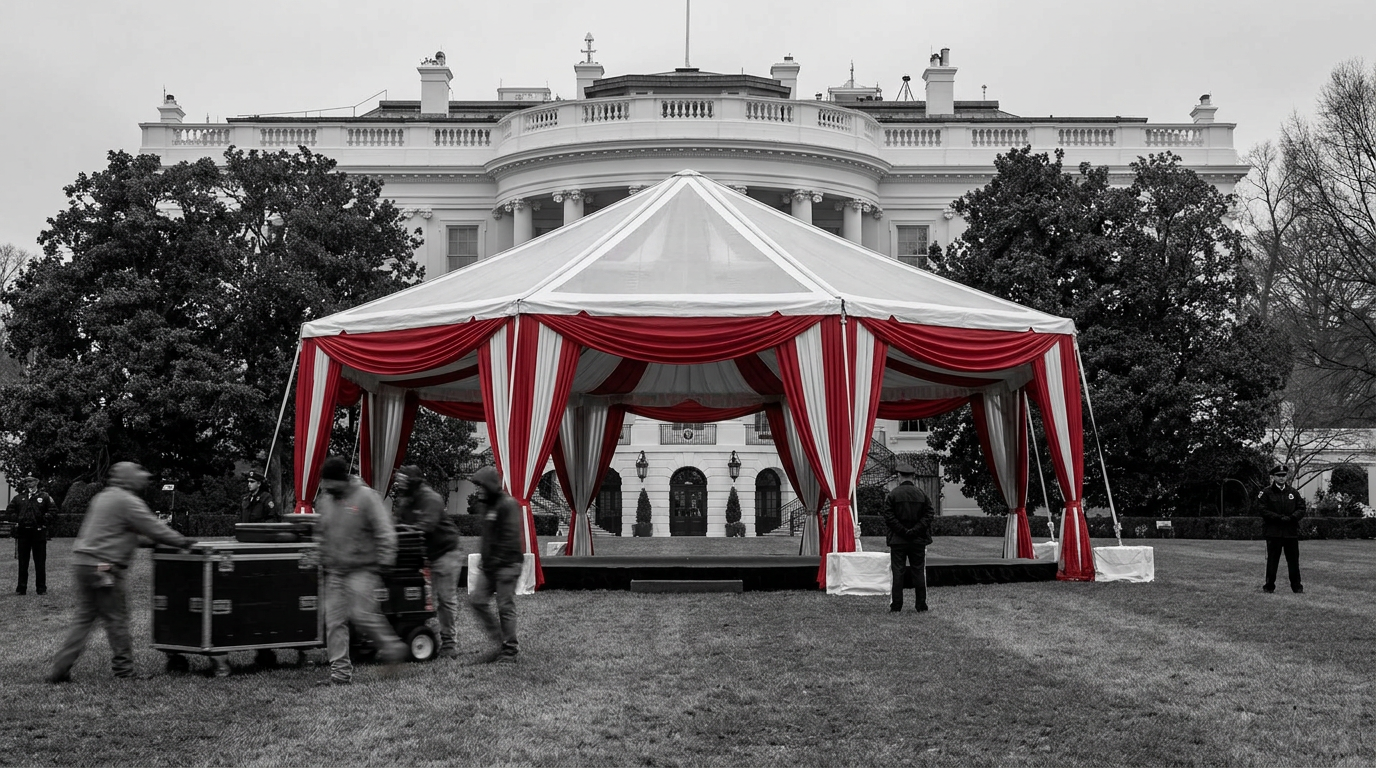
A federal judge in Washington, D.C., is currently reviewing a request to halt an Ultimate Fighting Championship (UFC) mixed martial arts event planned for the White House South Lawn. The event, named "UFC Freedom 250," is scheduled to coincide with President Donald Trump's 80th birthday on June 14.
U.S. District Judge Amit Mehta has asked legal counsel involved to propose a timeline for considering an emergency request to issue a temporary restraining order. This legal action could disrupt plans for a significant public spectacle at the executive residence.
Legal Challenge to Public Space Use
Two Washington-area residents initiated the legal challenge, filing a lawsuit on Saturday and subsequently requesting a temporary restraining order on Sunday. Their primary argument centers on the alleged unlawful authorization of the event by the National Park Service and the Interior Department.
The plaintiffs contend that national public monuments, including the White House grounds, should not be made available for private commercial exploitation. This stance pits concerns over public property integrity against the administration's interpretation of event permissions.
Event Details and Administrative Response
The proposed "UFC Freedom 250" event reportedly includes fighting within a 92-foot-tall, octagon-shaped cage, known as "the Claw," to be constructed on the South Lawn. Additionally, weigh-ins for the fighters are slated for the nearby Lincoln Memorial, extending the event's footprint across prominent public spaces.
The White House has characterized the lawsuit as an "obstructionist, baseless, and dilatory" attempt to interfere with planned activities. Administration officials assert that the UFC event aligns with existing precedent for various White House-hosted events on the South Lawn, as well as properly permitted events on the Ellipse and National Mall throughout the year.
Implications for Future Events
The judicial decision in this case could establish important precedents regarding the use of federal land and public monuments for events, particularly those with a commercial nature. A ruling in favor of the plaintiffs could restrict the types of events allowed on sensitive government properties.
Conversely, a rejection of the injunction would affirm the executive branch's discretion in utilizing these spaces, potentially paving the way for similar future events. The judge's scheduling request indicates a swift review process given the impending date of the event, ensuring a timely resolution to this contentious issue.