

Anthropic Fails to Halt DoD Ban in Federal Court Action
Appeals court upholds DoD ban on AI firm Anthropic, citing national security concerns over potential financial harm.
Court Prioritizes National Security
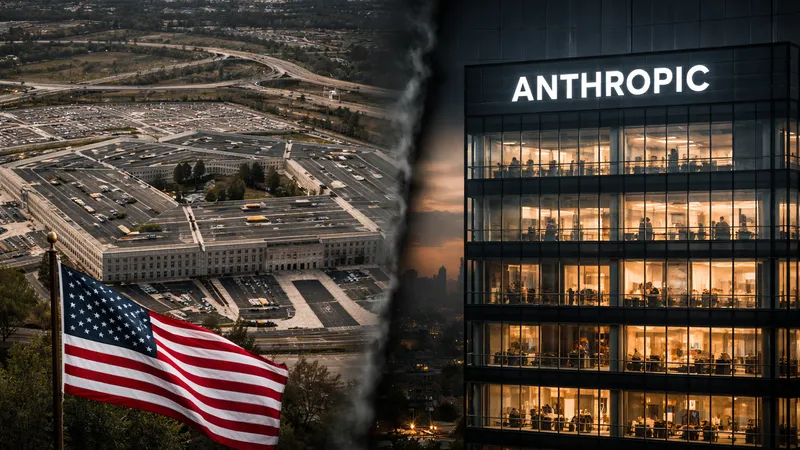
A federal appeals court has denied Anthropic's request to temporarily lift a Department of Defense (DoD) ban, ensuring the AI company remains blacklisted while a wider lawsuit proceeds. The decision from the court in Washington, D.C., on Wednesday prioritized national security interests over the company's claims of financial damage.
In its decision, the court said the legal balance favored the government. It framed the issue as a choice between a “relatively contained risk of financial harm to a single private company” and the government's ability to manage its defense procurement.
The panel emphasized the importance of executive authority in matters of military preparedness. The court stated it would not impose “judicial management of how, and through whom, the Department of War secures vital AI technology during an active military conflict.” Its use of the archaic term for the DoD highlights the gravity given to the department's role in national defense.
Contrasting Rulings in a Sprawling Legal Fight
The D.C. court's ruling marks a setback for Anthropic and contrasts sharply with a more favorable outcome in a related case. In late May, a federal judge in San Francisco granted the AI firm a preliminary injunction against a government ban.
That separate order specifically bars the Trump administration from prohibiting the use of Anthropic's Claude AI model. The existence of two conflicting rulings in different federal courts underscores the complex and high-stakes legal battle Anthropic is waging on multiple fronts.
While the San Francisco injunction offers the company some protection, the decision in Washington allows the separate DoD blacklisting to stand. The D.C. court denied Anthropic's motion for a stay while the full appeal on the merits of its case is reviewed.
Wider Implications for AI Sector
This legal standoff carries significant implications for the entire artificial intelligence industry, where lucrative federal contracts are a key driver of growth and legitimacy. Being barred from working with an agency as large as the DoD can cause substantial commercial and reputational damage.
The court’s deference to the Pentagon’s national security justification could create a powerful precedent. It may embolden other government agencies to more assertively exclude technology vendors over perceived security risks, making legal challenges more difficult for private companies.
The outcome of the main lawsuit will be scrutinized by AI developers and government procurement officials alike. It stands to shape the rules for how advanced technology is vetted, purchased, and integrated into sensitive government work, particularly within the defense and intelligence communities.
More stories
- Trump urges Ukraine to replace Zelensky over stalled deal
- Harris builds political team but leaves 2028 run undecided
- Isaias leaves 840,000 without power as rain risks persist
- Zelensky criticizes Trump over Russian fuel supply deal
- Katie Zacharia Selected as White House Press Secretary
- Michigan Senate rivals clash over health care and Israel
- Polymarket Ceasefire Bet Highlights Industry Risks
- UK "Right to Try" policy calms benefit reassessment anxieties
- Drone attack from Sudan kills 17 people in Chad as war spills over border
- Horizon IT scandal compensation scheme set up for families of victims
Latest news
- Burnham says Brexit vote faced Russian meddling in 2016
- Goldman and CPI lead week with 3.6% inflation estimate
- Russian strikes hit Ukraine plants after Trump ceasefire statement
- BlackRock falls more than 8% from 2026 high before earnings
- Saudi flights divert after Dammam airport targeted
- US said to threaten Ukraine weapons, intelligence aid
- Riyadh airport hit again as Trump weighs US role
- XRP Ledger Developers Deploy Emergency Patch to Fix Nine-Year-Old Token Minting Flaw