Gaza Sewage Discharge Threatens Israeli Water Supply
The destruction of Gaza's wastewater infrastructure has triggered massive sewage discharge, causing algae blooms that have crippled Israel's desalination…
Lauren Collins ·
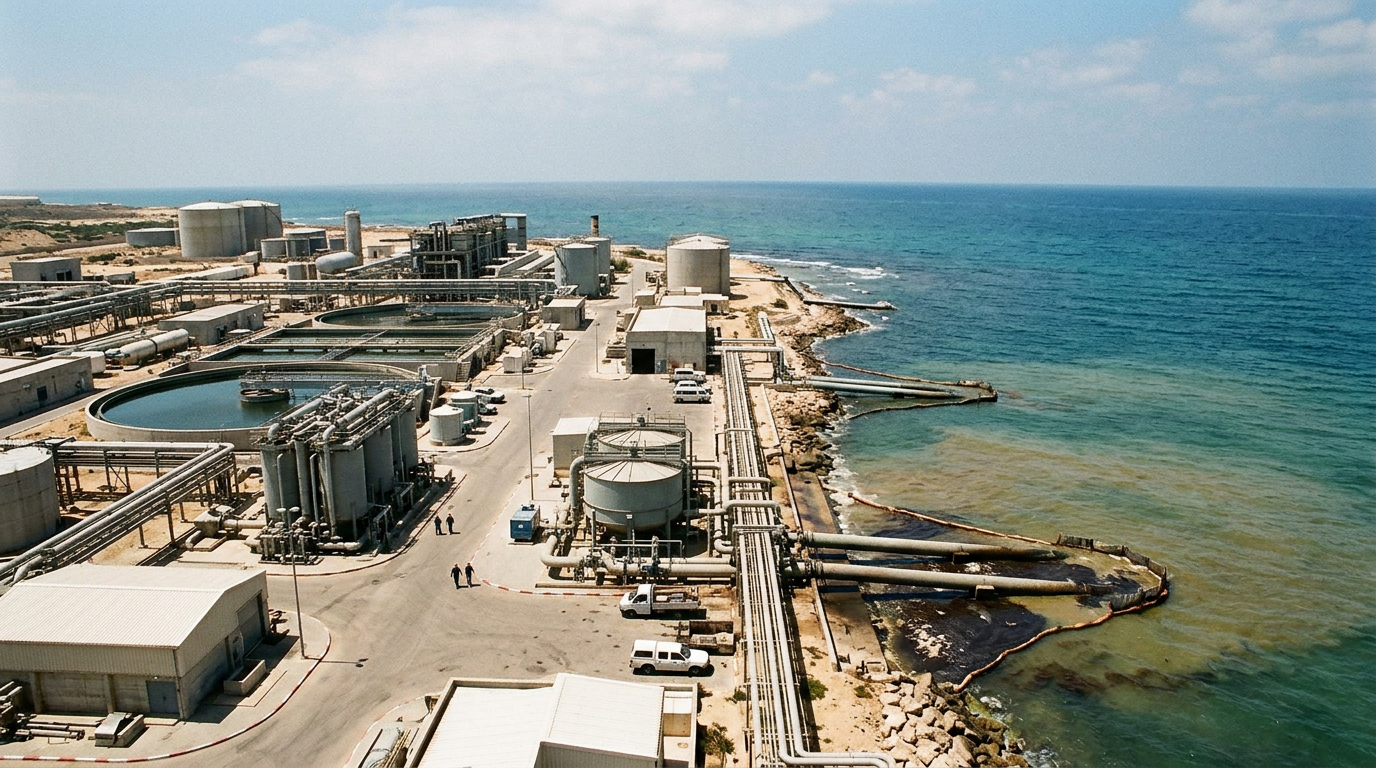
Israel faces significant water shortages after five of its six major seawater desalination plants reduced operations following an extensive microalgae bloom along the Mediterranean coast. This bloom obstructed critical filtration systems, leading to disruptions in water production capacity.
Technical analysis indicates that the bloom was exacerbated by the discharge of untreated sewage into the sea from the Gaza Strip. This environmental degradation is a direct consequence of the widespread destruction of wastewater treatment infrastructure in Gaza during ongoing military operations.
Cross-Border Environmental Hazard
The collapse of sanitation systems in Gaza poses a persistent risk to Israel’s water production. Experts warn that the inability to manage wastewater effectively creates a cross-border environmental hazard that threatens the integrity of essential drinking water supplies for the region.
Omar Shatat, the deputy executive director of the Coastal Municipalities Water Utility in Gaza, stated that all five of the territory’s wastewater treatment plants are out of service. This situation results in approximately 45,000 cubic meters of raw sewage being released into the Mediterranean daily, with an additional 15,000 cubic meters seeping into groundwater.
Humanitarian Crisis Deepens
Within Gaza, public health conditions remain critical due to the total failure of wastewater treatment facilities. The contamination of local groundwater and the destruction of distribution networks have intensified the humanitarian crisis, leading to a rise in waterborne diseases among the displaced population.
Gaza Strip
The Zalul Environmental Association, an Israeli NGO, highlighted that pollution does not recognize political borders, noting that the discharge of untreated sewage from Gaza contributes to the worsening crisis affecting Israeli desalination facilities. The wastewater contains nutrients like nitrogen and phosphorus that feed microalgae and may intensify blooms.
Looking ahead, the environmental and public health risks for both Gaza and Israel will persist as long as Gaza’s wastewater infrastructure remains non-operational. Restoring these critical systems is essential to mitigate the ongoing cross-border contamination and prevent further humanitarian and ecological damage.