China basketball rout gives Washington another soft-power signal to parse
China’s women’s basketball team advanced to the Asian Games semifinals after beating Mongolia, adding a sports datapoint to Washington’s broader watch on…
Lauren Collins ·
China basketball rout gives Washington another soft-power signal to parse
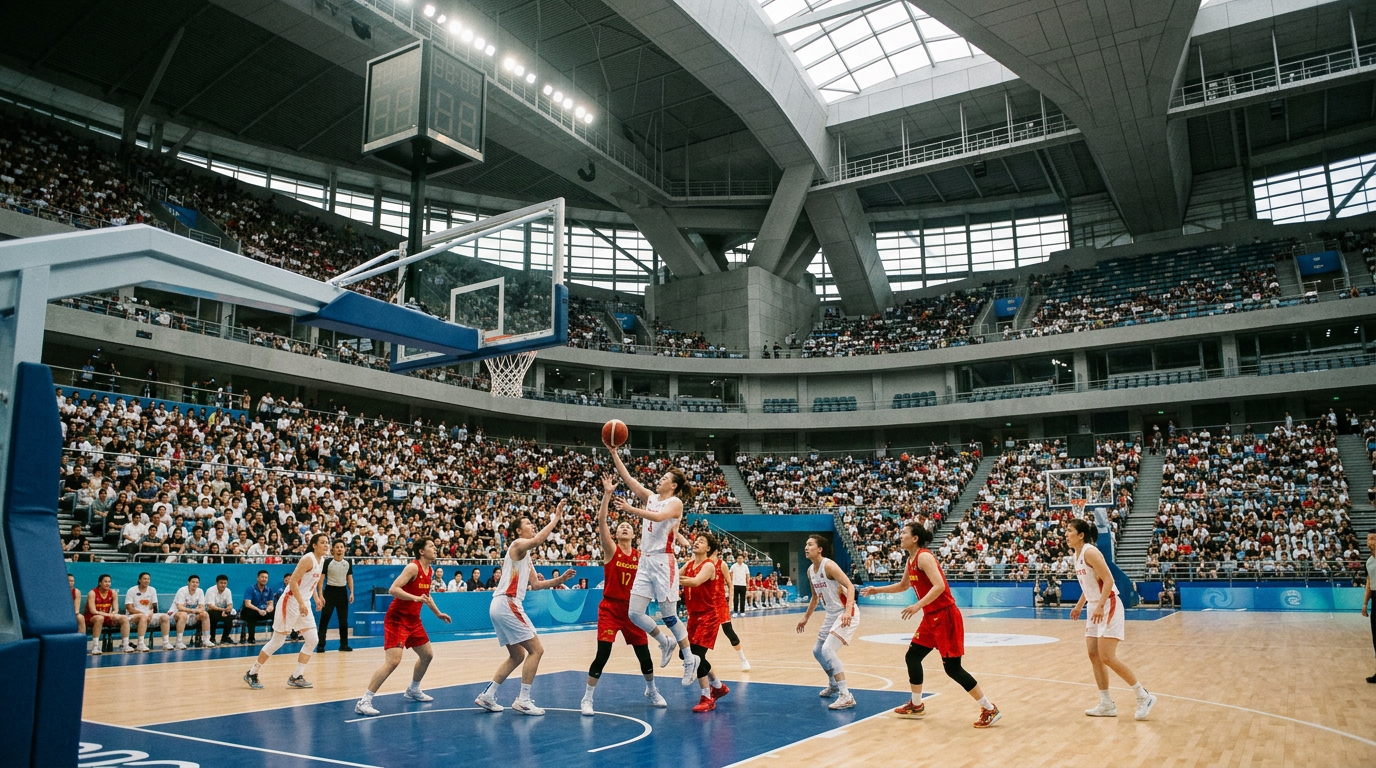
Washington had no official response on September 24 to China’s women’s basketball team beating Mongolia and advancing to the Asian Games semifinals, but the result landed inside a familiar U.S. policy problem: how to read Beijing’s use of sport as regional messaging. Chinese state media framed the win as part of China’s broader Games performance, giving Beijing another low-cost platform for national prestige in Asia.
The athletic fact is straightforward: China defeated Mongolia in women’s basketball and moved into the semifinal round. The Washington question is narrower and more consequential: whether U.S. officials treat such moments as routine sports coverage or as one layer of China’s public diplomacy across a region where political influence, commercial ties and military signaling already overlap.
China has long treated major sporting events as more than competitions. The 2008 Beijing Olympics gave the Chinese government a global stage to present competence, scale and national revival; the 2022 Winter Olympics did the same under more contested conditions, with Washington leading a diplomatic boycott over human rights concerns while U.S. athletes still competed.
The Asian Games operate on a different register. They do not command the same U.S. public attention as the Olympics, but they matter in the region Beijing most wants to influence. A dominant Chinese team performance against a smaller neighbor such as Mongolia can be carried through official media as evidence of national strength, institutional investment and regional leadership without requiring a formal diplomatic statement.
Asian Games
For Washington, that makes sport a soft-power input rather than a stand-alone policy file. The White House and National Security Council set the broad China strategy; the State Department handles public diplomacy and people-to-people ties; the Pentagon watches how Beijing pairs civilian messaging with military pressure in the Indo-Pacific. Congress often enters the issue through Olympic oversight, human rights legislation and scrutiny of U.S. organizations with exposure to China.
Women’s sports add another layer. Chinese coverage of female athletes can support a message of national discipline and social progress, especially when teams win decisively in regional competition. U.S. officials do not need to mirror that messaging to take it seriously; they only need to recognize that Beijing can use repeated athletic success to make China’s rise feel normal, successful and locally rooted to Asian audiences.
The current result does not alter the U.S.-China balance by itself. A quarterfinal or semifinal berth is not a treaty, a basing agreement or a technology export control. But sport can shape the environment in which those harder instruments operate, especially among publics that encounter China through tournaments, scholarships, media rights and cultural events before they encounter it through policy papers.
Washington’s recent approach has been uneven. The U.S. government has used sports diplomacy programs for years, including exchanges that send American athletes and coaches abroad, but those efforts are rarely described as part of strategic competition with China. The more common official language focuses on values, inclusion, educational ties and civil society rather than direct rivalry.
That restraint has advantages. If every Chinese medal or team win becomes a geopolitical contest, Washington risks looking reactive and insecure. If it ignores the cumulative effect of Chinese sports messaging, however, it leaves a visible public-diplomacy channel largely uncontested in a region where perception often shapes diplomatic room to maneuver.
The Asian Games also arrive as Olympic politics remain an active file. The next global competitions will test whether democracies can criticize host-country policies, protect athletes from political pressure and still support sporting engagement. U.S. officials will have to separate legitimate athletic achievement from state narratives built around that achievement.
China’s women’s basketball win over Mongolia is useful precisely because it is not a crisis. It shows how soft power often travels: through routine victories, repeated images and official amplification rather than through a single dramatic announcement. By the time Washington debates the message, the audience in Asia may already have absorbed it as background noise.
The falsifiable test is whether official Washington moves from silence to policy language by December 31, 2026. The soft-power reading is strengthened if a senior White House, State Department or NSC official publicly frames sport as a strategic tool in U.S.-China competition and links that framing to Olympic diplomacy, public diplomacy or regional outreach; it weakens if U.S. treatment remains confined to athletic coverage and no official connects Asian Games messaging to broader China strategy.