Iran tightens Strait of Hormuz stance ahead of Doha talks
Strait of Hormuz tensions rose after Iran said it will pursue oversight of ship traffic, as the US prepares for Doha talks on a lasting end to war.
Lauren Collins ·
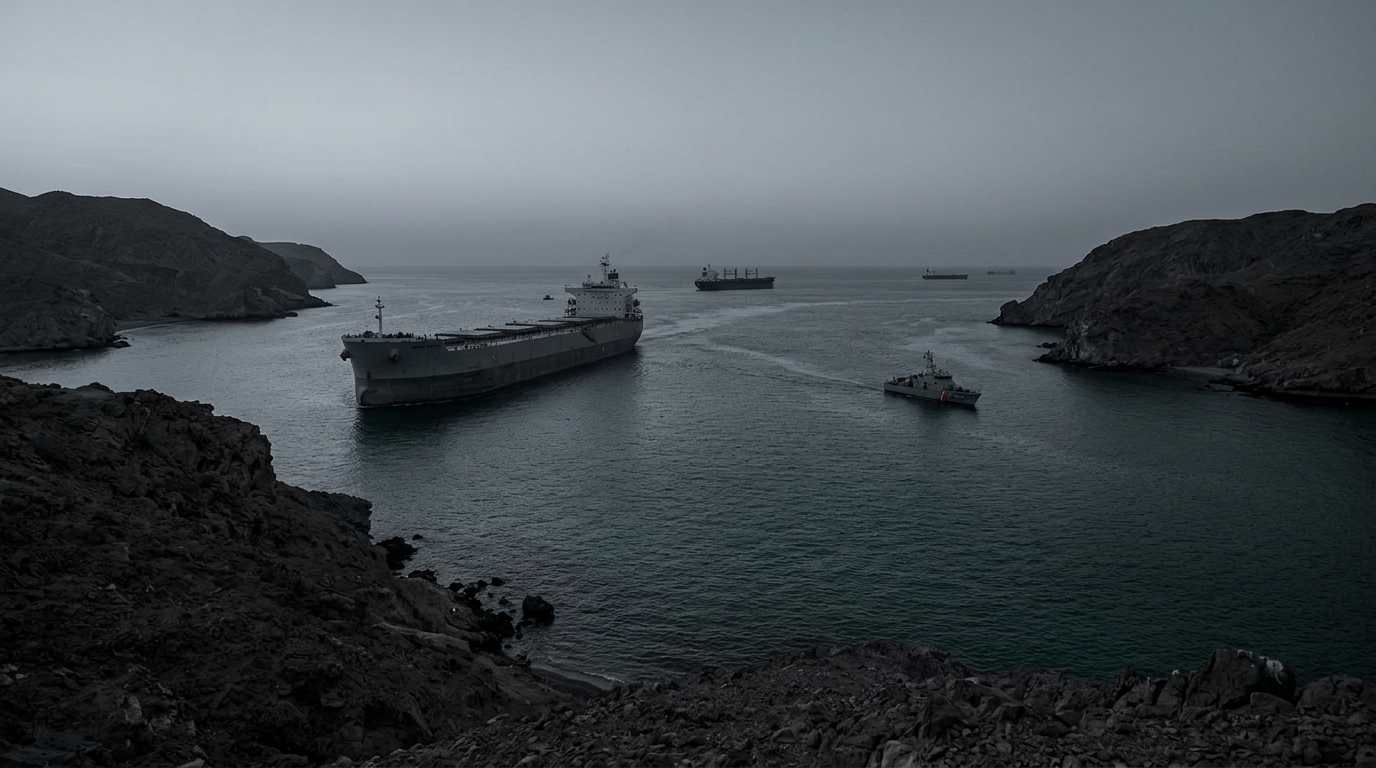
Strait of Hormuz tensions rose after Iran said it will pursue oversight of ship traffic, as the US prepares for Doha talks on a lasting end to war.
Iranian Deputy Foreign Minister Kazem Gharibabadi told state television that Tehran wants a framework with Oman to manage vessels passing through the narrow waterway. He added that Iran would proceed with its own measures if Oman declines to participate.
Gharibabadi also said Iran has warned Oman that “other countries” should not get involved, and that Tehran would designate temporary transit routes. Oman sits on the opposite side of the channel, giving it a central role in any bilateral approach to managing passage.
Iran signals a new post-war status quo for shipping
The comments indicate Iran does not intend to revert to pre-conflict arrangements in which commercial traffic moved without new Iranian oversight. The stance comes after a four-month war involving the US and Israel, which disrupted regional security assumptions around one of the world’s most critical chokepoints.
An interim peace agreement signed earlier this month included a 60-day period in which Iran would not levy tolls on transit. The text, however, left open the possibility that some form of fee could be introduced after the 60 days expire.
Maritime risks remain elevated. Vessels continued to pass through the strait even after an attack on a laden supertanker over the weekend, underscoring how quickly incidents can raise insurance and operational costs for shipping.
Doha becomes the next test for US-Iran messaging
The US has said a new round of negotiations is scheduled for Tuesday in Doha, Qatar. The White House has indicated that Special Envoy Steve Witkoff and Jared Kushner are expected to attend.
US officials have drawn a clear line on maritime fees. Secretary of State Marco Rubio said last week in Bahrain that tolls or charges imposed on shipping would be unacceptable, reflecting concerns that new costs or controls could ripple through global energy and trade flows.
Iran has not confirmed the details of the proposed Doha round as talks aimed at a permanent end to the war. Gharibabadi previously said that while “the Americans are traveling to Doha,” Iran had “no plans to meet with them,” a formulation that leaves room for indirect contacts.
At the same time, he acknowledged that Iranian delegates would be present to follow up on the interim agreement through Qatari mediators. That distinction suggests Tehran may seek to limit the optics of direct bilateral negotiations while still engaging in implementation discussions.
Regional gatekeepers and global shipping interests collide
Iran’s push to coordinate with Oman—while warning against outside involvement—highlights a broader contest over who sets rules in the strait. Tehran’s emphasis on temporary routes also points to the possibility of operational changes that could affect how ships plan transits and manage security.
Oman, long viewed as a regional mediator and a neighbor with strategic geography, could become pivotal if it is asked to endorse a shared oversight mechanism. Gharibabadi’s remarks suggest Iran would prefer a bilateral arrangement but is prepared to act unilaterally if needed.
For commercial shipping, the immediate issue is whether the interim 60-day no-toll period becomes a bridge to a stable framework or a countdown to new charges. For diplomacy, the next benchmark is whether Doha produces clarity on enforcement of the interim terms and the boundaries of any future maritime controls.
In the near term, market and security watchers are likely to focus on whether Iran attempts to formalize transit corridors, whether Oman publicly responds to Tehran’s proposal, and whether US negotiators secure commitments that keep the waterway free of tolls once the interim window closes.