Will Merchant Ships Return to Hormuz Following Iran’s Reopening Pledge and US Sanctions Pressure?
Hormuz Strait open, Iran says, but US blockade stays; oil fell below $90 as Paris talks and a May 16 Russian-oil waiver extension drew focus.
Lauren Collins ·
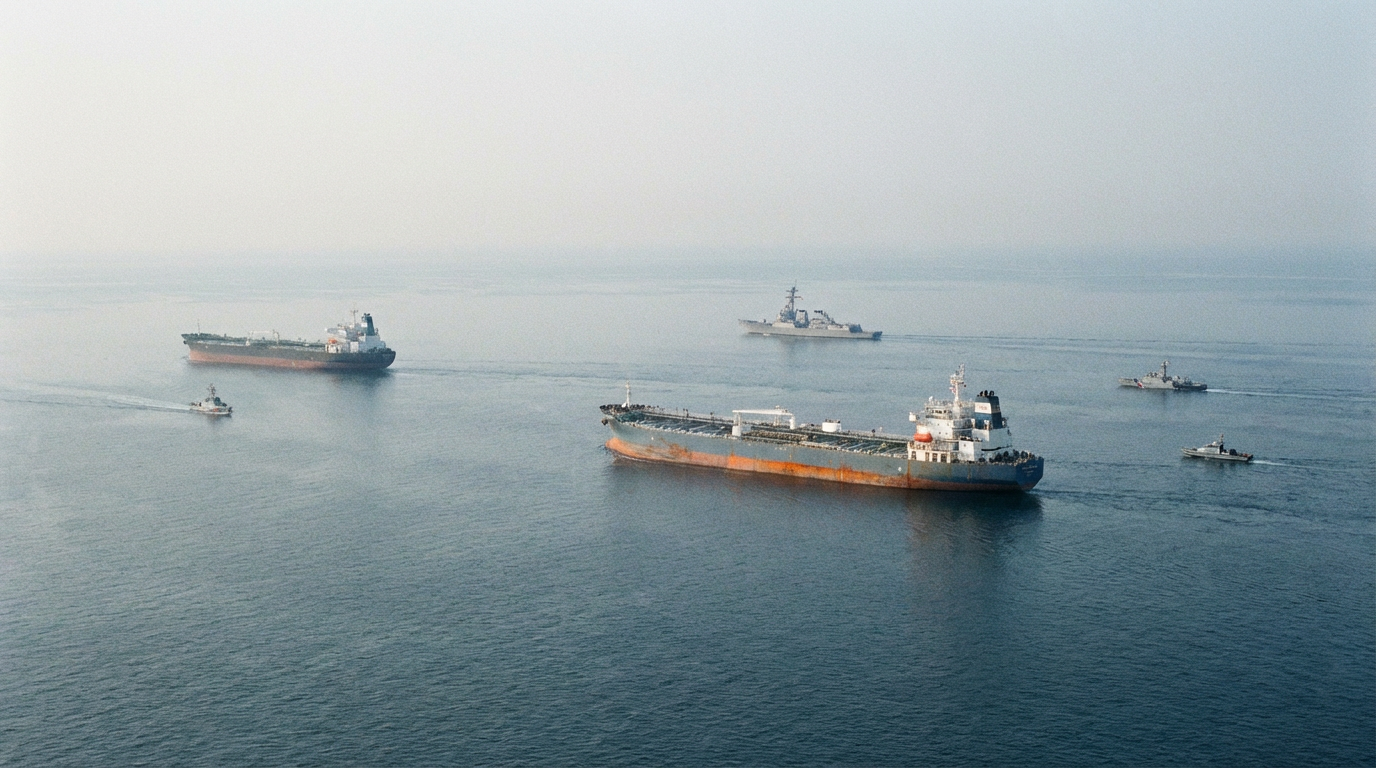
The Strait of Hormuz remains accessible for commercial maritime traffic, Iran announced on Friday, with Foreign Minister Abbas Araghchi stating the waterway was "completely open" for merchant vessels. This declaration coincided with a dip in oil prices, falling below $90 per barrel, underscoring the energy market's immediate reaction to any perceived reduction in shipping risks within the Gulf region.
Conflicting Statements
Despite the foreign minister's assurance, a unified message was not evident across the Iranian leadership. Mohammad Bagher Ghalibaf, the parliamentary speaker, cautioned that the strait could be reclosed should the United States' "blockade" against Iran persist. This statement maintained a degree of uncertainty for shipowners, insurers, and commodity traders who rely on stable transit conditions.
In Washington, President Donald Trump affirmed that a naval blockade against Iran would continue until a "transaction" with Tehran was finalized. Trump also asserted that Iran had agreed to an indefinite suspension of its nuclear program and would not receive frozen funds; Iranian authorities did not immediately respond to these claims.
IRGC's Role
Operationally, Iran's Islamic Revolutionary Guard Corps (IRGC) indicated that commercial ships would require its authorization and a designated route to navigate the strait. Consequently, despite the foreign minister's announcement, the short-term outlook for shipping volumes remained ambiguous, with expectations that few vessels would risk transit under such uncertain conditions, suggesting a return to normal traffic levels might be distant.
Regional Context
This announcement occurred amidst other regional developments, including a 10-day ceasefire in Lebanon that temporarily halted hostilities between Israel and Hezbollah. The timing connected Gulf shipping concerns with broader Middle Eastern security dynamics, which can influence risk assessments for energy supply routes globally.
Global Energy Market
Separately, the U.S. Treasury Department extended a waiver allowing the purchase of sanctioned Russian oil until May 16. This measure was described as an effort to manage global energy prices. The waiver decision highlighted how policy instruments beyond the Gulf, such as sanctions enforcement and exemptions, can influence oil market expectations alongside security developments.
International Response
On the diplomatic front, representatives from approximately 40 nations convened in Paris to discuss an international strategy for securing the Strait of Hormuz. Historically, the strait has been a conduit for about one-fifth of the world's oil and gas supplies, making it a critical area for governments and markets concerned with energy availability, shipping expenses, and the stability of global trade flows.