US Keeps Iran Naval Blockade After Failed Talks
U.S. maintains Iran naval blockade launched April 12, 2026, with major deployments as talks continue and an April 22 deadline nears.
Lauren Collins ·
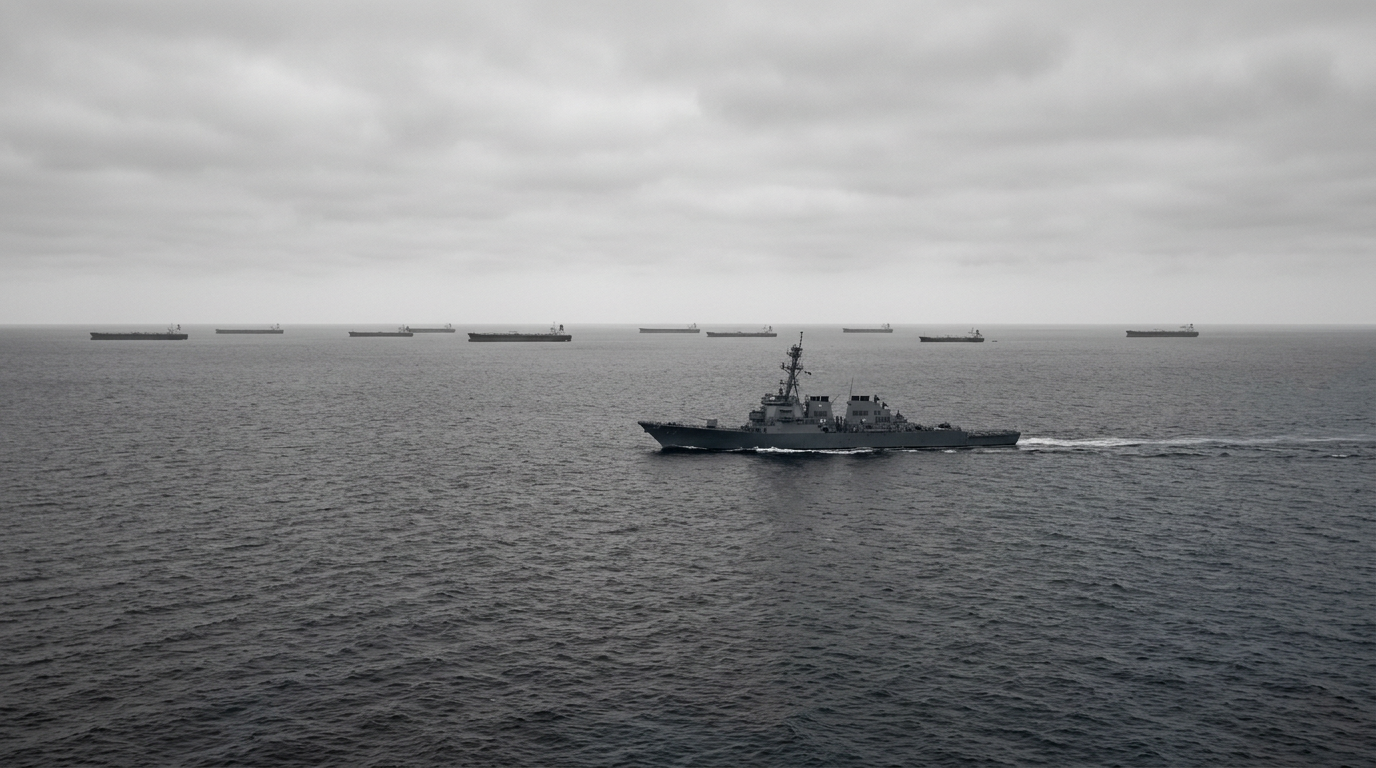
The United States is continuing a naval blockade of Iranian ports that began on April 12, 2026, after negotiations between Iran and the U.S. did not produce an agreement. Officials said the operation is being enforced by the U.S. military and is aimed at vessels attempting to enter or depart Iranian ports across the Gulf of Oman and the Arabian Sea.
The blockade remains in place even though Iran has recently agreed to reopen the Strait of Hormuz for shipping. U.S. President Donald Trump said the blockade will continue until a final political deal with Iran is completed, linking the duration of the operation to the outcome of ongoing diplomacy.
Officials said the U.S. has deployed over 10,000 troops and 16 warships to support the blockade, including 11 destroyers and an aircraft carrier. The deployment was described as representing 15 percent of the total deployed U.S. Navy fleet. The force package is supported by over 100 fighter jets, unmanned autonomous vehicles, and intelligence, surveillance, and reconnaissance (ISR) aircraft, according to the details provided.
Officials said the U.S. military is enforcing the blockade from a distance, operating from the Arabian or Mediterranean seas. The stated purpose of this posture is to monitor shipping while limiting direct exposure to potential Iranian threats, which were described as including mines, missiles, drones, and fast attack craft.
Enforcement is centered on visit, board, search, and seizure (VBSS) operations. Officials said these actions are conducted by the Navy and Marine Corps, and could also involve Coast Guard elements. The process begins with radio warnings to ships that attempt to breach the blockade, with escalation to physical boarding presented as a potential next step if required.
As of April 16, 2026, officials said 13 radio warnings had been issued and that none had required physical boarding. The update indicates that, at least through that date, the blockade’s immediate enforcement activity has relied on communications and monitoring rather than direct interdiction.
Risks and uncertainties remain centered on escalation . Officials said the primary risk is a widening confrontation if Iran retaliates or if talks fail, with added sensitivity because a ceasefire expiration is approaching on April 22. The timeline for any final political deal, and how long the blockade will remain in effect, was not specified beyond the condition set out by the U.S. president.