Iran says Strait of Hormuz can reopen within seven days
Iran said the Strait of Hormuz could reopen within seven days if Washington eases military pressure and port restrictions, putting UN diplomacy at center…
Atlas Newsdesk ·
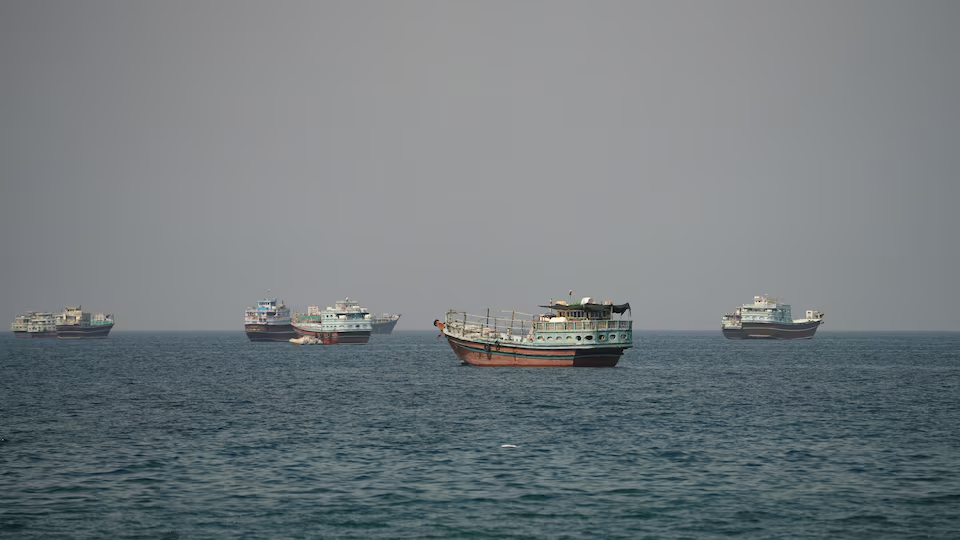
Iran said the Strait of Hormuz could reopen within seven days if Washington eases military pressure and restrictions on Iranian ports.
An unnamed senior Iranian official said Tuesday that Tehran wants Washington to state formally that it is seeking a diplomatic settlement, then agree on a timeline for talks. The official framed the seven-day reopening window as contingent on those steps, rather than as an unconditional decision by Iran.
Seven-day Strait timeline
The statement followed a warning from Iran's military central command on Sunday that it had been told the US was preparing to resume military operations with backing from regional countries. The command said such a move would bring Iranian retaliation “without limitations and considerations,” tying any reopening discussion to the military posture around the waterway.
The Strait's status is now linked, in Tehran's account, to two demands: lower US military pressure and relief from what the official described as restrictions affecting Iranian ports. The official did not provide operational details on how the Strait would be reopened within the stated seven-day period.
The central claim rests on Tehran's diplomatic framing. The official said Iran would be open to reviving talks if Washington takes tangible steps, including a public commitment to diplomacy and a negotiated sequence for further moves.
New York channel opens
Iranian President Masoud Pezeshkian left Tehran for New York on Tuesday morning for the United Nations General Assembly. The same official said Pezeshkian would not meet President Trump at UN headquarters, narrowing the likely diplomatic channel to indirect contacts.
Tehran's delegation at the General Assembly has full authority to restart diplomacy with the United States, the official said. That gives New York a practical role in any exchange, even without a direct presidential meeting.
The official said the details of an agreement to end hostilities with Washington could be discussed through mediators in New York. Tehran's proposal was delivered to the US through mediators on September 16, according to the official, giving both sides a dated document around which to structure any response.
The General Assembly timing matters because it places senior officials, mediators and diplomatic missions in the same city during a short political window. Tehran is using that setting to press Washington for a formal signal before any maritime or military de-escalation proceeds.
Ports and military pressure
The immediate impact falls on Iran's diplomatic position and on maritime actors exposed to the Strait's closure. If the US signals a diplomatic track and eases the measures cited by Tehran, Iran says the waterway can reopen within seven days, which would reduce one channel of pressure on shipping planning and port access.
If US military operations resume instead, Iran's command has warned that retaliation would follow. Under that scenario, the macro effect would come through higher security uncertainty around a major maritime route; Iran would face a more militarized negotiation, while shipping firms, insurers and regional ports would have to price in operational risk rather than a reopening timetable.
A third path is a partial diplomatic track in which mediators carry messages but Washington does not make the formal announcement Tehran is seeking. In that case, global trade would still face uncertainty, Iran would keep leverage over the Strait's reopening, and the wider maritime sector would lack a firm planning date.
The main open questions are whether Washington will issue the diplomatic signal Tehran wants, whether any port measures change, and whether regional countries support or avoid renewed military operations. Until those points are clarified, the seven-day timeline remains an offer attributed to Iran rather than an agreed schedule.