Iran Blockade Takes Effect, US Navy Reports
Iran blockade enforcement began as CENTCOM said six ships turned back in 24 hours, with more than 15 U.S. warships supporting the operation.
Lauren Collins ·
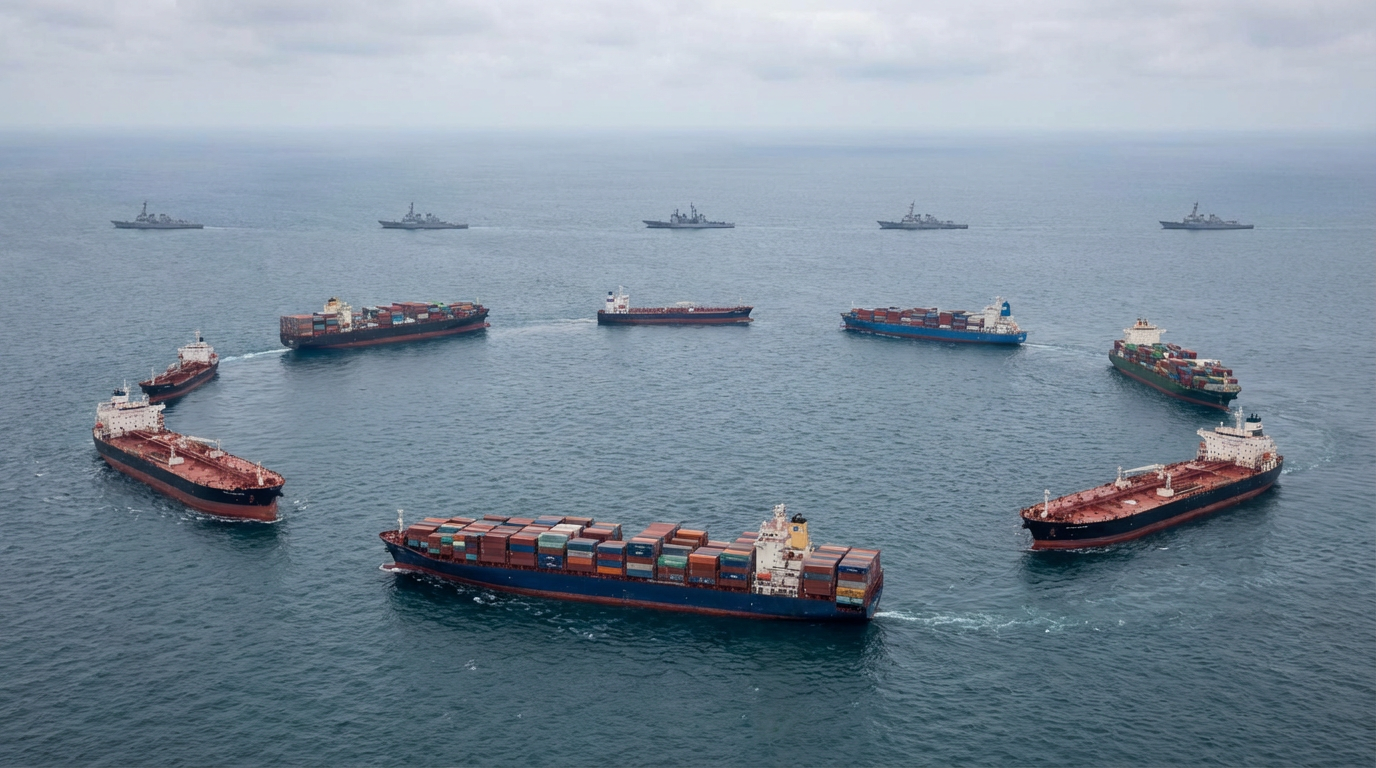
U.S. naval forces have begun enforcing a blockade of Iran that is already altering commercial shipping patterns, according to U.S. Central Command. Officials said multiple merchant vessels changed course after receiving directions from American naval forces, marking a sharp escalation in Washington’s effort to economically isolate Tehran.
U.S. Central Command reported that, within the first 24 hours of the operation, six commercial ships complied with instructions to reverse course toward an Iranian port in the Gulf of Oman. CENTCOM also said that since the cordon was put in place, no vessels departing from Iran have successfully passed through it. Officials have not reported any direct interdictions so far, such as boardings or seizures.
The enforcement effort is supported by a large military presence. A senior defense official said more than 15 U.S. warships are positioned in the region to back the mission and apply the new access restrictions. International involvement was also acknowledged, with United Kingdom maritime officials recognizing the measures, according to the information provided.
Officials described the blockade as broad in geographic scope, covering Iranian ports and coastal areas along the Persian Gulf, the Gulf of Oman, and parts of the Arabian Sea. Even with the expanded footprint, sources indicated that direct enforcement actions inside the Persian Gulf are unlikely during the early phase of the operation. The absence of reported boardings or seizures underscores that the initial impact is being driven by deterrence and compliance rather than physical interdiction.
The naval move is unfolding alongside continued diplomatic messaging from the White House. President Trump said on Monday that he believes the “right people” in Iran remain interested in negotiating a deal with the United States. He also reiterated that Iran would not be allowed to acquire a nuclear weapon, linking the maritime operation to the administration’s broader pressure campaign focused on Iran’s nuclear program.
Officials said the blockade is intended to restrict Iran’s remaining trade and oil exports, which are central to the country’s economy. The early decision by several ships to turn back suggests the operation is having an immediate deterrent effect, though officials described the situation as volatile. A key uncertainty is how Iran responds and whether any vessel attempts to challenge the cordon, a scenario that could lead to a direct U.S. military interdiction and a wider confrontation.