US Naval Blockade Chokes Iran's Export Routes
U.S. naval blockade began Monday at 14:00 GMT, targeting Iran’s Hormuz-linked exports and trade flows, with revenue and supply risks cited.
Lauren Collins ·
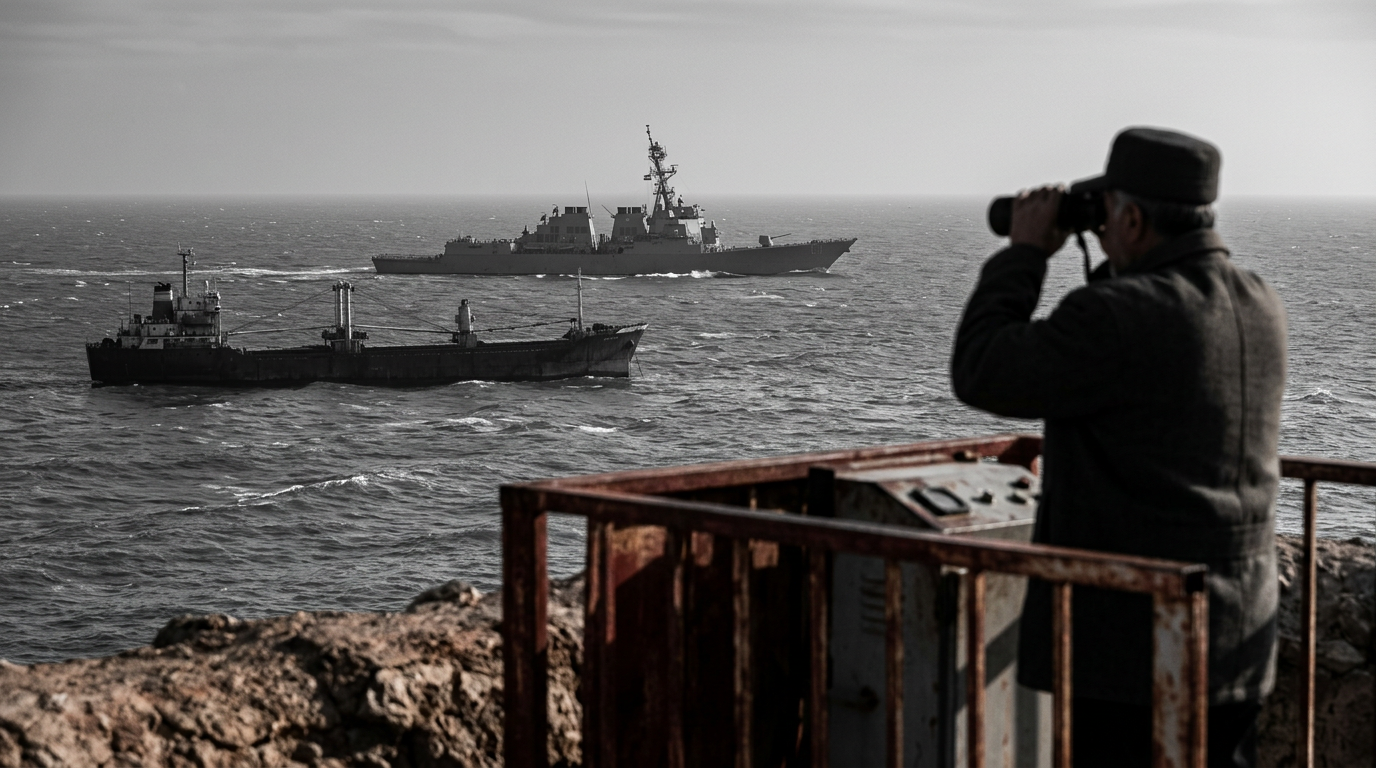
U.S. naval blockade hits Iran export routes via Hormuz
The United States began a naval blockade of Iran on Monday at 14:00 GMT, a move intended to increase economic pressure on Tehran to end its ongoing conflict, according to officials. Iran’s armed forces described the action as “an illegal act.” The measures focus on Iran’s main export corridors, with particular attention on maritime traffic linked to the Strait of Hormuz.
The blockade directly affects Iran’s oil and gas shipments, which account for about 80 percent of the country’s total exports. Data cited in the source shows Iran exported 1.84 million barrels per day (bpd) of crude oil in March. Exports were reported at 1.71 million bpd in early April, compared with an average of 1.68 million bpd in 2025.
With oil prices holding above $90 per barrel, Iran was estimated to have earned $4.97 billion from oil exports in the past month, described as a 40 percent increase versus pre-war earnings. Analysts cited in the source expect those revenues to fall sharply as the blockade constrains seaborne flows. The immediate pressure point is the ability to move cargo through key maritime routes that underpin Iran’s external trade.
The disruption is not limited to hydrocarbons. The blockade also threatens non-oil exports such as petrochemicals, plastics, and agricultural goods, including shipments destined for China and India. On the import side, the source says Iran relies on inflows of industrial machinery, electronics, and food from China, the UAE, and Turkey, leaving domestic supply chains exposed if maritime deliveries are interrupted.
Trade figures in the source indicate Iran’s non-oil trade totaled $94 billion between March 2025 and January 2026, with imports exceeding exports over that period. The source says interruptions to these flows are expected to worsen shortages at home and deepen economic strain. The breadth of affected categories suggests potential knock-on effects across manufacturing inputs, consumer goods availability, and food supply logistics.
Iran has developed alternative railway links with China through Central Asia, according to the source. However, the same account notes these routes are unlikely to compensate fully for the loss of maritime capacity under a naval blockade. A key uncertainty remains how much trade can be rerouted in practice and how quickly, given the scale of seaborne volumes involved and the concentration of export routes targeted by the operation.