Extreme Weather Events Span Global Regions, Impacting Infrastructure
Hurricane Polo threatens Baja California while India faces flooding and the Iberian Peninsula endures extreme heat, impacting infrastructure and stability.
Lauren Collins ·
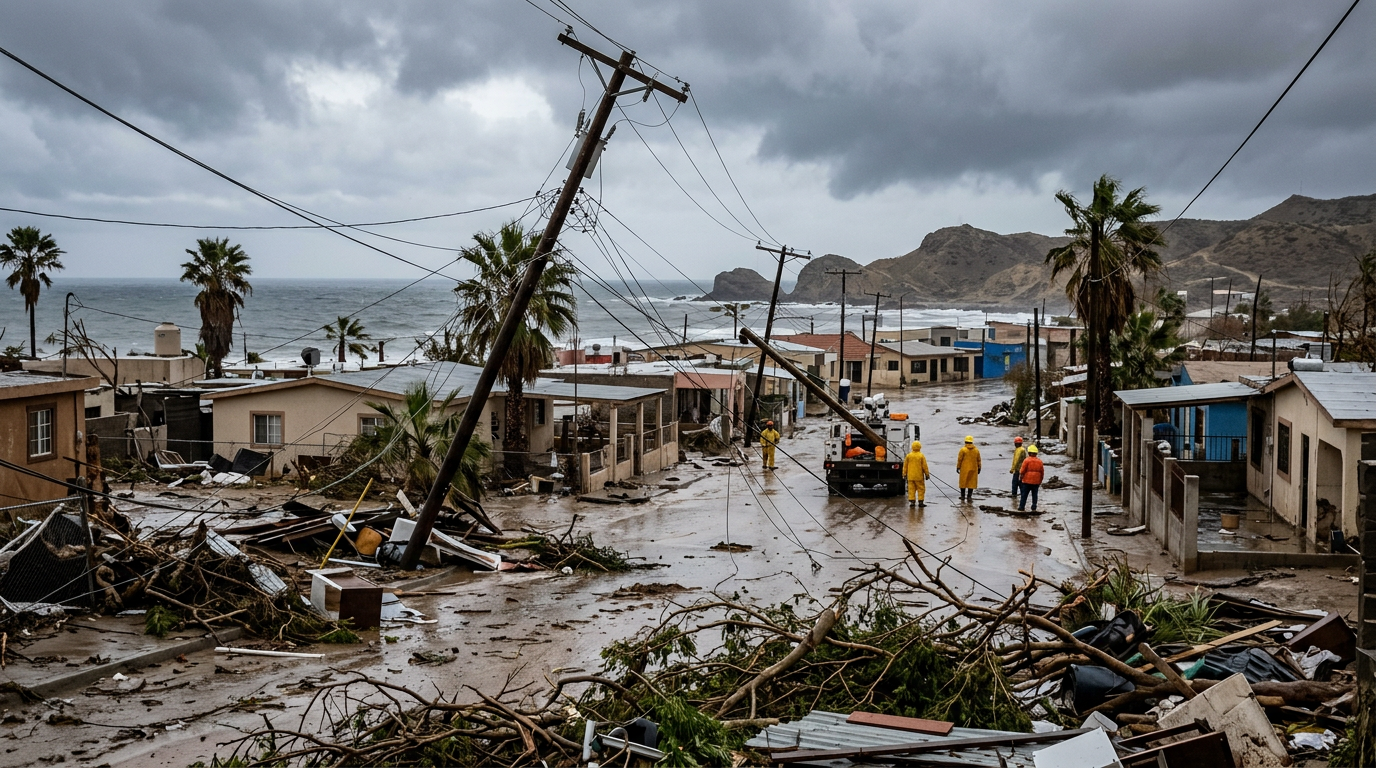
Three distinct extreme weather phenomena are currently gripping global regions, posing risks to critical infrastructure, energy systems, and public safety across Mexico, India, and the Iberian Peninsula. These events include an intensifying hurricane in the east Pacific, a disruptive low-pressure system causing heavy rains in India, and record-setting heat extending into autumn in Europe.
Hurricane Polo Intensifies Off Mexico Coast Hurricane Polo is advancing towards Mexico's Baja California region, maintaining its status as the second-most intense hurricane ever recorded in the east Pacific. Measurements on September 22 registered the storm at 892 millibars, with sustained winds reaching 150 miles per hour. Exceptionally warm Pacific water temperatures are fueling its considerable strength. Authorities anticipate high-intensity conditions to persist as the system follows a north-westerly path, threatening coastal infrastructure and regional logistics. Heavy Rains Disrupt Indian State Concurrently, the Indian state of Odisha is experiencing widespread disruption following the formation of a deep 988-millibar low-pressure system along its east coast. Forecast models suggest rainfall totals could surpass 200 millimeters in some locations over a 24-hour period. Localized flooding and strong winds, reaching up to 60 miles per hour, have led to the closure of numerous educational institutions. These severe conditions pose threats to regional power grids and transport networks, presenting immediate operational risks to local supply chains and public safety. Iberian Peninsula Endures Prolonged Heat Meanwhile, the Iberian Peninsula is enduring a prolonged period of extreme heat, with Portugal recording temperatures exceeding 41 degrees Celsius (105.8 degrees Fahrenheit). This marks an unusual extension of hot conditions into the meteorological autumn season, with Alvega, Portugal, registering a maximum of 41.7 degrees Celsius on September 23. This anomalous weather pattern challenges existing energy demand models and tests the resilience of infrastructure throughout the region, requiring policymakers to monitor potential effects on economic stability and resource allocation. Global Climate Trends and Risks
Iberian Peninsula
These concurrent global weather events highlight the increasing strain on infrastructure and public services due to climatic shifts. The heightened intensity of Hurricane Polo is attributed to elevated Pacific water temperatures, a factor consistent with broader warming trends.
Similarly, the unusual duration of heat in the Iberian Peninsula extends stress on energy systems and agricultural sectors. The widespread impact across diverse geographies underscores the interconnected risks to global economic stability, trade routes, and humanitarian aid efforts.
Looking ahead, the immediate focus remains on managing the direct impacts of each system. However, the confluence of these events will likely prompt further discussions among policymakers regarding long-term climate adaptation strategies and their implications for global supply chains and energy security.