Netanyahu's Iran strike defense at UN puts Washington on escalation watch
Benjamin Netanyahu told the UN that Israeli strikes on Iran's nuclear infrastructure were necessary for survival.
Lauren Collins ·
Netanyahu's Iran strike defense at UN puts Washington on escalation watch
Washington faced a tighter Iran dilemma on September 25 after Israeli Prime Minister Benjamin Netanyahu told the UN General Assembly that strikes on Iranian nuclear facilities were necessary for Israel's survival. His argument pushed President Trump's administration toward a familiar but narrowing lane: affirm Israel's security while avoiding a public blank check for unilateral escalation.
The speech matters in Washington because Israel's campaign against Iranian nuclear infrastructure does not stay inside an Israeli-Iranian frame. Any wider exchange could draw in US forces, test American air and missile defense commitments in the region, and complicate diplomacy with allies that still want a multilateral nuclear track.
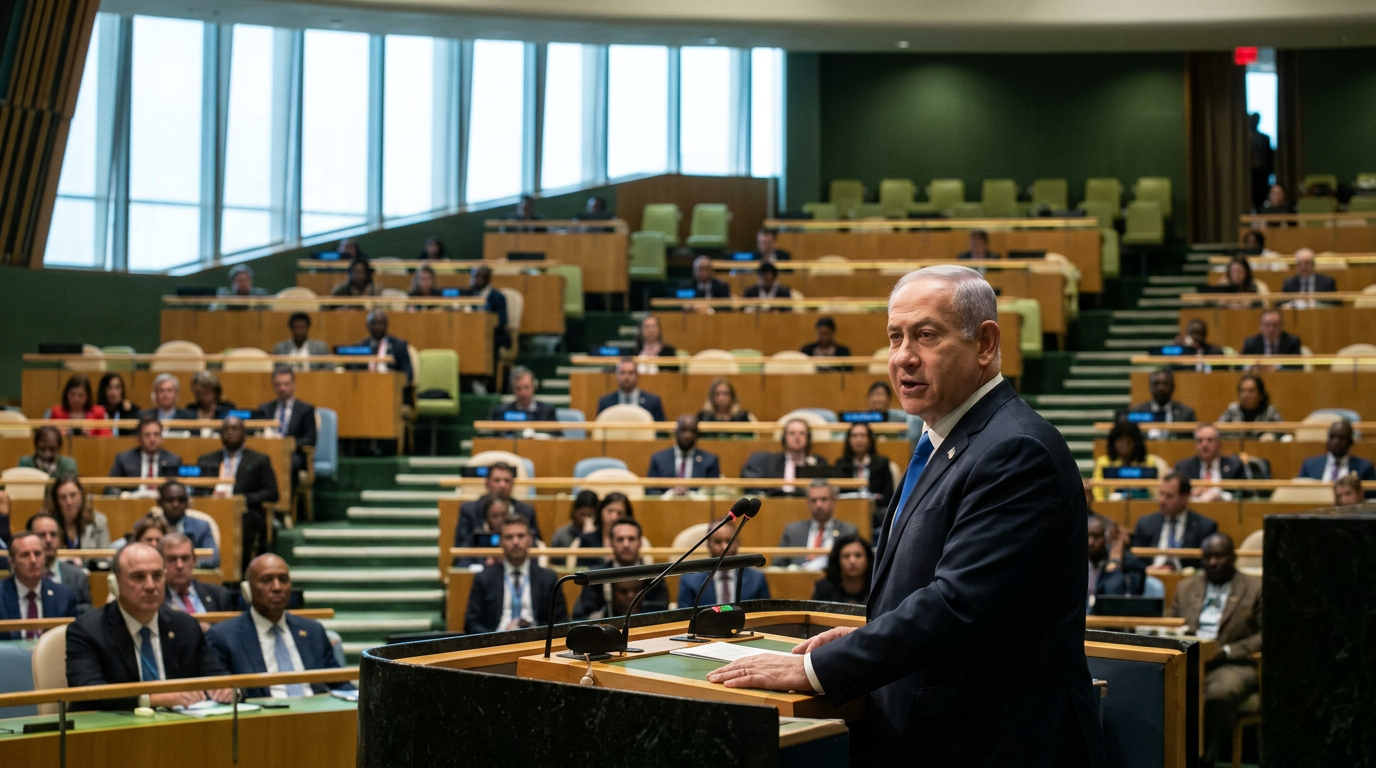
Netanyahu used the UN platform to present Iran's nuclear program as an existential threat to Israel and a danger beyond the Middle East. That framing is designed to make preemptive military action look less like a policy choice and more like a claimed act of national survival.
For Washington, the distinction matters. The United States has long supported Israel's right to defend itself, but it also has an interest in controlling the tempo of any confrontation with Iran. The White House, State Department and Pentagon each carry a different part of that problem: presidential messaging, diplomatic pressure, and military risk management.
Israeli Prime Minister Benjamin
The nuclear issue also runs through international institutions. The International Atomic Energy Agency monitors Iran's declared nuclear activities, while the UN Security Council and US sanctions architecture shape the diplomatic pressure available to Washington. Without a shared public baseline on Iran's nuclear advances, US officials have less room to align allies behind a single response.
The immediate US policy challenge is not whether Iran's nuclear program is a concern. It is whether Washington treats Israeli action as a precedent to endorse, a fact to manage, or leverage for a renewed pressure campaign. Each path carries a different cost.
If the White House leans into deterrence without endorsing unilateral strikes, it can keep military pressure on Tehran while preserving room for sanctions coordination and nuclear diplomacy. That approach would reassure Israel in public but signal in private that Washington wants advance consultation before any further military step that could expose US personnel.
If the administration instead aligns openly with Israel's strike rationale, the message to Tehran would be harder-edged. The risk is that Iran could treat the United States as a direct party to the campaign, increasing pressure on American bases, shipping lanes, and partners across the Gulf.
Congress will shape the next phase. Lawmakers skeptical of Iran are likely to press for tougher sanctions, tighter enforcement, and more explicit support for Israel. Others will ask whether the administration has a plan to prevent a broader war, especially if further strikes follow Netanyahu's UN defense.
The Pentagon's role is narrower but immediate. It must assess force protection, regional air defense, naval posture, and the risk that Iran or aligned groups could respond away from the nuclear sites themselves. In Washington, that is often where political language meets operational exposure.
State Department diplomacy will be tested with European and regional partners. A sanctions package has more force if allies join it; a diplomatic warning has more weight if it is not heard as a US-Israel statement alone. The harder Netanyahu's language becomes, the more Washington has to decide whether to amplify it or translate it into coalition terms.
The global macro channel runs through energy and risk sentiment.
If the confrontation stays limited, markets may treat it as another Middle East security shock to price and monitor. If it threatens Gulf exports or shipping routes, the effect could move quickly from foreign policy desks to inflation forecasts, central bank assumptions and consumer fuel costs.
For Israel, Netanyahu's UN message seeks to widen the audience for its Iran case and narrow the diplomatic space for criticism of its strikes. The payoff would be stronger US and allied tolerance for future action. The danger is that Washington may support the threat assessment while resisting the operational precedent.
For the defense and energy sectors, the mechanisms are clearer than the politics. More tension could lift demand for air defense, interceptors, surveillance systems and naval protection. It could also raise insurance and routing costs for energy flows if regional retaliation appears more likely.
By December 31, the clearest test will be whether President Trump's administration pairs deterrence language with a multilateral sanctions or diplomacy track, or whether it moves closer to public endorsement of unilateral Israeli action. The call is right if US officials reaffirm the need to deter Iran, avoid blessing further unilateral strikes, and advance a visible joint or multilateral mechanism; it is wrong if Washington signals support for additional Israeli military action without a parallel diplomatic or sanctions framework.