

Foreign Investment Returns to India Amid Global AI Market Volatility
Foreign investors have returned to Indian equities as global AI interest wanes, though domestic growth risks, currency volatility, and a lack of AI exposure…
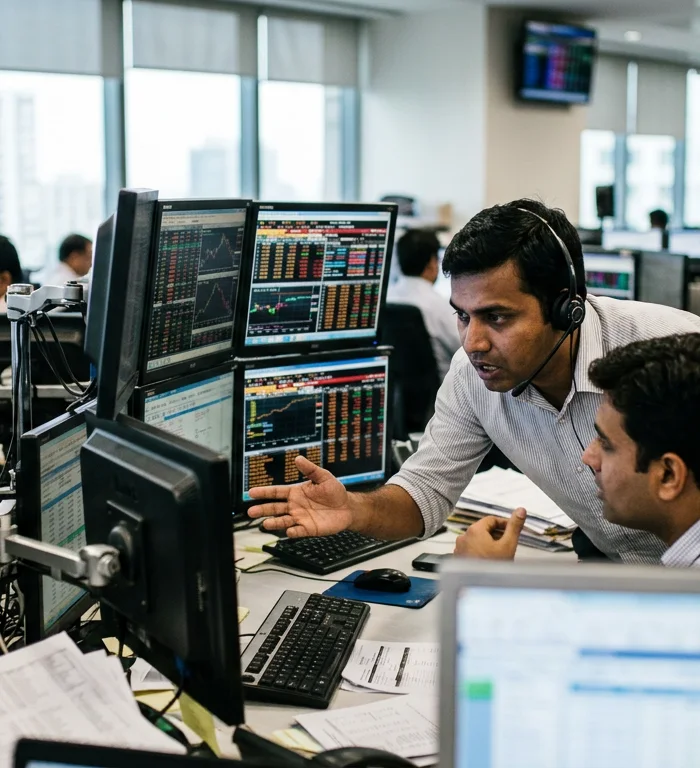
Foreign portfolio investors have resumed net buying in Indian equities, recording inflows exceeding $11.9 billion in November following two months of significant capital flight. This shift appears driven by a global rotation of funds away from artificial intelligence-focused assets, which have faced corrections due to regulatory uncertainty and concerns regarding the long-term revenue viability of AI projects.
Despite the recent influx, institutional sentiment remains tempered by India’s lack of direct AI-linked investment opportunities. Approximately 29% of regional fund managers identify this absence as a primary deterrent, followed by concerns regarding the pace of domestic reforms, currency depreciation, and elevated equity valuations. These structural concerns persist even as foreign investors seek alternatives to the cooling global AI trade.
Macroeconomic headwinds are further complicating the outlook as Macroeconomic headwinds are further complicating the outlook as India approaches the release of its Q2 FY27 GDP data. Projections suggest growth may moderate to 7.4%, down from 8.1% in the same period last year, largely due to the impact of regional geopolitical instability and adverse weather conditions affecting the agricultural and services sectors. Persistent food inflation and the potential for supply-side shocks continue to exert upward pressure on headline retail inflation.
Q2 fy27 GDP
The Indian rupee remains under significant pressure, having recently touched record lows near 96 against the US dollar. While the currency has stabilized slightly, its trajectory remains highly sensitive to capital account volatility and high global yields. Analysts note that the current challenge is primarily a capital account issue rather than a traditional current account deficit, limiting the Reserve Bank of India’s policy flexibility.
Looking ahead, the Reserve Bank of India faces a complex trade-off between currency stabilization, inflation control, and growth support. Market expectations are currently centered on a potential interest rate hike during the upcoming policy meeting scheduled for early December. The central bank’s ability to manage these competing priorities will be a critical determinant for sustained foreign capital participation in the coming quarter.
More stories
- Singapore core inflation eases to 1.5% in October
- Greece targets 2.3% growth in 2027 budget
- US stocks face Goldman warning on further forced selling
- Bitcoin falls below $57,742 as investors seek other bets
- Nvidia SEC probe examines chipmaker’s accounting issues
- Rwanda women-owned exports fall 51% from 2021 peak
- Investors value Anthropic at $2 trillion on Nasdaq debut
- Ubisoft H1 bookings fall 16.5% as it cuts 166 Canada jobs
- Johnson & Johnson lifts 2026 outlook after 6% Q3 growth
- Accordion adds 50 engineers in Stride AI acquisition
Latest news
- Nigeria's family-planning budget falls 97%
- Peter Attia reviews cold therapy claims on longevity
- Social Security raises 2027 benefits 3.6%
- Hull City 2–0 Brighton: When Resilience Beat Reputation
- David Parr House to honor Victorian art-workman with blue plaque
- Iran's attacks hit 25 tankers near Strait of Hormuz
- FCC approves prison cellphone jamming despite 2.5-mile warning
- Russia strikes Ukraine as Odesa faces electricity strain