

India advances traditional medicine integration amidst research drive
India is integrating ancient Ayurvedic practices into modern medical research, balancing cultural heritage with stringent safety and efficacy standards.
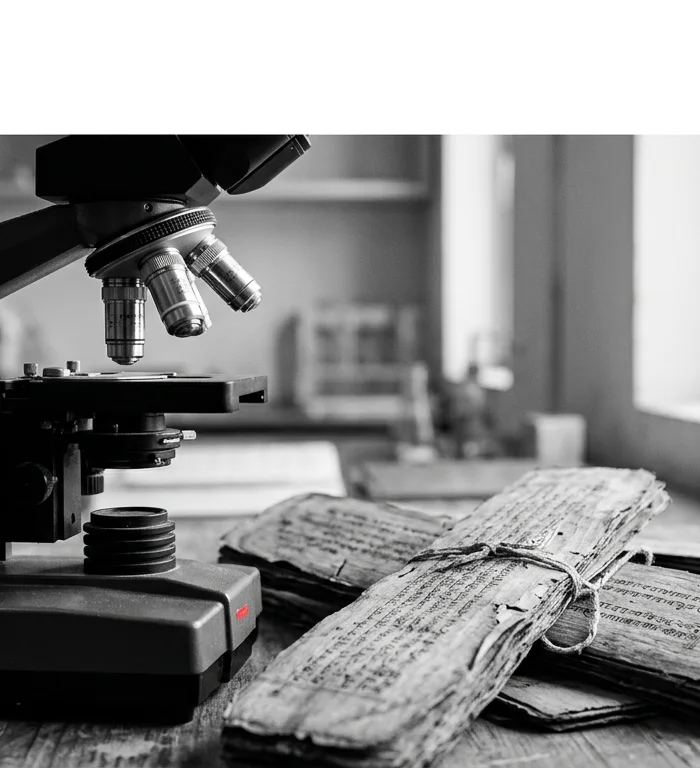
India’s government has intensified efforts to integrate traditional Ayurvedic medicine into its national healthcare and research systems, aiming to validate ancient practices with modern scientific methodologies. This initiative, spearheaded by the Ministry of AYUSH, seeks to establish evidence-based frameworks for Ayurvedic treatments, addressing long-standing debates over their efficacy and safety within contemporary medical standards.
Ayurveda's Enduring Roots
Ayurveda, an ancient system of medicine developed in India thousands of years ago, is rooted in the belief that health and wellness depend on a delicate balance between the mind, body, and spirit. It employs herbal remedies, dietary regimens, yoga, and lifestyle adjustments. For centuries, these practices have remained integral to daily life across India, often passed down through family traditions and local clinics, coexisting alongside Western-centric medical approaches.
The Ministry of AYUSH (Ayurveda, Yoga and Naturopathy, Unani, Siddha, and Homeopathy), established in 2014, formalizes the government's commitment to promoting and integrating these traditional systems. This dedicated ministry focuses on education, research, and propagation of indigenous medicine, aiming to bring these practices into the mainstream of public health and leverage India's rich medical heritage.
Policy Shift Drives Global Ambition
This integration push holds significant implications for public health policy, aiming to expand access to diverse treatment options and reduce the burden on conventional healthcare infrastructure. India's medical research sector is increasingly tasked with conducting rigorous clinical trials and pharmacological studies on Ayurvedic formulations, seeking to meet the validation standards required for broader acceptance.
Beyond domestic health, the Indian government views Ayurveda as a strategic asset for global medical tourism and soft power projection. By substantiating the scientific basis of these traditional therapies, India aims to position itself as a global leader in holistic healthcare, attracting international patients and fostering collaborative research opportunities.
Economic and Scientific Hurdles
Enduring Roots Ayurveda
The burgeoning Ayurvedic industry, valued at approximately $10 billion in 2022, is projected to expand significantly, driven by both domestic consumption and export ambitions. This growth is contingent on overcoming scientific validation hurdles, as many traditional remedies lack the empirical data required by international regulatory bodies. Challenges include standardizing herbal formulations and conducting double-blind, placebo-controlled trials to demonstrate efficacy and safety convincingly. However, successful integration could unlock substantial economic potential, particularly in pharmaceutical development and health tourism. International collaborations and research grants are becoming crucial for bridging the gap between traditional knowledge and modern scientific evidence, potentially leading to new drug discoveries and validated therapies for chronic conditions. Research Milestones Expected New research grants, policy announcements, or clinical trial results pertaining to Ayurvedic efficacy and safety are expected by September 1, 2024.
If the Modi government further champions AYUSH integration or a major Indian medical institution announces a significant Ayurveda research breakthrough, it could reinforce India's medical tourism and soft power goals. Conversely, controversies around efficacy or safety of Ayurvedic treatments rising, or international scientific bodies rejecting major claims, would hinder its global acceptance.
More stories
- Iran's attacks hit 25 tankers near Strait of Hormuz
- Russia strikes Ukraine as Odesa faces electricity strain
- Bahrain reports two injuries after Iranian aerial attacks
- Baltic responders fight Sparta II fire after drone strike
- Estonia to close 5 Russia road crossings for six months
- Mashatile seeks GBVF action after 1-in-3 violence finding
- Iran execution adds missile-site case to Israel spy feud
- Greenland deal expands U.S. military role in Arctic pact
- Trump Iran strikes could begin within days, officials say
- Jehovah's Witnesses Russia court seizes 123 assets Friday
Latest news
- Laura Brand curbs prison messages after YouTube dispute
- Nigeria's family-planning budget falls 97%
- Peter Attia reviews cold therapy claims on longevity
- Singapore core inflation eases to 1.5% in October
- Social Security raises 2027 benefits 3.6%
- Hull City 2–0 Brighton: When Resilience Beat Reputation
- David Parr House to honor Victorian art-workman with blue plaque
- FCC approves prison cellphone jamming despite 2.5-mile warning