Hitachi Energy’s Turkey bet gives Washington a supply-chain signal
Hitachi Energy says Turkey is a key node in its global supply chain after opening a $70 million Dilovası facility.
Lauren Collins ·
Hitachi Energy’s Turkey bet gives Washington a supply-chain signal
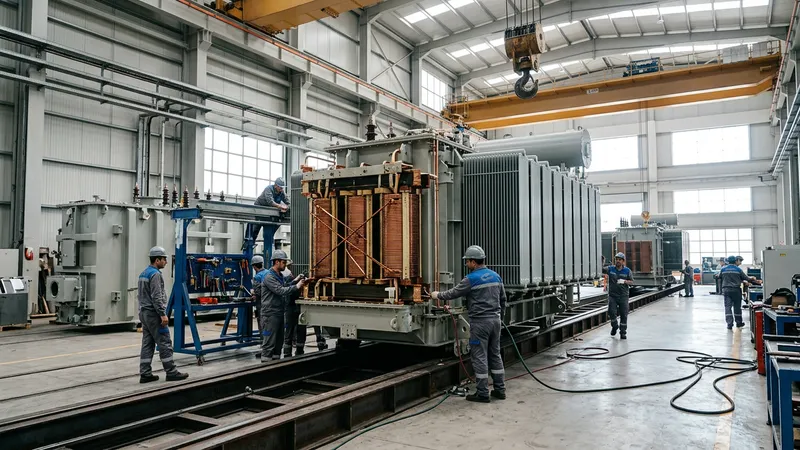
Hitachi Energy has opened a $70 million facility in Dilovası, Turkey, and tied further investment to supportive conditions, giving Washington another marker to track in the contest over energy-equipment supply chains. Alfredo Parres, a senior vice president at the company, said Turkey holds a key place in Hitachi Energy’s global supply network, according to the company remarks summarized in the source material.
The statement matters in Washington because grid equipment has moved from a narrow utility concern into a foreign-policy issue. The White House, State Department, Pentagon and Congress now treat power infrastructure, industrial capacity and sanctions compliance as connected questions, especially where NATO allies sit near Russian, European and Middle Eastern energy routes.
Hitachi Energy’s Dilovası project sits in one of Turkey’s main industrial corridors, near Istanbul and the Marmara region’s ports, factories and transport links. The company said the facility represents a roughly $70 million investment; the source material did not specify the plant’s full product mix, production capacity or export destinations.
For Ankara, foreign investment in energy technology supports a broader industrial goal: moving Turkey beyond its role as an energy transit country and deeper into higher-value manufacturing. Turkey already occupies a geographic hinge position between Europe, the Caucasus, the Black Sea and the Middle East, which gives energy infrastructure decisions there a strategic weight beyond the Turkish market itself.
Hitachi Energy
For Washington, that geography is both useful and complicated. Turkey is a NATO ally, hosts critical allied military infrastructure and remains central to Black Sea diplomacy, but U.S.-Turkey relations have also been strained by sanctions disputes, defense procurement fights and differing approaches to Russia, Syria and regional energy politics.
Grid supply chains are now part of that wider relationship. Modern power systems require transformers, switchgear, high-voltage equipment, digital controls and service networks that can be sourced reliably and maintained during crises. When a major supplier expands in Turkey, U.S. officials will read the move not only as a corporate investment but also as a data point about where allied industrial capacity is being built.
The timing gives the announcement extra policy relevance. Washington and European capitals are trying to strengthen energy resilience after Russia’s full-scale invasion of Ukraine exposed the vulnerability of fuel supplies, power networks and cross-border infrastructure. A Turkish manufacturing base that can serve Europe, the Middle East or Central Asia could fit that agenda if it meets allied expectations on transparency, export controls and sanctions compliance.
The conditional phrasing from Hitachi Energy is therefore important. Parres said investment would continue if conditions are supportive, according to the source summary. That leaves the key question open: whether Turkey’s regulatory, financial and geopolitical environment will remain attractive enough for a multinational energy-equipment company to commit more capital.
In Washington terms, three sets of actors will care. The White House and National Security Council will look at resilience and alliance alignment. The State Department will focus on Turkey’s regional positioning and sanctions behavior. Congress may view the same investment through a more skeptical lens, especially if lawmakers see Turkish policy as drifting away from U.S. priorities.
The Pentagon has a narrower but related interest. Military planners care about the reliability of allied infrastructure, including ports, bases, power systems and logistics networks. Energy-equipment manufacturing is not a defense program, but resilient civilian infrastructure can affect how allies support operations during a crisis.
The business question is more direct. If Hitachi Energy can use Turkey as a competitive production and export base, the Dilovası facility could strengthen the company’s regional footprint. If policy friction, currency volatility, permitting delays or sanctions exposure complicate operations, the $70 million investment could remain a contained project rather than the start of a larger Turkish buildout.
The sector impact would also depend on follow-through. A successful expansion could pull suppliers, skilled labor and service providers toward Turkey’s grid-equipment ecosystem. A stalled path would reinforce the caution already common among multinationals that like Turkey’s location and workforce but price in regulatory and geopolitical risk.
The global macro link is indirect but real. Grid bottlenecks can slow electrification, industrial investment and energy-transition projects, while diversified equipment supply can reduce dependence on a small number of manufacturing hubs. Turkey’s role will matter most if its factories can supply allied markets at scale and under rules acceptable to U.S. and European policymakers.
There are two plausible paths from here. If Turkey keeps investment conditions stable and Hitachi Energy announces additional capacity or project milestones, Washington is likely to treat the country as a more credible partner in allied energy resilience; Hitachi Energy would gain a stronger regional platform, and competitors could face pressure to deepen their own Turkish supply chains.
If the opposite happens, the signal changes. If regulatory hurdles, financing pressure or sanctions-related concerns slow the facility’s role in global supply chains, Washington will have less reason to fold Turkish manufacturing into energy-security planning; Hitachi Energy would likely limit exposure, and the wider sector would keep treating Turkey as a useful but politically complicated base.
The falsifiable test is whether, by December 26, 2026, Hitachi Energy announces a concrete follow-on Turkish project, Turkish regulators grant next-phase approvals, or U.S. or EU officials explicitly link Turkish energy-equipment manufacturing to grid resilience or sanctions-compliance goals. If one of those occurs, the Dilovası investment will look like the start of a broader supply-chain shift; if none occurs, or if policy barriers emerge, it will look more like a discrete corporate bet than a Washington-relevant realignment.