Li Auto’s Changzhou EV model sharpens Washington’s China supply-chain test
Li Auto’s family-focused EV strategy highlights China’s auto challenge. Will the U.S. respond with tougher sourcing rules, new incentives, or the status quo?
Lauren Collins ·
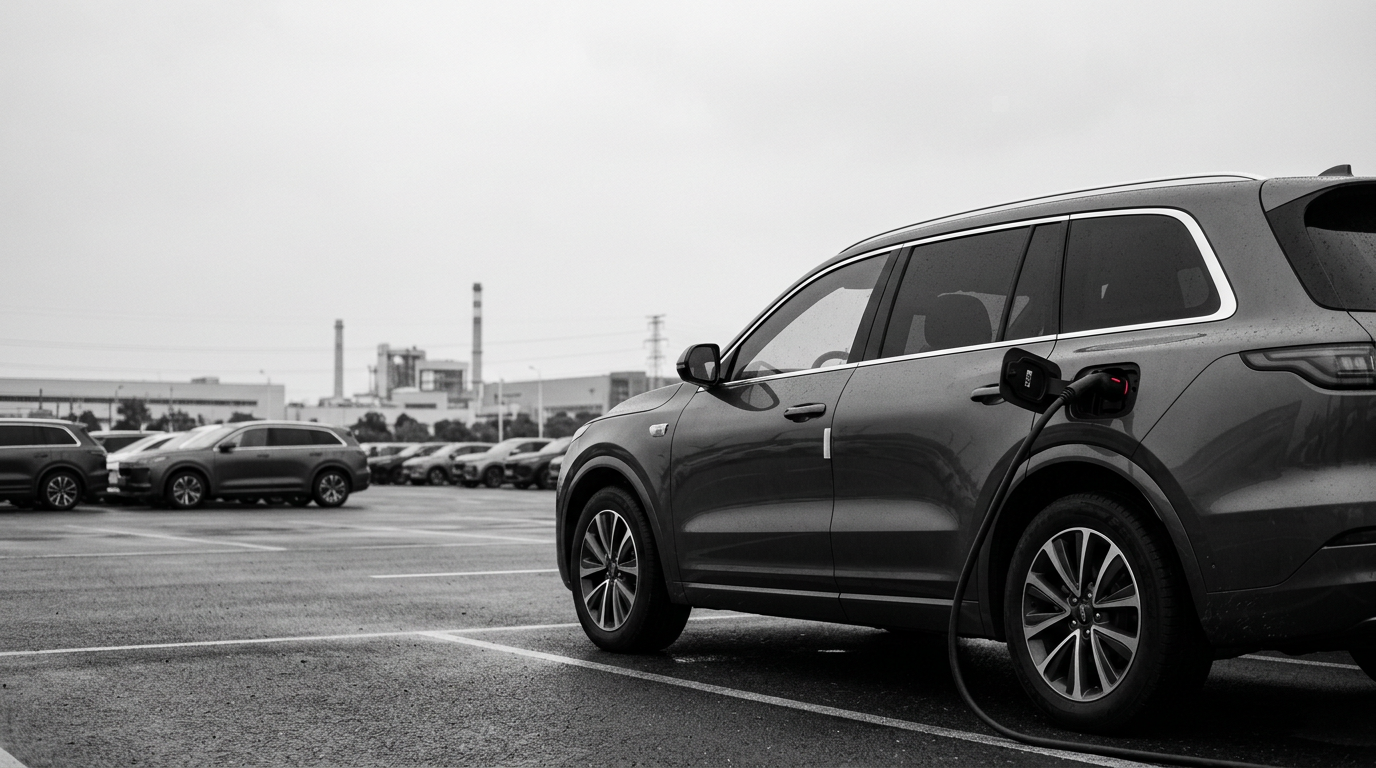
Li Auto’s Changzhou EV model sharpens Washington’s China supply-chain test
Washington’s China technology debate gained a new benchmark on September 20 as Li Auto’s Changzhou base drew attention to a profitable Chinese EV model built around automation, family buyers and extended-range technology. The company’s approach matters in Washington because it sits at the crossing point of three policy fights: electric-vehicle subsidies, battery supply chains and the future exposure of U.S. automakers to Chinese competition.
Li Auto was founded in 2015 by Li Xiang, first under the name Chehejia, or roughly Car and Home, according to a recent account of its Changzhou flagship. The company has leaned into that phrase as a business model, designing vehicles less as technology statements than as rolling family spaces with screens, comfort features and range management aimed at parents making daily trips as well as longer drives.
The Washington relevance is not that Li Auto is about to flood U.S. roads. Chinese automakers remain constrained by tariffs, political scrutiny and a subsidy system that favors North American production and vetted supply chains. The more immediate issue is that Li Auto shows how China’s EV sector is competing on production discipline, not only price.
Changzhou puts scale into view
The Changzhou site described in the account is heavy on automation: mechanical arms weld, lift and assemble while workers monitor screens and production readouts. That matters to policymakers because factory productivity is one channel through which Chinese automakers can lower unit costs, preserve margins and move faster through model cycles.
Li Auto’s distinguishing technology is the extended-range electric vehicle, or EREV. In plain terms, an EREV runs primarily as an electric vehicle but carries a small gasoline engine that acts as a generator when the battery needs support. That design reduces range anxiety for families that want electric driving without relying fully on public charging.
For Washington, EREVs complicate a debate often framed as battery EVs versus gasoline cars. If consumers view range and charging access as the weak points of full electrification, a profitable EREV maker gives China a bridge technology that can win buyers before charging networks mature. That is a commercial argument with policy consequences.
Li Auto also matters because the company has been described as one of the few Chinese EV brands to post genuine profit for three straight years. Without audited figures in the supplied material, that claim should be treated as a reported track record rather than an independently verified financial finding. Still, the allegation of sustained profitability is precisely what makes the company more relevant to U.S. officials than a loss-making startup chasing volume.
Washington sees a supply-chain problem
The White House looks at companies such as Li Auto through the lens of industrial strategy. Its concern is not only who sells the finished car, but who controls batteries, software, minerals, refining and manufacturing equipment. EVs are consumer products, but they also sit inside a strategic supply chain that Washington now treats as part of economic security.
The State Department views the same issue through alliances. If Chinese automakers gain share in Europe, Southeast Asia or Latin America, U.S. diplomats have to manage a world in which allies and partners buy Chinese clean-tech products while Washington pushes them to reduce strategic dependence on Beijing. That tension already shapes conversations around batteries, solar equipment and critical minerals.
The Pentagon’s interest is narrower but still important. Defense planners worry about supply chains that overlap with military needs, including advanced batteries, power electronics and certain mineral inputs. A civilian EV supply chain can become a national-security concern when the same materials or manufacturing capabilities matter for drones, communications systems or military logistics.
Congress adds another pressure point. Lawmakers have tools that the executive branch does not always control directly: tax-credit eligibility, procurement limits, tariff legislation and oversight of federal agencies. If Li Auto and its peers continue to show that Chinese EV makers can combine scale with profitability, congressional pressure for tougher sourcing rules is likely to grow.
Automakers face the benchmark
For U.S. automakers, the Changzhou lesson is uncomfortable. Li Auto’s model suggests that the competition is not confined to compact, low-cost EVs. A company that builds family-oriented vehicles with range-extending technology is closer to the core of the U.S. market, where households buy SUVs and crossovers for space, comfort and road-trip flexibility.
That does not mean Li Auto can easily enter the United States. Tariffs, dealership rules, safety approvals, data-security reviews and political opposition would all shape any market path. But Washington does not need direct market entry for the competitive pressure to matter. Chinese pricing, technology and production speed can influence global suppliers, allied markets and the export strategies of U.S. carmakers.
The industry effect would run through three mechanisms. First, suppliers may orient more engineering capacity toward Chinese platforms if those platforms scale faster. Second, allied governments may face pressure to accept cheaper Chinese EVs even while coordinating with Washington on security concerns. Third, U.S. automakers may have to defend margins at home while competing with Chinese vehicles abroad.
The macro channel is slower but broader. If Chinese EV makers push down global vehicle prices, consumers in importing countries could benefit while incumbent manufacturers face margin pressure. If Washington and its allies respond with tighter barriers, the clean-vehicle market could split into regional blocs, raising costs and slowing standardization.
By December 19, 2026, the clearest test is whether Washington turns the China EV concern into a concrete policy move: tighter battery-material sourcing rules, new incentives for domestic refining and manufacturing, or formal restrictions on Chinese EV technology in sensitive supply chains. If that happens, the Li Auto benchmark will look less like a car-company story and more like evidence shaping U.S. industrial policy; global trade would tilt further toward blocs, Li Auto would face a harder U.S. path, and the wider auto sector would accelerate regional supply-chain duplication. If policy stays largely unchanged, the thesis weakens: the macro effect would remain mostly outside the U.S., Li Auto would still matter as a China and export-market competitor, and U.S. automakers would get more time before Washington forces a sharper strategic choice.