Washington tests Gaza diplomacy after UN walkout over Netanyahu speech
A reported UN General Assembly protest against Benjamin Netanyahu has sharpened the Trump administration’s balancing act on Gaza: backing Israel’s security…
Lauren Collins ·
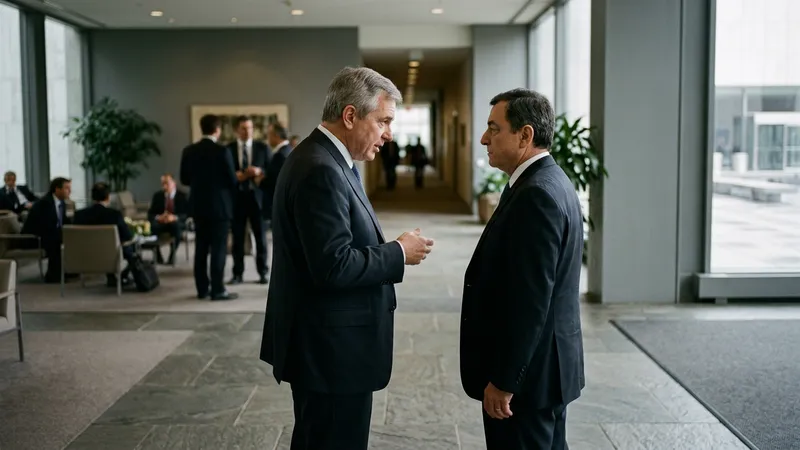
Washington tests Gaza diplomacy after UN walkout over Netanyahu speech
Washington entered September 27, 2026, with a familiar Gaza problem in a more visible setting: a reported walkout by representatives of roughly 70 countries during Israeli Prime Minister Benjamin Netanyahu’s UN General Assembly speech. For the Trump administration, the episode puts new pressure on a two-track posture that pairs US security guarantees for Israel with calls for humanitarian relief and regional diplomacy.
Israeli Prime Minister Benjamin
The reported protest, described in a Turkish account but not independently confirmed in the material provided, included Turkey, Saudi Arabia, Iran, Egypt, Jordan, Qatar, Indonesia and Pakistan. The same account said representatives of the United Arab Emirates, Bahrain, Azerbaijan, Kazakhstan, Senegal and Albania did not join the protest, a split that matters to Washington because several of those governments are part of the diplomatic map the US would need for any Gaza pause, reconstruction channel or wider regional bargain.
UN General Assembly walkouts are symbolic, but they are not empty theater. Diplomats use the chamber to show where coalitions are forming, where they are fraying and which governments want to register opposition without breaking formal ties. In this case, the reported departures during Netanyahu’s remarks turned Gaza from a policy dispute into a visual test of Israel’s international standing.
The US position is more constrained than that of most countries in the room. The White House, State Department, Pentagon and National Security Council each have different equities: alliance management, humanitarian access, military support, regional deterrence and domestic political risk. Congress adds another layer because Israel-related funding, weapons transfers and oversight conditions can become bargaining points during budget fights.
That is why Washington’s Gaza diplomacy often runs
That is why Washington’s Gaza diplomacy often runs on two tracks. Publicly, US officials try to defend Israel’s right to security and respond to pressure over civilian harm. Privately, they need Arab and Muslim-majority partners to keep humanitarian corridors open, mediate with Palestinian factions, manage postwar planning and prevent the conflict from spreading into a wider regional crisis.
The reported split among Muslim-majority states is important because Washington does not deal with a single regional bloc. Qatar has often been central to hostage and mediation channels. Egypt and Jordan are directly exposed to border and refugee pressures. Saudi Arabia’s relationship with Israel remains tied to broader security and normalization calculations. The UAE and Bahrain already have formal ties with Israel through earlier normalization agreements, making their diplomatic signals different from countries with no such relationship.
For the Pentagon, the Gaza debate also sits inside a wider deterrence problem. US forces and partners in the region operate in an environment shaped by Iran, militia networks, Red Sea security risks and the possibility that a local escalation can force American military decisions. A UN walkout does not change those facts, but it can change the political room in which US officials explain them.
The State Department’s challenge is narrower and more immediate. If Washington wants a humanitarian pause, aid surge or diplomatic process with regional buy-in, it needs governments that can publicly criticize Israel while still speaking with US officials behind closed doors. The reported decision by some countries to leave the chamber and others to remain shows the range of positions Washington has to manage.
The domestic US audience matters as well. Members of Congress who want stronger support for Israel can cite the UN episode as evidence that Israel faces diplomatic isolation. Lawmakers pressing for conditions on aid can point to the same scene as proof that US policy is losing international support over Gaza. The same facts feed opposite arguments on Capitol Hill.
President Trump’s team therefore has limited space for rhetorical drift.
If the White House leans too heavily into condemnation, it risks a fight with pro-Israel lawmakers and parts of the US security establishment. If it focuses only on Israel’s security, it risks losing cooperation from regional partners that Washington needs for humanitarian access and post-conflict planning.
The global macro effect is indirect but real. Gaza diplomacy touches shipping risk, energy-market nerves, defense spending priorities and investor assessments of Middle East stability. The mechanism is not the UN speech itself; it is whether the spectacle hardens positions among states that control mediation channels, airspace, ports, aid routes or security cooperation.
For Israel, the immediate company-like analogue is sovereign operating room: diplomatic bandwidth, military resupply, legal exposure and investor confidence. A larger protest bloc at the UN can raise the political cost of the war without forcing a near-term policy change. The risk for Netanyahu is that visible isolation narrows the set of governments willing to help manage the day after in Gaza.
For the broader defense and security sector, the signal cuts two ways. Continued US backing for Israel supports demand for air defense, precision munitions, surveillance and replenishment. A more fractured diplomatic environment can also complicate export approvals, end-use monitoring debates and congressional scrutiny of weapons transfers.
The clearest test is whether the White House or State Department, by December 26, 2026, formally describes Gaza policy as a linked package: security support for Israel, a defined humanitarian pause or aid mechanism, and named consultations with Gulf and regional partners. If that happens, Washington’s two-track approach will have survived the UNGA spectacle and given Congress a policy frame to debate rather than a vacuum to fill.
If the administration shifts to one-sided condemnation, or if White House and State Department messaging splits in public, the reported walkout will look less like a passing diplomatic image and more like a marker of reduced US leverage over the next phase of Gaza diplomacy.