Gold Prices Stabilize Near $4,180 Amid Rate Hike Uncertainty
Gold prices stabilized around $4,180 after a seven-week low, driven by adjusted rate hike expectations despite a firm dollar and high Treasury yields.
Ayla Demirhan ·
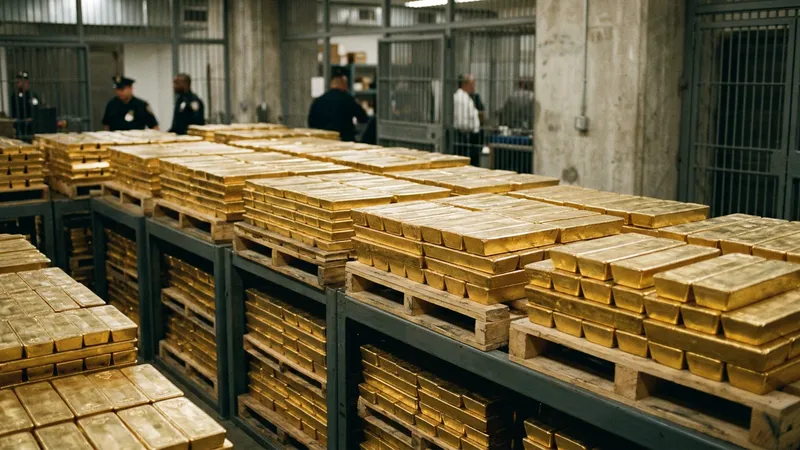
Gold prices recovered Tuesday, stabilizing around the $4,165-$4,185 range after touching a seven-week low in the prior session. This rebound occurred despite a firm U.S. dollar and 10-year Treasury yields holding above 5%, which typically pressure the rate-sensitive metal.
The immediate recovery follows a rejection of the $4,095-$4,115 lower price area, signaling a responsive bounce within a broader bearish trend. Traders adjusted expectations for an October rate hike after New York Fed President John Williams stated no immediate urgency existed for another increase.
Fed Policy Shapes Gold's Trajectory New York Fed President The Federal Reserve previously raised its target range by 25 basis points to 3.75%-4.00% on September 16. This policy move, coupled with ongoing inflation and employment data, continues to influence yield repricing and gold’s valuation. Current price action suggests market participants assess whether gold can establish sustained acceptance above the $4,165-$4,185 level. This area proves crucial for determining if the recent recovery can evolve into a more significant upward movement. Key Price Levels Define Market Direction The $4,165-$4,185 range represents gold’s immediate short-term value test. A sustained presence above this level would signal stronger auction support for the recovery, potentially leading to further gains.
Above the current value, the $4,220-$4,245 range stands as the next significant auction reference point. This area will serve as an acceptance test, rather than an automatic reversal, for any continued upward price migration.
Conversely, the $4,095-$4,115 area remains a critical lower rejection zone. A failure to maintain the reclaimed $4,165-$4,185 region, followed by a return and acceptance below $4,140, would weaken the recovery thesis, suggesting the market seeks lower value.
Macroeconomic Factors Drive Future Scenarios The interplay between Federal Reserve policy, U.S. dollar strength, and Treasury yields continues to exert significant influence on gold prices. If the Fed maintains its current interest rate stance, avoiding further immediate hikes, gold could find more stable ground. A scenario where gold builds acceptance above $4,165-$4,185 could see it rotate towards the $4,220-$4,245 level. This would indicate a shift in market sentiment, potentially driven by easing rate hike concerns or increased demand for safe-haven assets. However, if the broader bearish structure reasserts control, perhaps due to persistent dollar strength or renewed hawkish signals from the Fed, gold could lose its current footing. A move back towards and acceptance within the $4,095-$4,115 range would signal a failed recovery and a search for lower price discovery. Outlook Hinges on Price Acceptance Immediate market focus remains on gold’s ability to maintain acceptance above $4,165-$4,185. The broader H2 structure suggests a bearish bias, but the current responsive recovery offers a potential counter-narrative.
The key question is whether buyers can sustain this reclaimed region long enough to challenge higher resistance levels, or if sellers will ultimately reject the advance, pushing prices back towards recent lows.