China exports draw G20 pressure as local demand weakens
China exports drew G20 scrutiny after the US said all but one finance-minister attendee backed action on cheap shipments.
Mei Lin ·
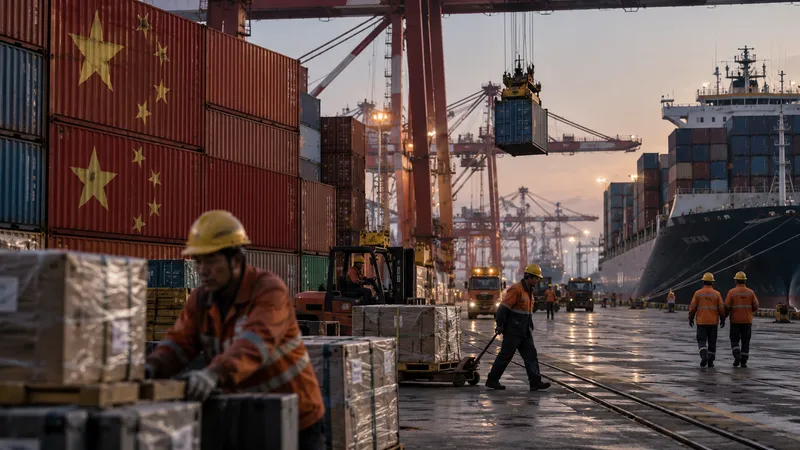
China exports drew G20 scrutiny after the US said all but one finance delegations backed action, exposing tension over weak domestic demand.
The latest data pointed to a split in China’s economy: factories are finding buyers abroad while households at home are buying less. Industrial-profit growth slowed as manufacturers relied more heavily on foreign demand, according to the data.
That mix matters for Beijing’s growth model. Strong shipments can support factory output and employment, but weaker consumption leaves companies more exposed to political resistance in the markets where they sell.
Export strength meets weaker households
The figures showed manufacturers leaning on overseas orders at a time when domestic purchases were falling. The source did not provide a profit-growth rate, export value, or retail-sales figure, so the scale of the shift cannot be sized from the data alone.
The pattern still sharpens a familiar policy problem for China. If producers expand sales abroad while local demand lags, the country’s growth relies more on external markets that can close through tariffs, investigations, or purchasing curbs.
Industrial profits are a useful signal for the health of Chinese producers. Slower profit growth suggests that rising volumes abroad may not be enough to offset weaker pricing power or softer demand at home.
G20 dispute centers on overcapacity
The trade tension surfaced at last month’s G20 meeting of finance ministers. The US said all but one attendee agreed that a "stream of cheap exports" needed a response, a formulation that pointed to China as the exception.
Beijing rejected that framing and accused other G20 members of "promoting protectionism." The exchange showed how China’s industrial strategy has moved from a domestic growth issue into a broader dispute over who absorbs surplus production.
Foreign governments argue that Chinese overcapacity is entering their markets and putting pressure on domestic producers. China’s position, as reflected in its response at the G20, is that restrictions on its exports amount to protectionist pressure rather than a neutral market correction.
Factory margins face policy risk
The immediate pressure falls on manufacturers that have used foreign sales to offset weaker consumption at home. If overseas buyers remain open, exporters can continue to support output, but profits may still slow if competition keeps prices low.
If trading partners move from complaints to barriers, the effect would run through three channels. Global trade flows would become less efficient, Chinese producers would lose part of the demand base supporting factory utilization, and rival manufacturers abroad would gain short-term relief while facing higher input or consumer costs.
A second path depends on Chinese household demand. If consumption strengthens, factories would have a larger domestic market and Beijing would face less pressure to rely on exports; if consumption stays weak, trade frictions are more likely to remain attached to industrial policy.
The main open question is whether China can rebalance demand without cutting into factory activity. Until that changes, the same data point can carry two messages: exports are cushioning producers, and the political cost of that cushion is rising abroad.