French navy, UK back Tagor interception amid sanctions push
The French navy intercepted the sanctioned tanker Tagor in the Atlantic, suspecting a false flag, and is escorting it for checks with UK support.
Lauren Collins ·
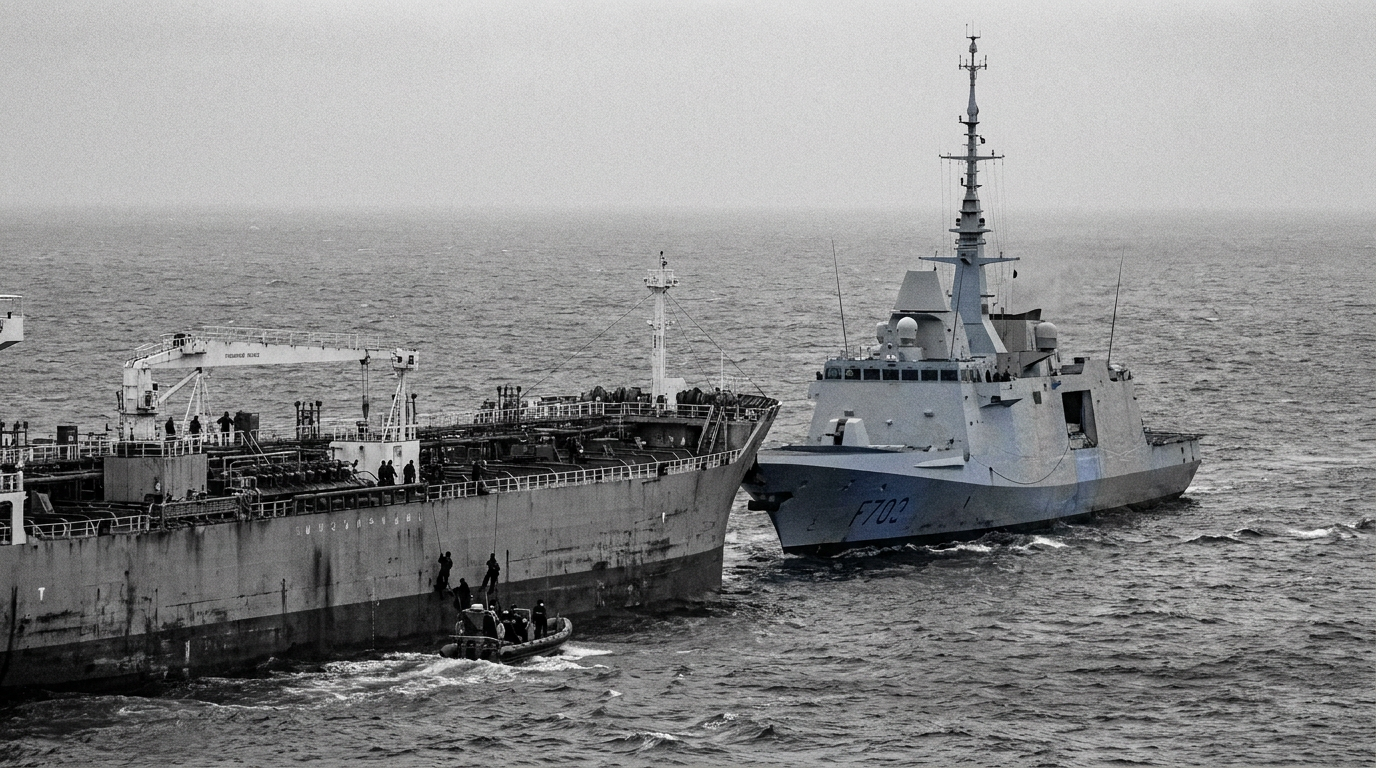
The French navy intercepted the sanctioned tanker Tagor in the Atlantic, suspecting a false flag, and is escorting it for checks with UK support.
Boarding at sea amid allied enforcement push
French authorities said the operation occurred Sunday morning in the Atlantic Ocean with assistance from partners, including the United Kingdom. The vessel, identified as Tagor and described as under international sanctions, was boarded and placed under naval escort for inspection.
Officials added that the ship had sailed from Murmansk, Russia, and is suspected of operating under a falsified flag. The maritime prefecture said further checks are underway to verify its registration, compliance, and cargo documentation.
Part of wider action against the shadow fleet
The interdiction fits a broader effort to police tankers used to move restricted Russian oil through opaque ownership, masking tactics, and questionable flagging. Since the European Union’s embargo on seaborne Russian crude took effect in late 2022, France and allies have intensified monitoring of high-risk ships transiting regional waters.
President Emmanuel Macron condemned attempts to bypass sanctions and maritime rules, framing enforcement as a tool to limit funding for Russia’s war in Ukraine. Paris has presented recent boardings as a signal that vessels suspected of concealing identity or violating safety and compliance norms will face scrutiny.
Recent interdictions underscore a pattern
France has mounted similar operations over the past year. In March, authorities halted a ship named Deyna in the Mediterranean, while earlier this year a vessel known as Grinch was also boarded on suspicion of flying an improper flag.
Last year, the tanker Boracay was stopped off France’s Atlantic coast after failing to provide adequate proof of nationality and flag. Each case highlighted a common enforcement trigger: irregularities in flag status or documentation, which raise red flags about sanctions compliance and safety.
Murmansk, a key port for Arctic exports, has featured in complex routing patterns used by sanctions-exposed oil flows. Officials say the checks on Tagor will determine whether the vessel’s flag state and paperwork align with international rules, and whether any breaches warrant detention or legal action.
Western partners, including the G7 and EU, maintain measures aimed at curbing Russian energy revenues, with price caps and restrictions on services such as insurance and shipping. Efforts to disrupt the so-called shadow fleet have focused on documentation audits, AIS monitoring, and coordinated at-sea inspections.
For shipowners, heightened enforcement raises legal and operational risks, particularly for vessels with opaque ownership structures or inadequate proof of registry. Traders and insurers are watching for potential delays, route adjustments, and additional compliance demands as checks intensify in the Atlantic and Mediterranean corridors.
French authorities have not disclosed the duration of Tagor’s escort or the timeline for completing the verification process. Further announcements on any administrative or judicial measures will depend on inspection findings and coordination with allied maritime agencies.