

Formula 1 adopts 2.1-litre V8 turbo engines for 2030 season
Formula 1 will transition to 2.1-litre turbocharged V8 engines in 2030 to reduce vehicle weight, lower development costs, and simplify technical regulations.
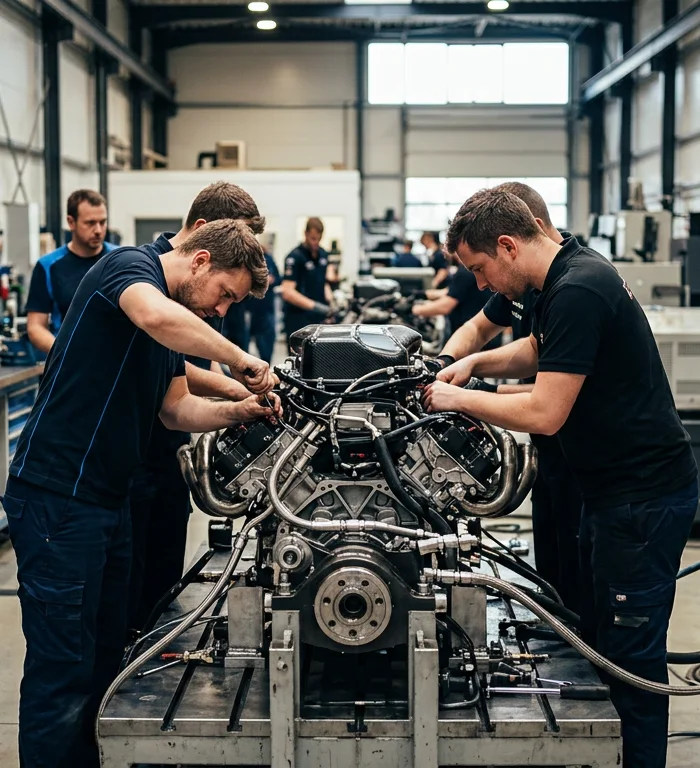
Formula 1 will shift to 2.1-litre turbocharged V8 engines paired with reduced hybrid systems in 2030 after the FIA, commercial rights holders, and power unit manufacturers reached unanimous agreement on Friday. The decision moves the sport's next regulatory cycle forward by one year from its previously scheduled 2031 introduction.
The technical blueprint replaces the current 1.6-litre V6 hybrid format with a 2.1-litre V8 and a 200kW electric component. Half of that electric output, or 100kW, will be reserved exclusively for overtaking modes, aiming to cut vehicle weight, curb mechanical complexity, and lower manufacturing expenses.
Simpler power units and lower costs
Governing officials and Formula 1 management accelerated the Governing officials and Formula 1 management accelerated the timeline following meetings of the F1 Commission and the power unit advisory committee. The governing body stated that the overriding objective is to deliver lighter, cheaper engines that enhance racing while producing an acoustic profile that satisfies fan expectations.
F1 Commission
The 2.1-litre architecture builds on the cylinder geometry of the current 1.6-litre units by adding two cylinders, a measure intended to help manufacturers control development expenses. The shift also decouples the championship from road-car hybridization trends that contributed to the weight and complexity of modern grand prix cars. Ratification pending at World Motor Sport Council The framework remains subject to formal ratification by the World Motor Sport Council before it is codified into sporting and technical regulations. Engine manufacturers must also finalize financial parameters, including cost-cap thresholds governing the design and production of the 2030 power units.
More stories
- Hull City 2–0 Brighton: When Resilience Beat Reputation
- Aleksey Batrakov Attracts Barcelona Transfer Interest
- Manchester United weigh Osimhen move, transfer report says
- Ravens 20, Chargers 23: A season at the edge
- Billie Jean King ties 39 majors to equal-pay fight
- Cavaliers list Jarrett Allen questionable for Hornets game
Latest news
- Eisenkot secures first coalition deal but lacks majority
- Trump prepares tariffs on China and other major exporters
- New-car buyers pay record average $50,087 in October
- Banks face ECB reserve debate over liquidity and profits
- Investors see Anthropic debut gains fade below $83 a share
- Iraq orders federal control over Kurdish-area oilfields
- Germans oppose Ukraine aid as poll shows support slipping
- Kim Jong-un receives 10 envoys after constitutional shift