

FIFA Opens Second Round of Bidding for 2030 World Cup Broadcast Rights
FIFA has entered a second round of bidding for 2030 World Cup media rights, targeting $2 billion in a contest between Netflix and Fox-Univision.
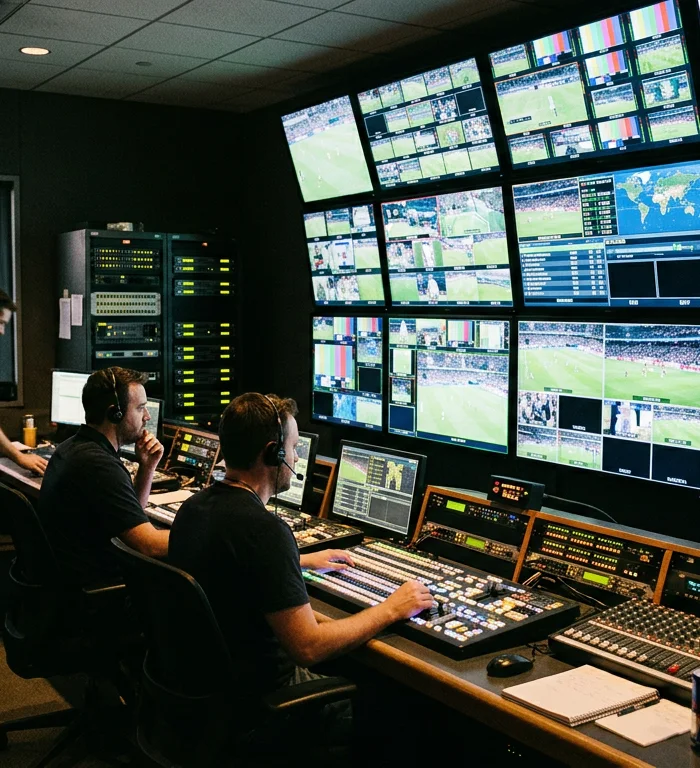
FIFA has moved to a second round of bidding for the 2030 World Cup United States media rights, seeking to maximize valuation by fostering competition between Netflix and a joint bid from Fox Sports and Univision. Netflix emerged as the frontrunner in the initial round, submitting the highest offer and surpassing bids from other streaming and traditional broadcast entities. The governing body is targeting a total valuation between $1.5 billion and $2 billion for the combined English and Spanish-language rights package.
This valuation target represents a significant increase over the combined $1.085 billion generated by the 2026 tournament rights. The bidding process saw limited participation from major US media conglomerates, with several prominent networks declining to submit proposals. Industry analysts suggest that the geographic dispersion of the 2030 tournament—spanning South America, Morocco, Spain, and Portugal—creates unfavorable time zones for US viewership, potentially impacting the perceived value of the rights.
While Netflix has secured rights for the 2027
While Netflix has secured rights for the 2027
While Netflix has secured rights for the 2027
Fox Sports, the incumbent broadcaster for recent men’s World Cup cycles, is prioritizing the retention of these rights to maintain its position in the sports broadcasting market. Their joint bid with Univision emphasizes the continued use of free-to-air broadcast television, contrasting with Netflix’s streaming-first model. While Netflix has secured rights for the 2027 and 2031 Women’s World Cups, the 2030 men’s tournament represents a critical test of its ability to compete with traditional broadcasters for major global sporting events.
Unlike in certain European markets, there are no regulatory requirements in the United States mandating that a streaming service sub-license matches to free-to-air providers. Consequently, the outcome of this tender will determine whether the 2030 World Cup remains accessible via traditional broadcast infrastructure or transitions to a subscription-based digital platform. FIFA has declined to comment on the ongoing negotiations, citing commercial sensitivities.
More stories
- Hull City 2–0 Brighton: When Resilience Beat Reputation
- Aleksey Batrakov Attracts Barcelona Transfer Interest
- Manchester United weigh Osimhen move, transfer report says
- Ravens 20, Chargers 23: A season at the edge
- Billie Jean King ties 39 majors to equal-pay fight
- Cavaliers list Jarrett Allen questionable for Hornets game
Latest news
- Eisenkot secures first coalition deal but lacks majority
- Trump prepares tariffs on China and other major exporters
- New-car buyers pay record average $50,087 in October
- Banks face ECB reserve debate over liquidity and profits
- Investors see Anthropic debut gains fade below $83 a share
- Iraq orders federal control over Kurdish-area oilfields
- Germans oppose Ukraine aid as poll shows support slipping
- Kim Jong-un receives 10 envoys after constitutional shift