Erdoğan’s Somali Spaceport Plan Tests Washington’s NATO Calculus
President Recep Tayyip Erdoğan says construction has begun on a Somali spaceport while Turkey pursues a lunar mission and talks with SpaceX, creating new…
Lauren Collins ·
Erdoğan’s Somali Spaceport Plan Tests Washington’s NATO Calculus
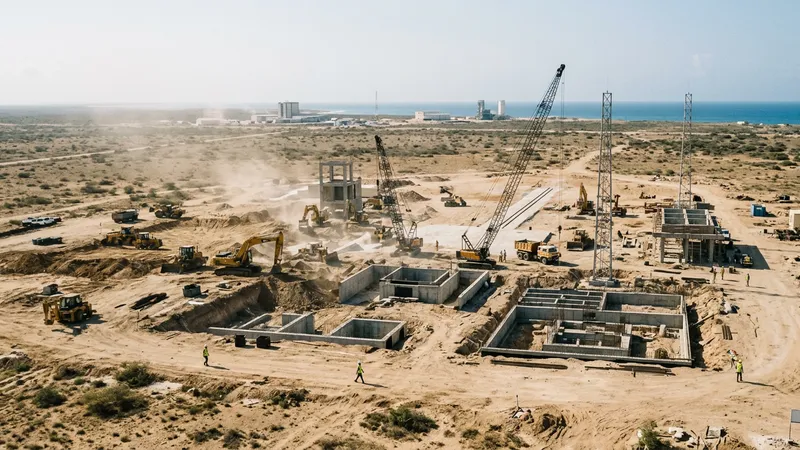
President Recep Tayyip Erdoğan said Turkey has begun construction on a spaceport in Somalia, pairing the announcement with a warning that weaponizing space would be "extremely wrong and dangerous." His remarks at the 77th International Astronautical Congress in Antalya place a more concrete Turkish space project before Washington, where officials will need to distinguish civilian launch ambitions from capabilities with potential military applications.
Erdoğan also said he met SpaceX executives and Erdoğan also said he met SpaceX executives and described Turkey’s space effort as part of a drive for independent access to space. The speech offered no public terms for any potential cooperation with the U.S. company, but the contact will draw attention because launch technology, propulsion systems and satellite infrastructure can serve civilian and defense purposes.
Turkey’s government has presented its space program as a national industrial project as well as a scientific one. Erdoğan said production, assembly and integration work had been completed for a lunar spacecraft weighing about 3.5 metric tons, developed under the country’s Moon Research Program. He said more than 80% of the vehicle’s content was domestic, a claim that has not been independently detailed in the account of his speech.
The Somali project marks a shift from spacecraft production toward launch infrastructure. Erdoğan said the facility would help Turkey build independent access to space and contribute to Africa’s space ecosystem. Turkey and Somalia publicly announced cooperation on the project in December 2025, when Industry and Technology Minister Mehmet Fatih Kacır said feasibility and design work had been completed and first-stage construction had started.
Turkey is using an allocated site in Somalia for the facility, according to the government’s account. The project’s public description centers on satellite launches, yet a launch site can also create broader technical capacity in rocketry, tracking and range operations. Erdoğan did not address prior claims that the site could be used for ballistic-missile testing.
For Washington, the central issue is not whether a country can pursue civilian space activity. It is whether the project develops systems, partnerships or operational practices that complicate security coordination with U.S. allies. Dual-use technology refers to equipment or expertise that can support both civilian missions and military programs; launch vehicles and missile systems can share engineering disciplines even when their intended uses differ.
The White House would set the broad strategic approach, while the State Department could weigh diplomatic and technology-transfer considerations. The Pentagon would assess whether new launch and tracking capacity affects regional security planning, and Congress could seek more detail on any U.S. commercial or government links to the program. None of those institutions has announced a public response in the material available from Erdoğan’s address.
SpaceX adds a separate layer. Erdoğan’s meeting with the company’s executives signals Turkish interest in engaging a leading U.S. launch provider, but it does not establish an agreement, a technology transfer or an operational role in Somalia. The practical questions would be what form any engagement takes, what technology is involved and whether it remains confined to commercial services.
By December 31, 2026, the observable test will be whether Turkish and Somali authorities publish construction milestones, technical specifications or governance arrangements for the spaceport, and whether U.S. officials or lawmakers address the project’s security implications.
If the facility proceeds with transparent civilian launch plans and clearly defined commercial cooperation, Washington may have room to treat it as an allied industrial initiative while seeking safeguards around sensitive technology. If disclosures remain limited while the project develops rocket-testing or military-linked functions, the issue could move from commercial engagement to a more difficult debate over dual-use risk, regional security and the limits of space cooperation.