Drone reveals 1-meter hole in Fukushima Unit 1 reactor
Fukushima Unit 1 drone footage confirms a 1-meter hole in the pressure vessel, sharpening TEPCO’s decades-long fuel-debris removal plans.
Jason Kwon ·
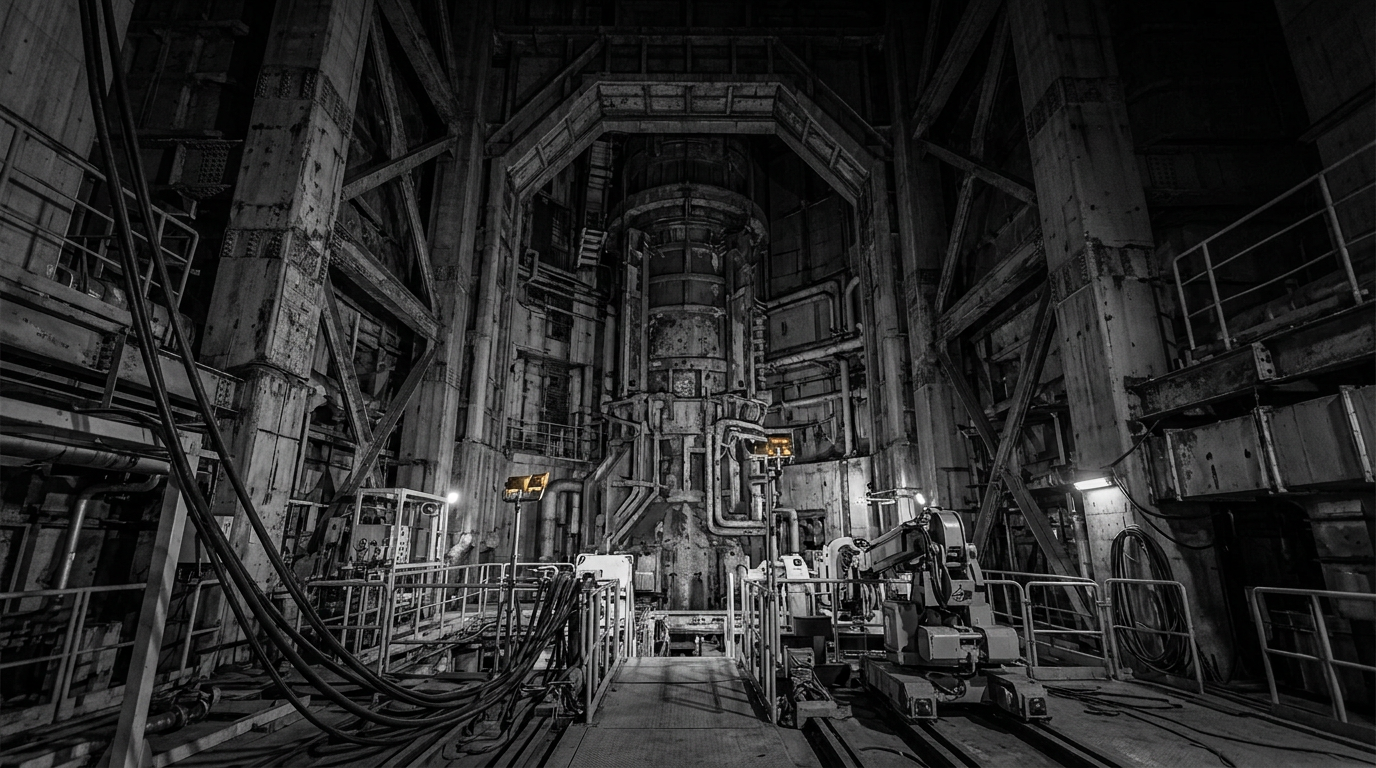
A drone survey inside Japan’s Fukushima Daiichi nuclear plant has provided the first visual confirmation of major internal damage in Reactor Unit 1, a key step for the site’s long-running decommissioning program.
Images captured during the mission show a hole about 1 meter across at the bottom of the reactor’s pressure vessel, a finding that indicates molten nuclear fuel likely broke through the structure during the 2011 accident.
What was found and who conducted the work
The drone used for the inspection was developed by Toshiba Energy Systems & Solutions. It was deployed inside Unit 1 over several days to collect visual information in areas where radiation levels prevent direct human access.
The footage confirmed the presence of a large opening in the pressure vessel’s lower section. The observation supports the assessment that melted fuel debris moved beyond its original location during the meltdown.
Why the discovery matters now
The new visuals provide Tokyo Electric Power Company Holdings (TEPCO), the plant’s operator, with more concrete evidence about the reactor’s internal condition. That information is central to planning how to retrieve melted fuel debris, one of the most technically difficult parts of decommissioning.
Fuel-debris removal is expected to take decades, and strategies depend on knowing where damaged structures and debris are located. The drone’s ability to operate in highly radioactive zones highlights how robotics and remote tools are becoming essential to progress at the site.
Background: the 2011 accident and the scale of the task
Fukushima Daiichi suffered severe damage after the 2011 earthquake and tsunami, with meltdowns occurring in three of the plant’s six reactors. Units 1, 2, and 3 were heavily damaged, and the accident released significant radiation.
Decommissioning is projected to cost trillions of yen, reflecting the complexity of dismantling damaged reactors and managing radioactive materials. Because many internal areas remain inaccessible, the project relies on specialized technologies to map conditions and reduce uncertainty before major removal work begins.
Risks, limits, and what remains unknown
While the drone images confirm a major breach, the available information does not specify the full distribution, quantity, or exact configuration of fuel debris inside Unit 1. Those unknowns can affect the choice of tools, timelines, and safety controls for retrieval operations.
The mission also underscores an ongoing constraint: extreme radiation limits inspection time and equipment durability, which can slow data collection and complicate planning. Further surveys and engineering assessments are likely needed to translate visuals into detailed removal steps.