

Disabled South African women face 14.6% partner sexual-violence rate
ISS linked prevention gaps to disability access barriers and childhood trauma, citing regional estimates of up to 38.2 million child witnesses.
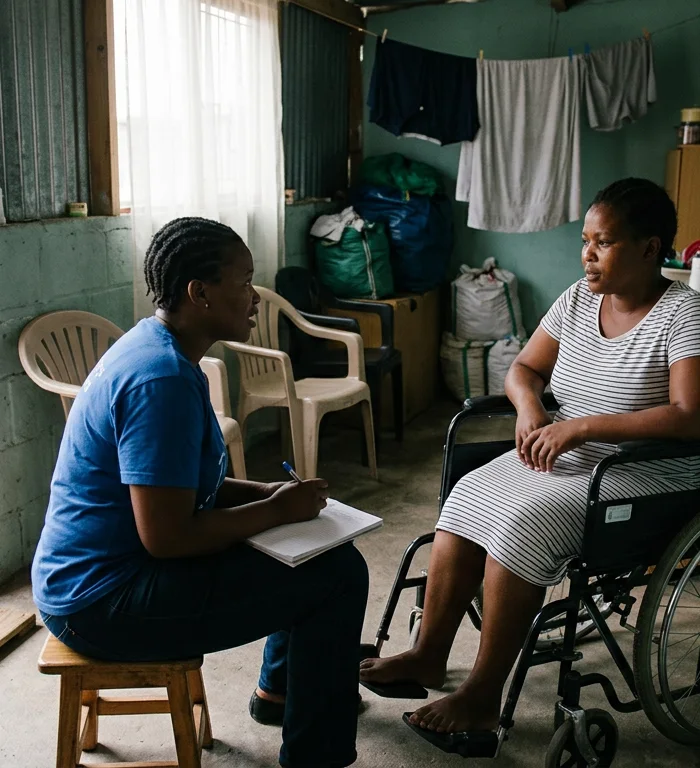
Disabled South African women had a reported lifetime partner sexual-violence rate of 14.6%, roughly twice the 7.2% rate for women without disabilities, Nompumelelo Zungu and Chandré Gould wrote in an ISS analysis on Oct. 30.
The Oct. 30 analysis said prevention efforts need to reach those at highest risk, including children; it cited estimates that 34.9 million to 38.2 million children in sub-Saharan Africa have witnessed domestic or intimate-partner violence.
The article, by HSRC senior research director Zungu and ISS senior research fellow Gould, argues that South Africa’s state and civil-society response should move beyond reaction after assaults to prevention. It comes as gender-based violence receives presidential attention in South Africa.
The authors used an Aug. 27 Khayelitsha case, reported as an alleged rape, to show how common safety advice can fail disabled women. According to the analysis, a 43-year-old wheelchair user was at home with her five-year-old son when four men from the area, ages 19 to 21, allegedly entered through a window and raped her.
The authors said policing, medical, social-service and community organisations need to account for disabled survivors’ specific barriers in reporting abuse and seeking justice. They also cited a pooled study across two sub-Saharan African countries that found lifetime sexual violence affected 19.8% of women with disabilities, compared with 11.7% of women without disabilities.
For children, the analysis treated witnessing violence as a harm requiring support, not a background detail. It said the 2024 HSRC gender-based violence study found women exposed to domestic violence as children were more likely to report victimisation, while men who were bullied or bullied others as children were more likely to report perpetrating violence as adults.
The authors cautioned that childhood exposure to violence does not mean every boy who experiences trauma will later perpetrate abuse. They said the evidence points to potential links that justify early care for children who see violence and prevention programmes involving adolescent boys and young men.
A recent systematic review cited in the analysis found younger children exposed to intimate-partner violence often show behavioural and cognitive difficulties, while older children more often experience depression, anxiety and post-traumatic stress disorder.
Source: Institute for Security Studies analysis via AllAfrica, Oct. 30, 2026
More stories
- Monrovia mayor-designate seeks $14.5m city budget
- Iran's attacks hit 25 tankers near Strait of Hormuz
- Russia strikes Ukraine as Odesa faces electricity strain
- Bahrain reports two injuries after Iranian aerial attacks
- Baltic responders fight Sparta II fire after drone strike
- Estonia to close 5 Russia road crossings for six months
- Israel faces UN warning over 70% Gaza deployment aim
- RSA Facts chatbot generates false R1,500 grant notice
- Cyberattacks expose millions of records in Japan and South Korea
- Singapore coroner rules 20-year-old bodybuilder's death accidental
Latest news
- Nvidia board gets Trump input on Jensen Huang return as CEO
- Rwanda faces budget strain from 85% electricity access push
- ICE arrests at Seattle airport draw protests and scrutiny
- AI doubts leave Asian stocks facing a new investment test
- EU rejects COP31 deal as fossil fuel divisions block pact
- Deal Sheet: Fortis shutdown costs over 400 jobs
- Germany to pay about $11 a month into child pension accounts
- Laura Brand curbs prison messages after YouTube dispute