Pakistan military spokesperson dismisses Indian claim as false flag
Pakistan’s military spokesman disputed an Indian army claim that it killed a suspect on Sept.
Mateo Fernandez ·
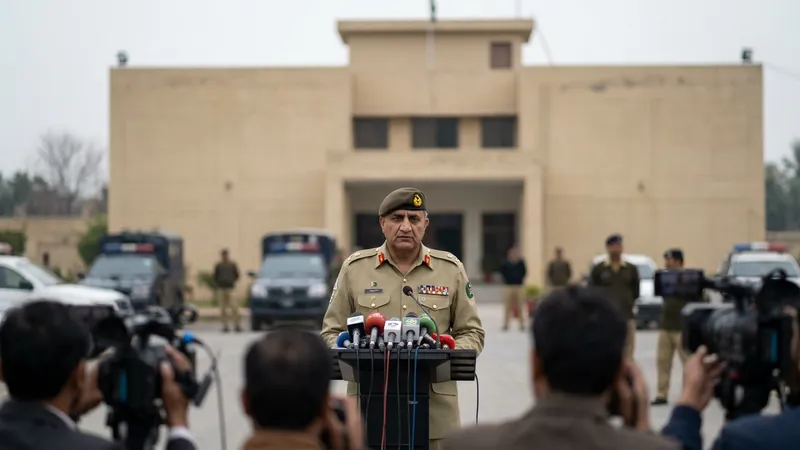
Pakistan's military has rejected claims by the Indian armed forces regarding a Sept. 29 security operation in Yousmarg, describing the incident as a staged "false-flag" event. Speaking at a press briefing on Thursday, Director General of Inter-Services Public Relations Lt. Gen. Ahmed Sharif Chaudhry directly challenged the account provided by Indian defense officials.
The dispute stems from statements issued by the Indian army's Chinar Corps, which claimed security forces had neutralized an individual identified as Mohammad Asif. Indian military officials asserted that the deceased was a former Pakistan Army serviceman with special forces experience and alleged he was involved in an attack in Pahalgam earlier in 2025.
Cross-Border Tensions Follow May Ceasefire Agreement
Dismissing the allegations, Pakistani military representatives characterized the operation as fabricated and stated that official documentation outlining their stance would be made public. Before Thursday's briefing, neither the Pakistani government nor its defense establishment had released a formal response. Observers indicate that the lack of an official written rebuttal before Oct. 8 could leave the allegation unresolved, serving as a lingering point of diplomatic friction.
This fresh dispute revives lingering hostilities from May 2025, when a four-day confrontation triggered by the Pahalgam incident concluded with a US-mediated ceasefire on May 10. The recent exchange underscores the ongoing information campaign and strategic rhetoric that continue to define relations between the two countries.
Surveillance and Regional Security Risks Escalate
Following the sharp accusations, both nuclear-armed neighbors are anticipated to increase border monitoring and intelligence activity along the Line of Control. The heightened tension poses a challenge to the fragile May ceasefire, increasing operational readiness among border troops and elevating concerns for local communities living along the frontier.
Beyond immediate military readiness, sustained cross-border friction threatens to undermine broader economic stability and investor sentiment across South Asia. While a structured diplomatic response before the October timeframe could allow third-party mediators to facilitate backchannel communications, historical patterns suggest such disputes typically transition into extended diplomatic standoffs rather than rapid resolutions.