Democrats Eye Senate Gains In 2026
Democrats eye 2026 Senate gains as Trump's approval dips, despite GOP financial and structural advantages in key races.
Lauren Collins ·
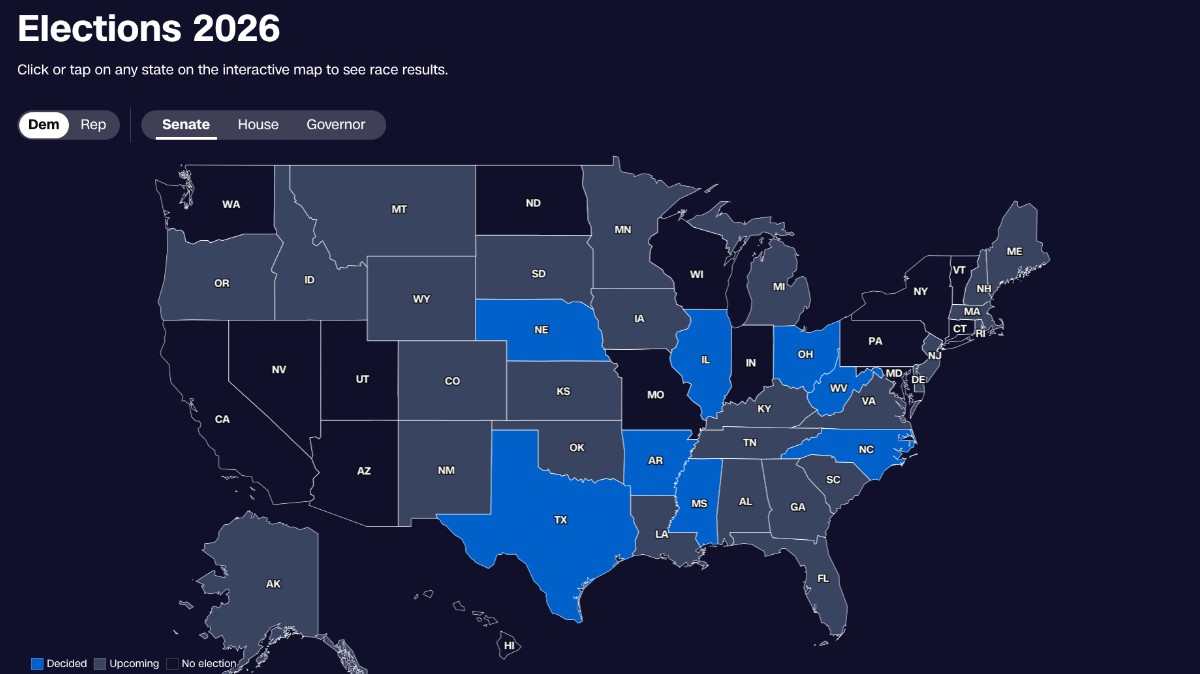
The battle for control of the U.S. Senate is rapidly intensifying ahead of the 2026 midterm elections, with Democrats seeing new opportunities to flip seats as economic concerns, rising inflation and political fallout from the Iran conflict reshape the national landscape.
According to a Washington Post analysis, Democratic strategists now believe reclaiming the Senate is within reach after months in which Republicans appeared strongly positioned to maintain control.
Democrats are targeting Republican-held seats in states including North Carolina, Maine, Ohio and Alaska, while also exploring longer-shot opportunities in Texas, Iowa and Mississippi.
At the same time, the party faces pressure to defend vulnerable Democratic-held seats in battleground states such as Georgia and Michigan.
Trump’s political troubles reshape map
Democratic optimism has grown partly because of declining approval ratings for President Donald Trump, whose administration has faced mounting criticism over inflation, gasoline prices and the ongoing Iran conflict.
Senate Minority Leader Chuck Schumer compared the current political environment to 2006, when Democrats regained control of Congress during President George W. Bush’s second term.
Republicans, however, insist they remain favored to keep the chamber.
Tim Scott, chairman of the National Republican Senatorial Committee, said Republicans could still expand their Senate majority if economic conditions improve before Election Day.
Key races already taking shape
Several Senate races are already emerging as national battlegrounds.
In North Carolina, former Democratic Governor Roy Cooper is challenging Republican Michael Whatley in one of the most competitive contests of the cycle.
In Georgia, Democratic Senator Jon Ossoff is defending his seat in a state Donald Trump narrowly carried in 2024. Republicans including Representatives Buddy Carter and Mike Collins are competing for the GOP nomination.
Meanwhile, Republicans are defending an open seat in Kentucky after longtime Senator Mitch McConnell announced he would not seek reelection.
Money remains major Republican advantage
Despite Democratic momentum, Republicans still maintain a large fundraising edge through allied super PACs and outside political groups.
The Senate Leadership Fund and other Republican organizations have accumulated hundreds of millions of dollars more than Democratic Senate groups, allowing Republicans to reserve early advertising and campaign infrastructure in battleground states.
Still, several Democratic candidates have individually outraised Republican rivals in competitive races, giving the party hope it can remain financially competitive.
Little room for error
Democrats must gain four seats to retake Senate control if Republicans hold the vice presidency after 2026. Political analysts say the path remains difficult because Democrats have almost no margin for error.
Internal Democratic primaries, especially in Michigan and other swing states, could also weaken the party before the general election.
Even so, strategists in both parties increasingly view the Senate map as far more competitive than it appeared at the beginning of the year.