Trump and Xi End Beijing Summit With Warm Words, Few Deals
Trump leaves Beijing after trade & Iran summit with Xi Jinping. Taiwan, tariffs & rivalry remain unresolved.
Lauren Collins ·
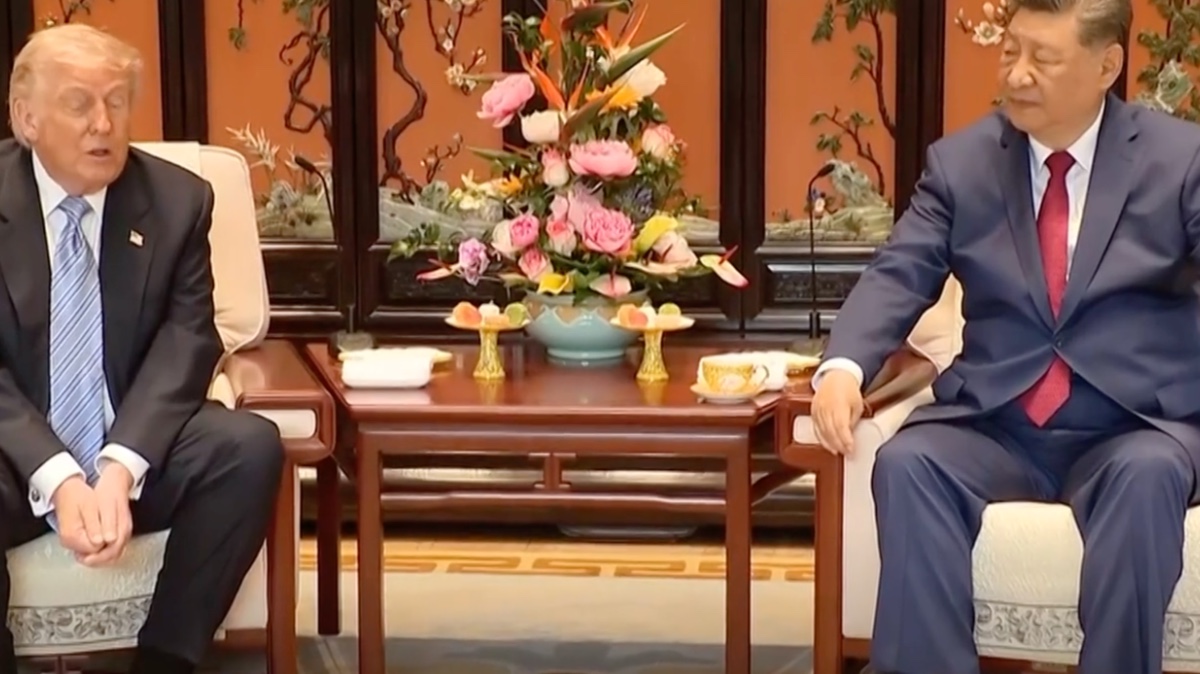
President Trump departed Beijing after a summit with Chinese leader Xi Jinping that softened the public tone between Washington and Beijing but delivered few clear changes to the world’s most consequential bilateral relationship. Trump told reporters the two governments had made “fantastic trade deals,” yet the public record offered little detail on enforceable terms, timing or concessions. China’s foreign ministry said the talks produced “a series of new common understandings,” while also leaving the substance of those understandings largely undefined. The result was a summit heavy on choreography and light on proof: enough to signal that both leaders want to manage tensions, not enough to show they have resolved them.
Taiwan Becomes the Fault Line
The clearest point of friction came from Xi, who used the talks to warn Trump that Taiwan remains the most sensitive issue in US-China relations. According to reports, Xi said Washington and Beijing could face “clashes and even conflicts” if the issue is handled badly, and he described Taiwan independence and cross-strait peace as irreconcilable. That language went beyond routine diplomatic complaint and placed the island at the center of the summit’s security stakes. Secretary of State Marco Rubio said US policy toward Taiwan remained unchanged, while warning that any Chinese move to take the island by force would be a serious error.
Iran Narrows the Room
Trump tried to present Iran as an area of overlap, saying both leaders wanted the war to end, Iran to remain without a nuclear weapon, and the Strait of Hormuz to stay open. Reports indicated that Trump said the two countries “feel very similar” about the conflict, but he offered no detailed path toward a breakthrough. China’s foreign ministry called for a ceasefire and for Hormuz to reopen quickly, while Beijing avoided taking ownership of Washington’s Iran problem. That mattered because the strait is central to global energy flows, and the crisis has given China room to portray itself as a stabilizing actor while the US carries the cost of escalation.
Trade was the other area where Trump described success without releasing a full ledger. Reports indicated that the main announced commercial item was Trump’s statement that China would buy 200 Boeing jets, while US Trade Representative Jamieson Greer said Washington expected China to buy US agricultural goods worth double-digit billions annually for three years. Those are meaningful figures if they become contracts and shipments, but the summit did not publicly resolve the deeper disputes over tariffs, market access, industrial policy, technology controls and rare earths. China’s prior use of critical minerals as leverage showed that the trade fight is no longer just about deficits or farm purchases; it is about control of inputs needed for defense, clean energy and advanced manufacturing.
A Peer-to-Peer Stage
The symbolism in Beijing served Xi as much as it served Trump. Trump called the meeting a “G-2,” a label that casts the United States and China as twin managers of global order, even though Beijing has traditionally avoided embracing that phrase too openly. Reports indicated that China’s side pushed a message of parity, with Xi presenting China as a rising power in a world undergoing a historic shift. That framing matters to US allies in Asia, especially Japan and Taiwan, because a Washington-Beijing relationship built around superpower management can raise fears that smaller partners become bargaining chips.
The summit also unfolded against a more difficult US strategic backdrop. A report, citing a confidential US intelligence assessment, said China is using the Iran war to gain advantage over Washington across military, economic, diplomatic and informational fronts. The assessment said the conflict has depleted US munitions, damaged American military hardware and facilities in the Middle East, and allowed Beijing to study how the US fights under pressure. The Pentagon rejected the idea that the global balance had shifted away from the United States, while China’s embassy said Beijing was focused on de-escalation rather than exploiting the crisis. Even with those denials, the report sharpened the summit’s main strategic question: whether Trump arrived in Beijing with enough leverage to turn warm words into concessions.
September Tests the Reset
The next test is whether the two governments turn summit language into visible action before any follow-up meeting in Washington. Trump said he invited Xi to the White House for September, but the immediate uncertainty is whether China confirms the trip and whether either side publishes specific agreements on trade, agriculture, aircraft, Iran or military communication. Taiwan will remain the hardest issue because Beijing treats it as sovereignty, Washington treats it as a security commitment, and Taipei has little reason to trust private understandings reached over its future. The summit reduced the risk of an immediate rupture, but it also showed that the US-China relationship is still being held together by personal diplomacy, tactical deals and unresolved danger.