Russia Expands Putin’s Authority to Send Troops Abroad
Russia’s State Duma adopted a law expanding Putin’s power to deploy troops abroad to protect Russian citizens facing foreign prosecution.
Lauren Collins ·
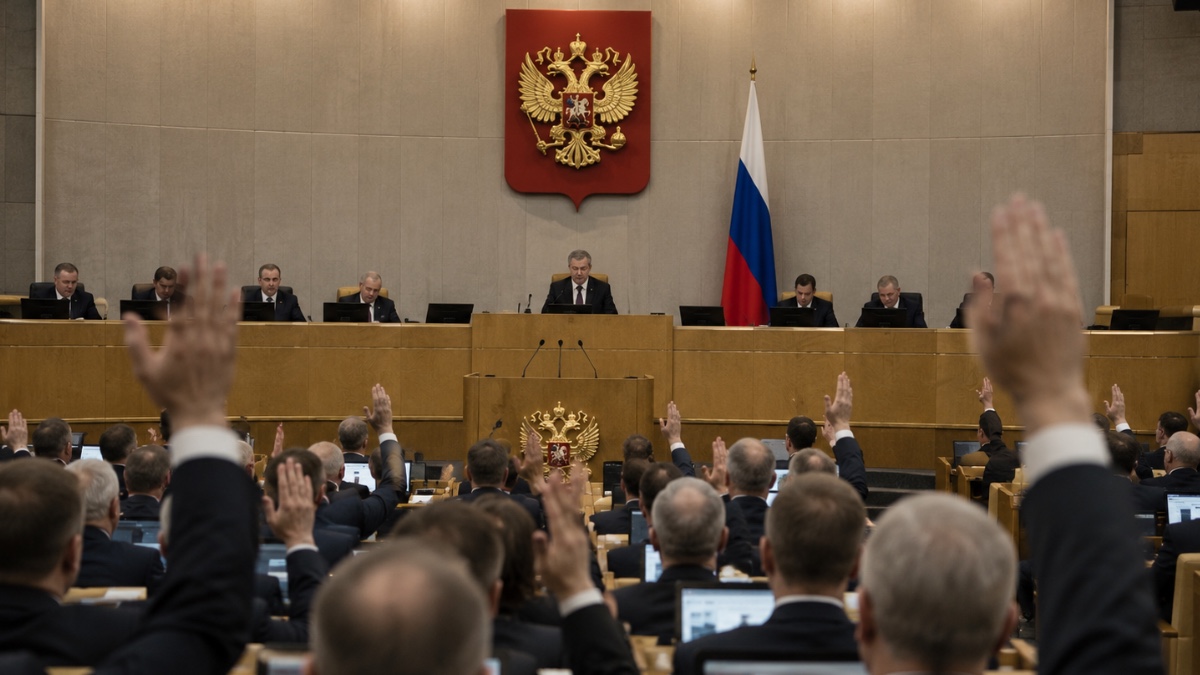
Russia’s State Duma has adopted legislation that gives President Vladimir Putin a broader domestic legal basis to use military force outside Russia when Moscow says its citizens are threatened by foreign legal action. The measure covers Russians who face arrest, detention, criminal cases or other proceedings by foreign courts or international judicial bodies whose jurisdiction Russia does not accept. The Duma’s site listed the May 13 adoption of a law intended to further protect Russian citizens abroad, after the chamber had approved the same proposal in a first reading on April 14. Once the process reaches Putin, the Kremlin leader has a signing window under Russia’s legislative procedure, making the measure less a debate in Moscow than a near-complete addition to the state’s war powers.
From March Draft to May Vote
The proposal was drafted by Russia’s Defense Ministry and published in the Duma’s legislative database on March 19, with amendments to two federal statutes: the law on defense and the law on Russian citizenship. Existing Russian law already permits overseas deployments in several situations, including attacks on Russian military units, defense of allied states, protection of citizens from armed assault and anti-piracy operations. The new language adds a different trigger: foreign or international judicial action against Russians, even where there is no immediate battlefield threat. That is why the bill matters procedurally; it turns legal disputes abroad into a potential national-security category controlled by the president.
The Donbas Precedent Lingers
For Ukraine and many European governments, the wording lands in familiar territory. Putin’s February 24, 2022, invasion speech framed Russia’s attack on Ukraine around the claimed need to protect people in Donbas, after Moscow had recognized the Russian-backed entities in Donetsk and Luhansk. Critics of the new law point to a longer Kremlin pattern: issuing or invoking Russian citizenship, then treating those citizens as a basis for intervention or pressure. Kyiv Post described similar logic in Georgia’s Abkhazia and South Ossetia before the 2008 war, in Crimea in 2014 and in occupied Donbas before Russia’s full-scale invasion.
Kyiv Sees Occupation Code
Kyiv’s response was blunt because the law arrives while Russia is still trying to dictate political, linguistic and religious terms to Ukraine as part of any settlement. Ukrainian officials have argued that Moscow’s demands over the Russian language and church structures are not narrow minority-rights issues, but tools for keeping leverage inside Ukraine’s domestic system. Carnegie’s analysis of Russia’s negotiating posture said Moscow wants the ability, as a would-be guarantor, to intervene if Kyiv fails to meet Russian demands on language, church, media, history and elections. In that light, the new law gives Ukrainian officials another reason to view Russia’s legal changes as preparation for coercion rather than protection.
Foreign Courts Become a Trigger
The timing also intersects with international attempts to prosecute Russian leaders over the war. In June 2025, Ukrainian President Volodymyr Zelenskyy approved plans with the Council of Europe to create a special tribunal for the crime of aggression against Ukraine, a charge existing courts have struggled to bring against Russian nationals. The Associated Press reported that the tribunal was designed to target senior Russian officials, while noting that sitting heads of state and certain top officials have immunity under international law. Russia does not extradite its own citizens, but the new law signals that Moscow may treat foreign warrants, detentions or tribunal activity as hostile acts rather than legal proceedings.
NATO’s Eastern Flank Tightens
The law will be read most closely in countries that already see Russia as a direct security threat, especially along NATO’s eastern edge. Dutch military intelligence warned in April that Russia could be able to start a regional conflict with NATO within a year after the end of major fighting in Ukraine, if conditions favored Moscow. Zelenskyy has warned that the Baltic states could become future targets if Russia is not stopped in Ukraine, though Estonia’s foreign minister said there was no evidence of a Russian military buildup for an attack on NATO or the Baltics. That split captures the strategic risk: Russia may not be ready for a direct NATO fight, but it can still use laws, passports, courts, drones, sabotage and political pressure to test the alliance’s tolerance for ambiguity.
The Legal Door Is Open
The central uncertainty is not whether Putin will sign the measure, but how Moscow will use it once it is available. The law could remain a warning aimed at foreign prosecutors, border authorities and governments handling sanctioned Russians or war-crimes cases. It could also become a ready-made justification for military pressure in places where Moscow claims Russian citizens are mistreated, especially if Europe’s defense buildup lags or U.S. policy toward NATO stays unpredictable. The practical test will come when a Russian citizen faces a high-profile arrest or prosecution abroad and the Kremlin must choose between diplomatic protest, hostage-style bargaining, covert pressure or open military signaling.