Iran Expands Hormuz Zone as War Costs Rise and LNG Ships Go Dark
Iran expands its Strait of Hormuz claim, raising risks for oil shipping, LNG exports, Gulf security and the wider US-Iran conflict.
Lauren Collins ·
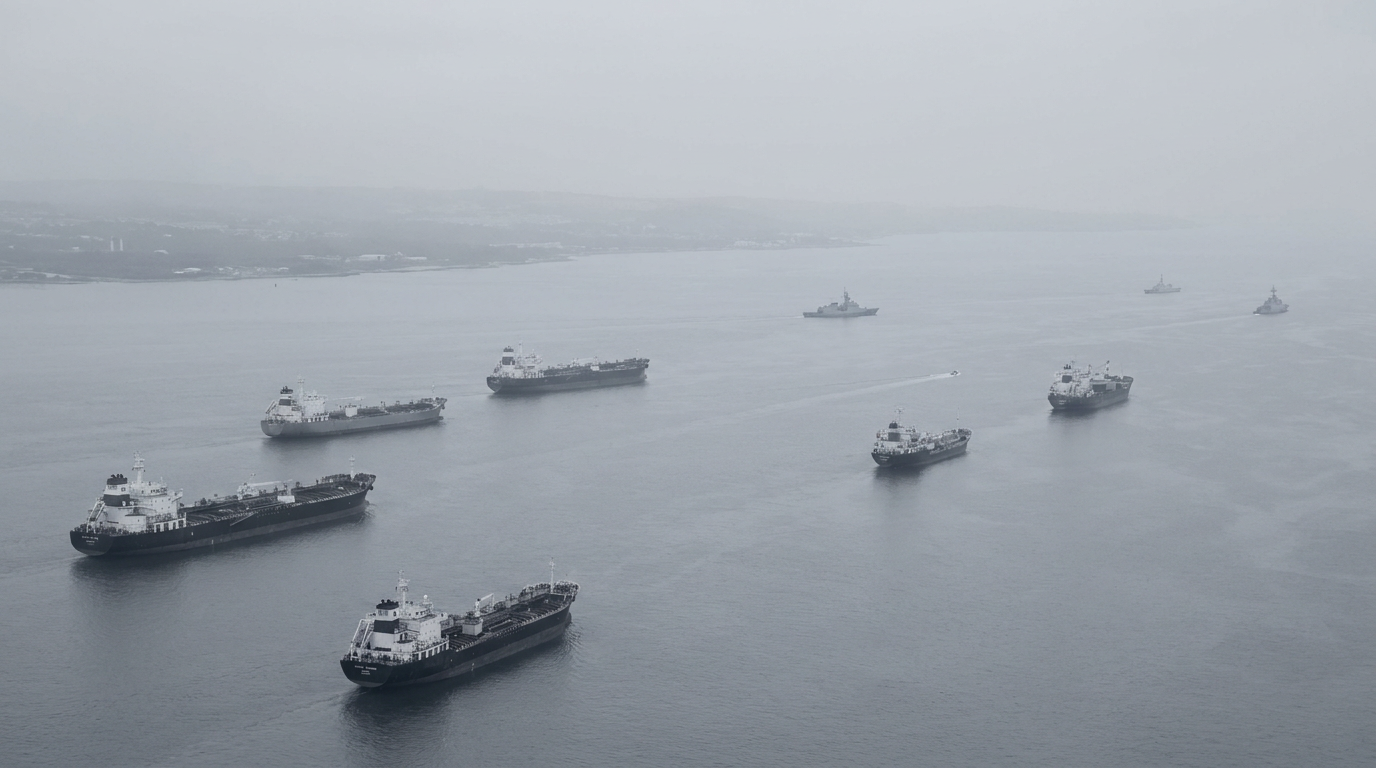
Iran is trying to turn the Strait of Hormuz from a narrow maritime chokepoint into a much larger zone of military leverage. Mohammad Akbarzadeh, an official in the Islamic Revolutionary Guard Corps navy, said Tehran now treats the waterway as extending across a broader stretch from Iran’s southeastern coast toward islands near the Gulf, rather than the smaller area traditionally associated with Hormuz and nearby islands. The shift matters because the strait was already under severe stress after Iranian attacks disrupted commercial shipping at the start of the conflict. By widening the area it says it can police, Iran is signaling that the fight over Hormuz is no longer just about passage through a channel, but about control over a regional operating space.
A 500-Kilometer Warning
The new Iranian framing gives Tehran a larger military vocabulary for threatening ships, ports and rival naval activity. Akbarzadeh described Hormuz as a broad operational area, and Iranian-linked reporting has put the expanded zone at roughly 500 kilometers. That is not the same as a widely accepted legal redrawing of the strait, but it is a clear strategic message: Iran wants adversaries and shipping companies to assume that risk now extends well beyond the tightest part of the passage. The practical effect is confusion, which can be almost as disruptive as a formal closure when shipowners, insurers and energy buyers are deciding whether to move cargo through the Gulf.
Oil’s Most Sensitive Corridor
Hormuz has outsize power because so much of the world’s energy trade depends on it. The US Energy Information Administration has described the strait as the world’s most important oil chokepoint, with flows in 2024 and early 2025 equal to more than a quarter of seaborne oil trade and about one-fifth of global petroleum liquids consumption. It also carried about one-fifth of global liquefied natural gas trade in 2024, much of it from Qatar. That makes Iran’s widened claim more than a regional military maneuver. It puts Asian importers, European gas buyers and global fuel markets inside the same risk equation.
Ships, Signals and Ras Laffan
The pressure is already changing behavior at sea. QatarEnergy has told vessels approaching Ras Laffan, the world’s largest LNG export hub, to switch off automatic identification signals in port waters and nearby anchorages, according to a company advisory reported by The Wall Street Journal. Turning off AIS can make ships harder to track publicly, but it can also add uncertainty for market participants trying to understand whether cargoes are moving safely. Ras Laffan’s role makes the order especially sensitive because Qatar is a central supplier of LNG to global markets. In a conflict where missiles, drones and maritime harassment have blurred the line between military and commercial targets, even routine port procedures now carry geopolitical weight.
Washington Counts the Cost
The US response is being shaped by both military risk and rising expense. Gen. Dan Caine, chairman of the Joint Chiefs of Staff, told lawmakers that Iran’s attacks on commercial vessels amounted to an attempt to use the world economy as leverage, while urging allies and partners to help deal with the maritime threat. A senior Pentagon official put the cost of the Iran war at about $29 billion, roughly $4 billion above the estimate given less than two weeks earlier. President Trump has argued that a blockade of Iranian ports is starving Tehran of revenue and said he is confident Iran can be prevented from obtaining a nuclear weapon. Those claims now sit beside a harder congressional question: how long the US can sustain military pressure while keeping Hormuz from becoming a permanent drain on global trade.
Kuwait Drawn Into the Friction
The confrontation is also spreading across the Gulf’s smaller but strategically exposed states. Kuwait summoned Iran’s ambassador after accusing armed IRGC-linked personnel of trying to infiltrate Bubiyan Island by sea, where Kuwaiti authorities said a clash injured one service member. Kuwait’s Interior Ministry said detainees had acknowledged IRGC ties and hostile intent, while Iran’s foreign ministry rejected the accusation and described the episode as baseless, according to reporting on the incident. Bubiyan is sparsely populated but strategically important because it hosts military facilities and a major port project. The episode shows how the Hormuz crisis is no longer confined to tanker lanes; it is pulling ports, islands and coastal infrastructure into the conflict’s outer ring.
The Market Watches June
The central risk is that Iran’s expanded Hormuz doctrine becomes a standing threat even if some shipping resumes. The EIA’s latest outlook assumes the strait remains effectively closed until late May, with traffic beginning to recover in June, but that forecast depends on security conditions improving rather than deteriorating. If shipowners keep rerouting, insurers demand higher premiums or Gulf exporters struggle to move oil and LNG, the economic damage will outlast the military phase that created it. Iran does not need to stop every vessel to keep pressure on Washington and its allies. It only needs to make Hormuz uncertain enough that every cargo becomes a political and financial calculation