CIA Director Visits Cuba as Trump Demands “Fundamental Changes”
CIA Director Ratcliffe met Cuban officials, stating US engagement on economic/security issues requires "fundamental changes" amid a fuel crisis.
Lauren Collins ·
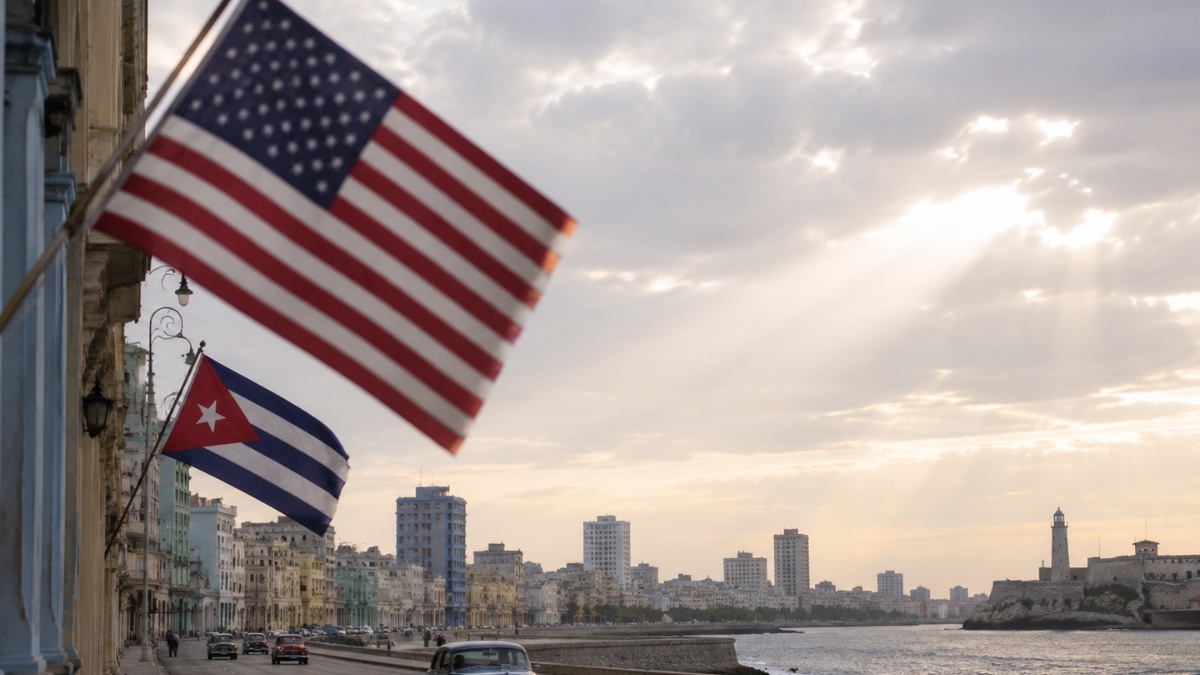
CIA Director John Ratcliffe made a rare trip to Havana on Thursday, carrying President Trump’s message that Washington is ready to discuss economic and security issues with Cuba only if the island’s government makes “fundamental changes.” A CIA official said Ratcliffe met senior Cuban officials, including Raúl Guillermo Rodríguez Castro, Interior Minister Lázaro Álvarez Casas and the head of Cuba’s intelligence services. Cuba’s government confirmed the meeting with Interior Ministry officials and said both sides discussed law-enforcement cooperation and regional security. The visit stood out because direct contact at that level has been scarce since Fidel Castro’s 1959 revolution, and because it came during one of Cuba’s worst economic and energy crises in decades.
Trump’s Conditional Opening
The US message mixed an offer of engagement with a threat of continued pressure. Ratcliffe told Havana that Washington could seriously engage on economic stability, intelligence cooperation and security, but only if Cuba changed course, according to a CIA official cited by AP. The official also said Cuba could no longer serve as a “safe haven for adversaries in the Western Hemisphere,” while Cuban representatives said the island does not threaten US national security. The specific reforms sought by Trump were not disclosed, leaving open whether Washington is demanding political liberalization, economic opening, security concessions or all three.
Cuba's Energy Crisis
The diplomacy unfolded as Cuba’s energy system entered a critical stage. Cuba’s energy minister, Vicente de la O Levy, said the country had run out of diesel and fuel oil, according to The Guardian, leaving the grid dependent on domestic crude, natural gas and limited renewable generation. Rolling blackouts have stretched through much of daily life, with reports of outages reaching nearly a full day in parts of Havana. Protests broke out in the capital as residents faced spoiled food, sleepless nights and a breakdown in basic services tied to electricity and fuel shortages.
The Fuel Blockade Bites
Trump has increased pressure by threatening tariffs against countries supplying Cuba with fuel, a policy that has sharply narrowed the island’s access to imported oil. The Guardian reported that Mexico and Venezuela have stopped regular shipments, while only one Russian tanker had delivered crude since December 2025. The administration has framed the campaign as a national-security measure, arguing that Cuba supports hostile governments and groups in the hemisphere. The State Department also announced sanctions this month targeting GAESA, the Cuban military-linked business conglomerate that Washington says controls a large share of the island’s economy.
Havana's Response and Regional Context
Havana Rejects the Threat Label
Cuba’s position in the talks was defensive but not entirely closed. Its government said the meeting took place during complicated bilateral relations and that Cuban officials rejected the claim that the island poses a threat to US security. Havana has long argued that US sanctions, rather than its own political system, are the central cause of the island’s hardship, while Washington has for decades pressed Cuba to open its state-run economy, hold freer elections and address property claims tied to the Castro-era expropriations. That divide explains why even a meeting between intelligence officials can look less like a thaw than a negotiation under duress.
A Venezuela Shadow
Ratcliffe’s Havana mission also fits a wider Trump strategy in the Caribbean and Latin America. US officials have pointed to Venezuela as an example of hostility giving way to limited cooperation after Washington’s military operation against Nicolás Maduro, according to the source account, and Ratcliffe previously traveled to Venezuela for talks after that episode. The comparison sends a clear message to Havana: the administration wants concessions, but it also wants Cuba to see that US pressure can escalate. For regional governments, that raises a harder question about whether Washington is trying to negotiate a security reset or force political change through economic strangulation.
The Next Cuban Decision
The immediate test is whether Havana answers Ratcliffe’s channel with practical concessions or uses the visit to rally domestic resistance against US pressure. The opening could lead to talks on migration, intelligence sharing, detainees, fuel access, counterterrorism claims or humanitarian relief, but none of those paths is guaranteed. The risk is that the fuel crisis worsens faster than diplomacy moves, increasing public anger inside Cuba and hardening both governments’ positions. The uncertainty is also political: Trump has offered a door to engagement, but only after demanding changes that Cuba’s leadership may view as a threat to its survival.