Crude Oil Rally Puts Equity Markets, Fed Rate Path on Defense
Rising oil prices are pushing benchmark bond yields higher, creating headwinds for U.S.
Jurgen Goldmeier ·
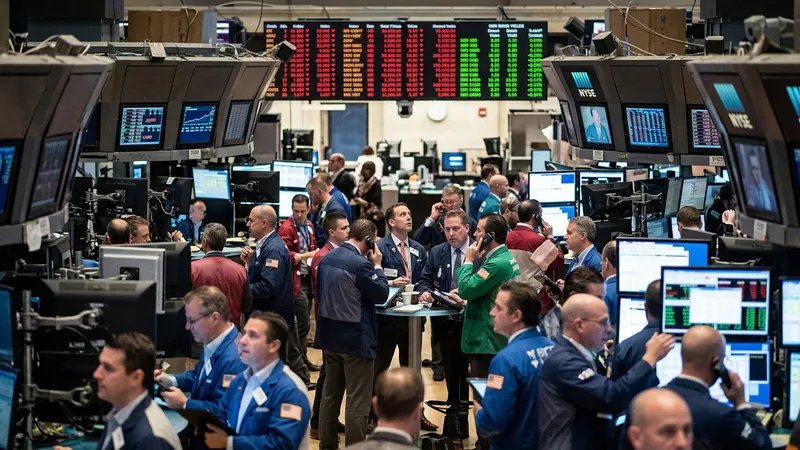
Crude Oil Rally Puts Equity Markets, Fed Rate Path on Defense U.S. stock indices retreated from recent record highs on Monday as rising crude oil prices pushed benchmark Treasury yields higher. The move reprices inflation expectations and casts doubt on the timing and depth of anticipated Federal Reserve interest rate cuts this year, threatening the market's soft-landing consensus. ## Background The S&P 500's push to all-time highs was built on expectations of disinflation and a dovish pivot from the Federal Reserve. Leadership had been narrow, concentrated in a handful of mega-cap technology firms whose performance masked weakness elsewhere. While broad market participation, or breadth , recently improved, positioning remained crowded in these rate-sensitive names. Such companies often trade at high price-to-earnings multiples —a measure of how much investors are willing to pay for each dollar of a company's profit—which are mathematically compressed by higher government bond yields that serve as the economy's base discount rate. This consensus is now being tested by a sustained rally in West Texas Intermediate (WTI) and Brent crude, driven by OPEC+ supply discipline and heightened geopolitical risk. Coming after consumer price index (CPI) prints already showed stickier-than-expected inflation, the energy surge is a direct challenge to the soft-landing narrative. In response, bond traders are selling government debt, pushing the 10-year Treasury yield, a key benchmark for borrowing costs across the economy, to multi-month highs. ## Why it matters The direct read-through is a tightening of financial conditions that front-runs any potential action from the Federal Reserve. Every basis point increase in the 10-year yield pressures equity valuations, particularly for growth-oriented sectors like technology and consumer discretionary whose lofty valuations depend on low discount rates for future cash flows. Higher energy costs also act as a tax on consumers, crimping discretionary spending, and as a direct input cost for industries like transportation and manufacturing. This dual threat jeopardizes corporate earnings per share, or EPS , and makes optimistic forward-looking profit forecasts, known as guidance , less credible. Portfolio managers positioned for a smooth glide path to 2% inflation and multiple rate cuts in 2024 are now on the wrong side of the tape. The rotation out of growth stocks and into the energy sector on Monday highlights this defensive shift. The move also has implications for credit markets, where wider spreads could emerge if higher-for-longer rates begin to stress corporate balance sheets. This dynamic forces a difficult choice on the Fed: tolerate higher inflation, or delay rate cuts and risk a more severe economic slowdown than the market has priced. ## What to watch The key observable is the 10-year Treasury yield and its ability to hold below recent highs. Watch for a decisive break above the 4.75%–5.00% range, which would signal a more durable repricing of inflation and rate expectations. Key inputs will be weekly EIA oil inventory reports, the next round of CPI and Personal Consumption Expenditures (PCE) inflation data, and minutes from the next Federal Open Market Committee meeting. By January 20, 2025, if crude prices remain elevated and inflation proves stubborn, expect equity volatility to be higher and rate cut expectations to be significantly curtailed. Conversely, a stabilization in oil coupled with soft inflation prints would allow yields to ease, providing relief for equity indices and validating the market's earlier dovish positioning.