

College football coaches warn 105-man roster limit strains playoffs
Coaches warn that the 105-man roster limit may be insufficient to handle the physical toll of an expanded 24-team playoff format beginning in 2027.
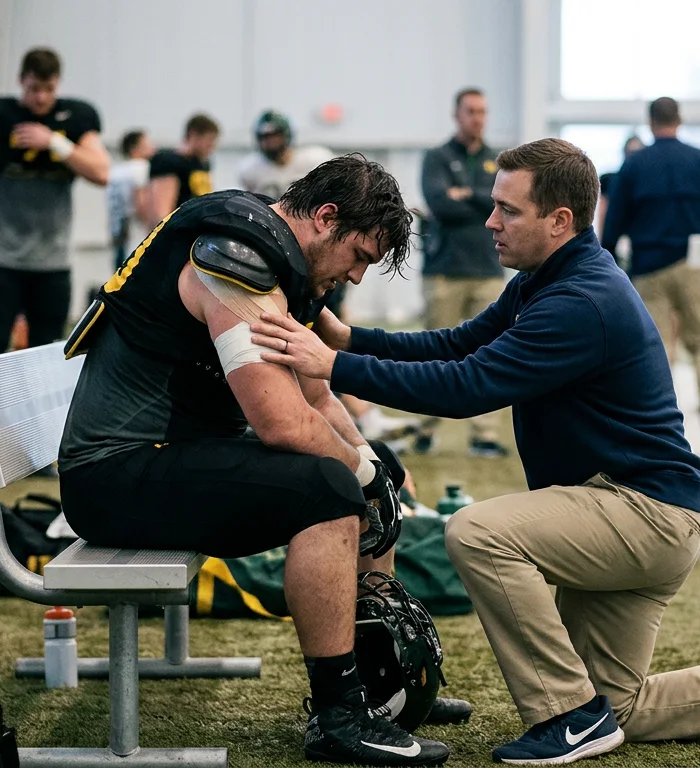
College football coaches are raising concerns that the sport's new 105-man roster limit will struggle to support the physical demands of an expanded 24-team College Football Playoff starting in 2027. The shift to a larger postseason field, which mirrors the current Football Championship Subdivision structure, could force teams to play as many as 17 games in a single season.
North Dakota State head coach Tim Polasek said the roster cap is one of the most significant challenges facing programs as they attempt to manage player workloads over a 20-week period. Polasek, who has extensive experience in long-season management from his time in the FCS, argued that the limit should be reconsidered to protect the quality of play.
Managing player health through a season that stretches into January requires precise training protocols, according to Polasek. He noted that strength coaches and head coaches must align their strategies to ensure athletes can sustain performance levels during a significantly longer schedule than traditional bowl-game participants faced in previous decades.
Iowa State coach Jimmy Rogers, who led South Dakota State to a national title in 2023, emphasized that weekly adjustments are critical for maintaining health. He noted that a natural tapering process is necessary for players to remain competitive throughout the postseason.
College Football Playoff
Starting in 2027, the revised football calendar will replace the traditional 15-day spring practice period with 21 days of organized team activities spread over seven weeks. Schools are also required to provide at least nine weeks of no mandatory athletic activity between January and the start of preseason camp, while preseason practice sessions will be reduced from 25 to 21 days.
Polasek said the new calendar will force coaches to be more strategic with their allotted practice time. He pointed to the historical success of North Dakota State, which leveraged extra practice time during deep playoff runs to focus on player development rather than just football repetition.
More stories
- Hull City 2–0 Brighton: When Resilience Beat Reputation
- Aleksey Batrakov Attracts Barcelona Transfer Interest
- Manchester United weigh Osimhen move, transfer report says
- Ravens 20, Chargers 23: A season at the edge
- Billie Jean King ties 39 majors to equal-pay fight
- Cavaliers list Jarrett Allen questionable for Hornets game
- Liverpool face Arsenal with 3-point gap at stake
- Harry Kane wins Ballon d'Or after 61-goal Bayern campaign
Latest news
- Eisenkot secures first coalition deal but lacks majority
- Trump prepares tariffs on China and other major exporters
- New-car buyers pay record average $50,087 in October
- Banks face ECB reserve debate over liquidity and profits
- Investors see Anthropic debut gains fade below $83 a share
- Iraq orders federal control over Kurdish-area oilfields
- Germans oppose Ukraine aid as poll shows support slipping
- Kim Jong-un receives 10 envoys after constitutional shift