Coaches say hydration breaks change FIFA World Cup tactics
Hydration breaks at the men’s World Cup are being linked to momentum swings, raising questions about fairness, flow, and broadcast incentives.
Atlas Newsdesk ·
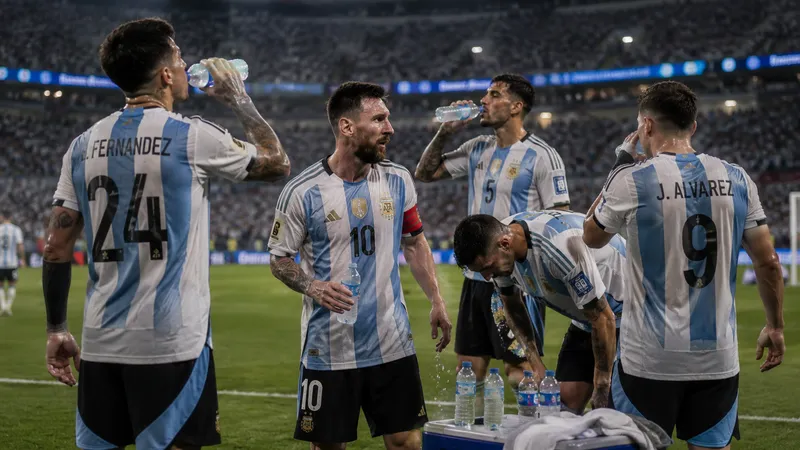
Hydration breaks at the men’s World Cup are being linked to momentum swings, raising questions about competitive balance and the rhythm of matches.
The mandatory stoppages were introduced by FIFA for the first time this year, with two breaks scheduled per match to address concerns about extreme heat. The rule has drawn criticism from supporters who say it interrupts play and changes how games unfold.
Analysis links stoppages to momentum changes
A new analysis published by Spain’s El País found the breaks frequently coincide with shifts in match control. The outlet reported that nearly 80% of the hydration pauses were followed by a noticeable change in momentum.
While “momentum” can be difficult to define in purely statistical terms, the finding points to a recurring pattern: teams that were pressing or sustaining possession often lost their edge after the restart. In practice, that can turn a period of dominance into a more even stretch of play.
The effects are especially pronounced for sides that rely on long spells on the ball to tire opponents and create openings. A forced pause can act like a reset, allowing the defending team to recover, reorganize, and receive instructions.
FIFA heat rationale collides with indoor venues
FIFA’s stated motivation was player welfare amid high temperatures, a risk that can increase the likelihood of dehydration and heat stress. Organizers opted for a standardized approach: two mandatory stoppages per game, rather than making breaks solely dependent on referee discretion or venue conditions.
That uniformity has fueled debate because the breaks also apply in closed, air-conditioned stadiums. Critics argue that if the main aim is preventing heat-related illness, indoor venues should be treated differently from outdoor matches in high temperatures.
The breaks themselves are brief, but they are long enough to alter match dynamics. Supporters have compared the interruptions to timeouts in other sports, saying they reduce continuous play and shift soccer toward a more segmented format.
Commercial criticism and tactical consequences
Some fans and commentators have also questioned whether the stoppages create additional windows for television advertising. The criticism has intensified because the breaks occur predictably and twice per match, making them easier to package for broadcast schedules.
Coaches, meanwhile, have focused on the tactical impact rather than the commercial debate. France’s national team coach was quoted as saying, “Those three minutes completely changed soccer,” underscoring the view that even short interruptions can reshape decision-making.
In modern tournaments, where teams spend months preparing for tightly defined game plans, any mandated pause becomes an opportunity for adjustment. Staff can give rapid instructions, tweak pressing triggers, or calm a side that is under sustained pressure.
The analysis raises a larger question for FIFA: whether the benefits of a blanket welfare measure outweigh the competitive distortions that can follow. If breaks systematically reduce the advantage of high-possession or high-pressing teams, the rule may influence outcomes in ways unrelated to skill or strategy over 90 minutes.
With scrutiny growing, tournament officials may face calls to refine when hydration breaks apply, including temperature thresholds or venue-specific exceptions. For now, the next signal to watch will be whether FIFA defends the universal rule, or shifts toward a more flexible approach based on conditions and medical guidance.