China AI talent share expands as US keeps researcher pull
China AI talent accounts for 57% of the global pool as domestic growth, US visa limits and Beijing travel curbs reshape researcher mobility.
Mei Lin ·
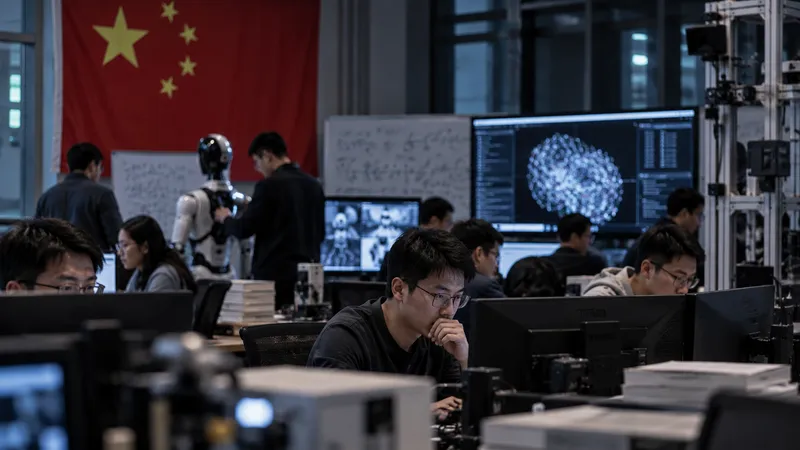
China AI talent now accounts for 57% of the global pool, while the US remains the main overseas draw, Carnegie China found.
The 57% share marks an 11 percentage-point increase from 46% in 2023, according to the study. The findings point to a faster concentration of AI researchers trained or produced in China, even as the US continues to attract many of them.
Carnegie China counts the shift
The study links the change to two pressures moving in the same direction: China’s expanding domestic AI industry and tighter US visa conditions for Chinese students and researchers. It does not say the US has lost its lead as a destination; it says China is producing a larger share of the talent base and retaining more of it at home.
That distinction matters for companies and universities competing for scarce technical labor. AI research depends on a small group of highly trained engineers, computer scientists and chip specialists, so changes in where they study and work can affect the pace of product development.
Visa limits narrow US routes
The US remains the strongest magnet for those researchers, according to Carnegie China. The same study says Washington’s visa restrictions have made US study more difficult, adding friction to a route that has long connected Chinese students with American universities and laboratories.
For US institutions, the immediate risk is a thinner intake of Chinese researchers if visa barriers keep rising or become harder to navigate. For China, the same constraint can increase the domestic supply of AI specialists available to universities, startups and established technology groups.
Travel curbs test tech employers
The pressure on researcher mobility is not only external. The report said Beijing has widened overseas travel restrictions to include family members of some executives in artificial intelligence and chips, a measure that could make career decisions more complex for senior technical staff.
The measures are described as part of a stricter effort to keep top AI and semiconductor talent inside China. If applied more broadly, the rules could strengthen domestic retention while making overseas collaboration, conference travel and foreign postings harder to arrange.
Chinese AI companies would gain from a larger local hiring pool if more researchers remain in the country. The counterweight is that professionals facing travel limits may weigh personal mobility, family constraints and career flexibility more heavily when choosing employers.
Three paths for researcher flows
If China’s increase from 46% in 2023 to 57% holds, the global effect would be a deeper concentration of AI research capacity in China rather than a simple shift in consumer demand. For Chinese technology companies, that would support faster domestic hiring; for the wider sector, it could reduce reliance on US-based training pipelines.
If US visa access becomes easier, American universities and companies could keep more of their pull, even with China producing a larger share of researchers. In that case, the macro effect would be continued cross-border circulation of technical labor, while Chinese employers would face stronger competition for their best candidates.
If Beijing extends travel restrictions further, the mechanism changes from incentives to constraint. The global macro effect would be a more segmented AI labor market; Chinese firms may retain key staff, while the broader industry could see fewer international transfers and weaker day-to-day research exchange.
The main open question is whether China’s domestic AI boom can keep absorbing researchers at the pace implied by the latest study. The next indicators are visa policy, the scope of travel controls and whether top Chinese AI specialists continue choosing home-based careers over US study or employment.