

Character IP leads TCCF with 29 exhibitors
Weta FX’s AI partnership and telecom-backed funds show how Taiwan is trying to turn content markets into financing and technology platforms.
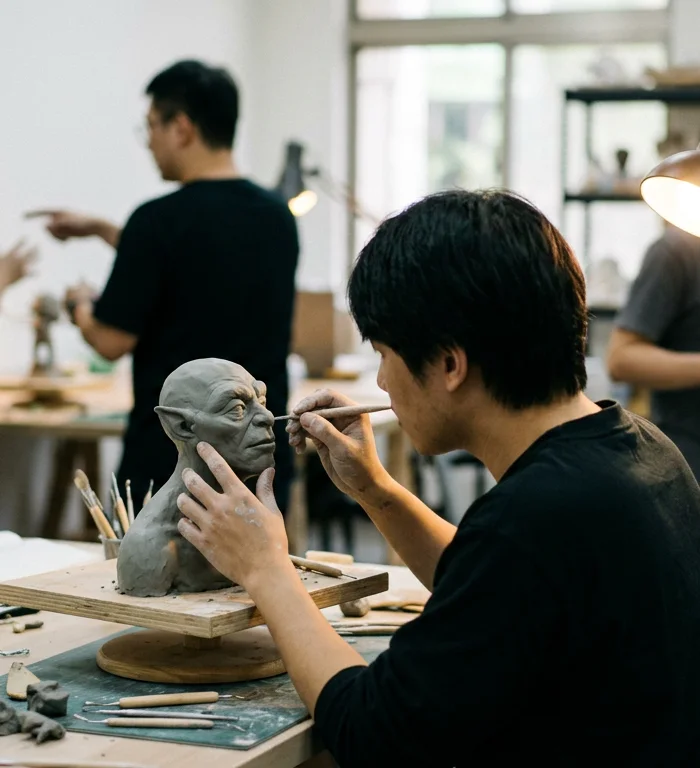
Animation and character IP, rights built around characters that can move across screens, games and merchandise, became the biggest exhibitor category at Taiwan Creative Content Fest’s 2026 edition in Taipei, Variety reported on Nov. 11.
The category rose to 29 of 107 exhibitors from 19 in 2025, according to post-event figures from the Taiwan Creative Content Agency, while total exhibitors fell to 107 from 117 last year.
The mix points to a market tilting toward characters, games, animation and cross-platform rights, rather than only film and television production. Of this year’s exhibitors, 69 were Taiwanese and 38 came from overseas, TAICCA figures cited by Variety showed.
Other categories moved unevenly. Television and media networks increased to 22 exhibitors from 20, while new media, streaming and entertainment companies rose to eight from six. Film and TV production and distribution companies fell to 16 from 22, and digital technology, visual effects and immersive media dropped to eight from 15.
The festival’s Pitching program presented 93 projects and stories, including entries from TAICCA School, to industry participants from 28 countries. TAICCA was still compiling buyer attendance and the value of business done, Variety reported.
A central development came on Nov. 6, when Weta FX, the New Zealand visual-effects company behind “The Lord of the Rings” and “Avatar,” signed a memorandum of understanding with TAICCA. The agreement aims to help position Taiwan as an artificial-intelligence hub for Asian content industries.
Weta FX will work with Taiwanese animation and VFX company Moonshine Studio and set up a technology platform for Taiwanese film and TV projects, along with exchanges and internships for young Taiwanese filmmakers.
Weta FX Chief Executive Daniel Seah said studio legal departments had ruled out generative AI, systems that create new text, images or video from prompts and training data, on projects early last year. Clients later began asking about the company’s AI strategy, Seah said. “It’s, ‘If you don’t have an AI strategy, don’t bother to work with us,’” he said of the period since the third quarter of this year.
Japanese studios also used the Taipei market to discuss AI and intellectual property. Toei President Yoshimura Fumio said the studio, known for “Kamen Rider” and Super Sentai, had adopted generative-AI rules and was using the technology for backgrounds. “I believe AI is not something that takes away jobs, but a tool that expands the possibilities of expression and business,” he said.
The AI push remains bounded by client rules. Charles Beirnaert, chief creative officer of French studio Blue Spirit, said the “Blue Eye Samurai” studio is barred from using AI on its Netflix work, according to Variety.
Taiwan’s content-financing effort also drew private capital. TAICCA presented four joint-venture funds that have backed 27 projects and attracted NT$4.9 billion in private capital alongside NT$740 million from the agency, about $180 million in total.
Two ventures involve Taiwanese telecom companies. The Chunghwa Digital Cultural and Creative Fund, majority owned by Chunghwa Telecom, totals NT$1 billion, or $32 million, and invests in both projects and companies. Enjoy Entertainment, a TAICCA partnership with Far EasTone, invested in 15 projects in its first 10 months.
Enjoy’s slate includes a Taiwanese remake of the Korean series “Our Blues,” scheduled to launch globally on Netflix on Dec. 3. Another investment, “The Rope Curse 4: Kuntilanak,” a Taiwan-Indonesia horror collaboration also backed by Toei, took NT$80 million, or $2.6 million, at Taiwan’s box office, described by Variety as a franchise record.
The Dec. 3 Netflix launch will give Enjoy Entertainment’s TAICCA-backed slate an international distribution test. TAICCA’s buyer attendance and business-value figures will show whether the market’s reshaped exhibitor mix translated into measurable deal activity.
Source: trade-press report, Variety, Nov. 11, 2026
More stories
- Netflix to release Brand film after 10-year sentence
- Lina Jouni turns Lebanese war debris into sculptures
- Russell Brand complainant reports threats after 4-count conviction
- Television guitarist Richard Lloyd dies at 75 years old
- Channel 4 ends 10-year Married at First Sight UK run
- Wang Jiangyong takes 10-year debut to Tokyo competition
Latest news
- FAA halts US departures after communications disruption
- Europe faces unity test as Trump revives Ukraine diplomacy
- Democrats push AI regulation as two state veterans arrive
- Lutnick faces AI chip scrutiny as Bessent faults Commerce
- AI investment boom binds global suppliers to US spending
- Senate Democrats face leadership fight after midterm gains
- Trump extends Jones Act waiver for another 90 days: official
- Russia reports 1% growth as refinery output declines 18%