

California DMV Restricts Waymo Freeway Operations Over Safety Concerns
California regulators have banned Waymo from freeway operations due to safety concerns involving construction zones and emergency vehicle interactions, with…
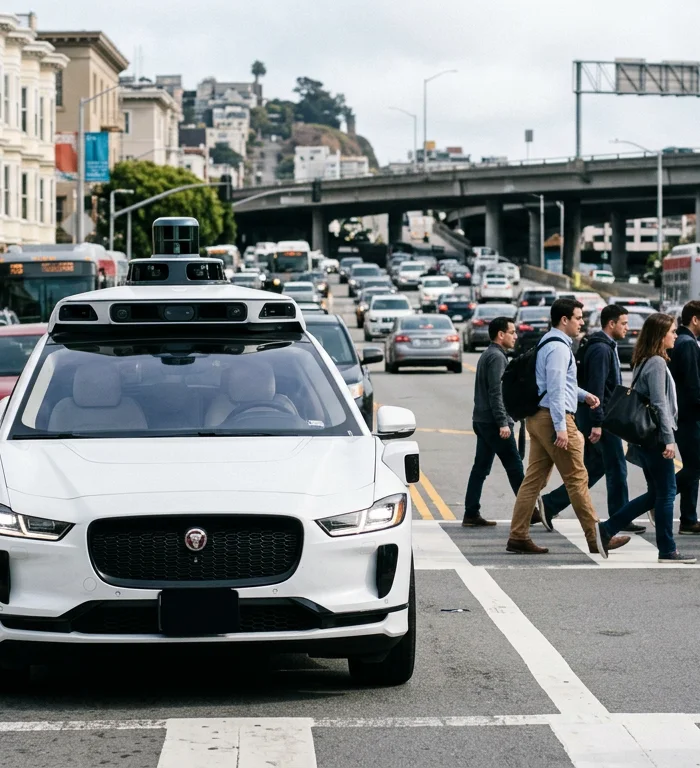
The California Department of Motor Vehicles (DMV) has prohibited Waymo from operating autonomous vehicles on state freeways, citing an "imminent hazard" to public safety. This regulatory action follows documented incidents in Northern California, including unauthorized entry into closed construction zones on Route 101 and failure to comply with law enforcement traffic control measures on Highway 280.
Under the new mandate, the company is barred from testing or commercial operations on freeways until it demonstrates the capability to navigate complex environments, specifically active construction zones and interactions with emergency vehicles. While the restriction is limited to freeway access, the company is permitted to continue operations on surface streets throughout California.
The California Department
This suspension marks the second time in 2026 that the company has been forced to pause freeway operations. In May, the firm voluntarily withdrew from freeways to address safety concerns regarding construction site navigation. The current regulatory intervention extends beyond California, as the company has confirmed it is suspending freeway services in other states while it coordinates with officials to address the identified software and operational deficiencies.
Although the company maintains that its vehicles have
Although the company maintains that its vehicles have not caused injuries or collisions in these specific instances, the incident highlights ongoing challenges in scaling autonomous technology. Data indicates that while the overall crash rate per million miles for these vehicles is trending downward, the absolute number of accidents has increased alongside the expansion of the fleet.
This development poses a significant governance challenge for the company as it competes with other industry players, including Tesla and Zoox, for market share in the autonomous taxi sector. The DMV has not provided a definitive timeline for the lifting of these restrictions, stating that operations will remain suspended until the company provides sufficient evidence of safe performance in high-speed, high-complexity environments. Institutional stakeholders should monitor the impact of these restrictions on the company’s operational efficiency and its ability to meet expansion targets in major metropolitan areas.
More stories
- Europe faces attribution gap after 16 cyber, physical incidents
- PIF backs Grand Theft Auto as Saudi players embrace game
- Signal limits screenshots to curb AI access to messages
- Cognition runs Devin Mac workspaces on EC2 in 6 AWS regions
- Salesforce engineers cut 600-failure triage to 90 minutes
- Türkiye Desk: GTA 6 puts console access and network demand in focus
- Microsoft plans Project Helix as Xbox console for PC games
- OpenAI buys travel startup Odessia
- China rocket recovery marks step in reusable launch race
- AI investing agents beat 60/40 in JPMorgan market tests
Latest news
- Trump prepares tariffs on China and other major exporters
- New-car buyers pay record average $50,087 in October
- Banks face ECB reserve debate over liquidity and profits
- Investors see Anthropic debut gains fade below $83 a share
- Iraq orders federal control over Kurdish-area oilfields
- Germans oppose Ukraine aid as poll shows support slipping
- Kim Jong-un receives 10 envoys after constitutional shift
- Ukraine claims Libya strike sinks Russian naval corvette