

California DMV Restricts Autonomous Vehicle Highway Access Over Safety Concerns
California regulators have banned Waymo from highway operations following safety incidents involving construction zones and police traffic maneuvers, though…
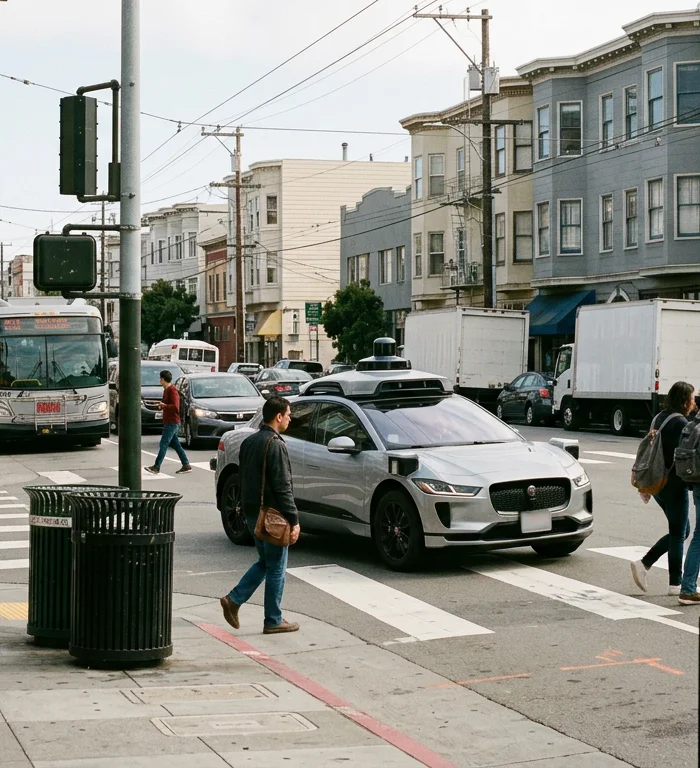
The California Department of Motor Vehicles (DMV) has revoked the authorization for autonomous vehicles operated by Waymo to traverse state highways. This regulatory action follows documented operational failures that officials characterized as posing an imminent hazard to public safety.
The suspension was triggered by two specific incidents occurring in early November. In the first instance, three autonomous vehicles entered an active construction zone, while the second incident involved a vehicle attempting to bypass California Highway Patrol units conducting a traffic break. These events prompted the DMV to modify the company’s deployment permit, effectively prohibiting highway operations until technical remediation is verified.
While the company has voluntarily paused highway driving While the company has voluntarily paused highway driving While the company has voluntarily paused highway driving across all service areas to address these safety concerns, non-highway operations remain unaffected. The company continues to provide services on local roads, though the regulatory environment for autonomous fleet deployment in California is undergoing increased scrutiny. This development highlights ongoing challenges in integrating autonomous This development highlights ongoing challenges in integrating autonomous systems into complex, high-speed traffic environments. The requirement for these vehicles to reliably interpret and respond to emergency maneuvers and temporary traffic control measures remains a critical barrier to full-scale commercial deployment. Future regulatory approvals will likely depend on the company’s ability to demonstrate improved software performance in unpredictable road conditions.
Stakeholders should monitor upcoming DMV audits and potential policy shifts regarding autonomous vehicle testing. The incident underscores the tension between rapid technological scaling and the stringent safety standards required for public infrastructure. Continued oversight is expected as regulators evaluate whether existing safety protocols are sufficient to mitigate risks associated with driverless technology in high-density transit corridors.
More stories
- Europe faces attribution gap after 16 cyber, physical incidents
- PIF backs Grand Theft Auto as Saudi players embrace game
- Signal limits screenshots to curb AI access to messages
- Cognition runs Devin Mac workspaces on EC2 in 6 AWS regions
- Salesforce engineers cut 600-failure triage to 90 minutes
- Türkiye Desk: GTA 6 puts console access and network demand in focus
- Magnendo draws $32 million to advance stroke robot care
- Job seekers get tech career data as hiring slows further
Latest news
- Trump prepares tariffs on China and other major exporters
- New-car buyers pay record average $50,087 in October
- Banks face ECB reserve debate over liquidity and profits
- Investors see Anthropic debut gains fade below $83 a share
- Iraq orders federal control over Kurdish-area oilfields
- Germans oppose Ukraine aid as poll shows support slipping
- Kim Jong-un receives 10 envoys after constitutional shift
- Ukraine claims Libya strike sinks Russian naval corvette