Brazil Heads to Presidential Runoff Following Election Deadlock
Brazil's 2026 presidential election heads to an October 25 runoff after neither Lula da Silva nor Flávio Bolsonaro secured a majority of votes.
Atlas Newsdesk ·
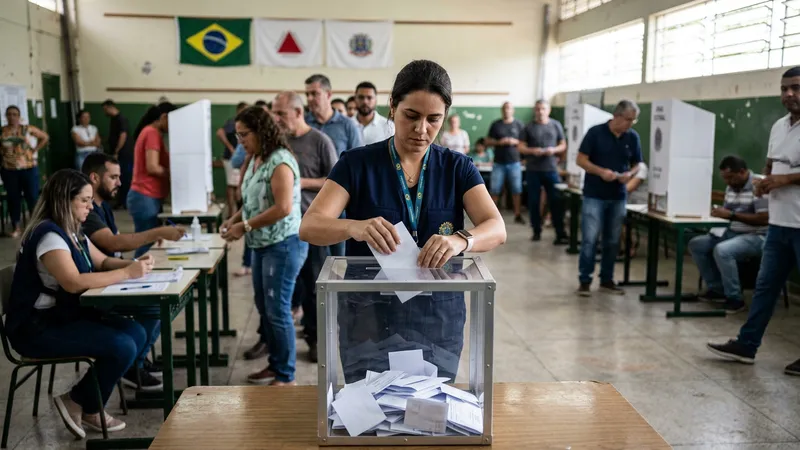
Brazil's 2026 presidential election is heading to a second-round runoff after neither the incumbent, Luiz Inácio Lula da Silva, nor the challenger, Flávio Bolsonaro, achieved over 50% of the valid votes in the initial balloting. The decisive second vote is scheduled for October 25, with the successful candidate slated to assume office on January 5, 2027.
This outcome prolongs a period of political uncertainty for the nation, underscoring significant divisions within Brazil's political landscape and a highly polarized public. Both campaigns are expected to intensify their efforts over the coming weeks in preparation for this final contest.
Key Political Contenders
Flávio Bolsonaro, the opposition candidate, has centered his campaign on principles associated with his father, former President Jair Bolsonaro. The elder Bolsonaro is currently imprisoned due to alleged involvement in a coup attempt, an event that has previously raised concerns regarding institutional stability within the country.
The necessity of a runoff indicates that political uncertainty will continue in Brazil for the immediate future. The close initial results highlight the deeply divided electorate and the challenge both candidates face in securing a broader mandate.
Minas Gerais as Bellwether
Observers are particularly focusing on the state of Minas Gerais, which historically serves as a crucial indicator for the presidential election's ultimate result. The candidate who secures victory in Minas Gerais has consistently gone on to win the presidency in past elections.
The results from this bellwether state are expected to provide significant momentum and insight into the potential trajectory of the second round. Given the absence of a clear majority in the initial vote, both campaigns are preparing to redouble their voter outreach efforts and strategic messaging.
The outcome in Minas Gerais will be a key factor in shaping both public perceptions and strategic campaign approaches as the October 25 runoff date approaches. The intense campaigning will aim to sway undecided voters and consolidate support ahead of the final decision.