

Treasury Yields Spike as Markets Anticipate Aggressive Federal Reserve Rate Hikes
Treasury yields surged as hotter-than-expected inflation data and hawkish Federal Reserve commentary forced markets to price in more aggressive interest rate…
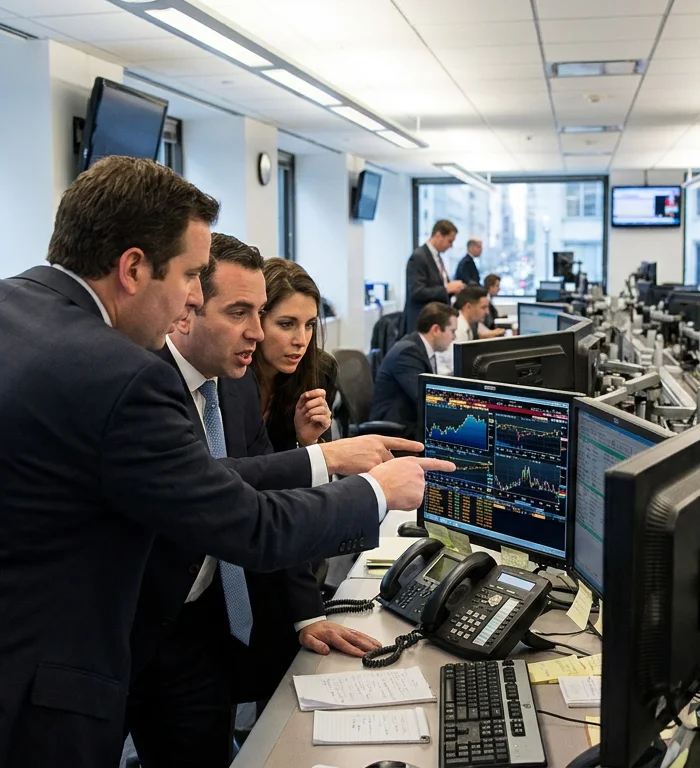
US Treasury yields experienced their most significant single-day increase in 19 months following the release of higher-than-expected core inflation data and hawkish commentary from Federal Reserve officials. The two-year Treasury yield rose 17 basis points, while the 10-year yield climbed 10 basis points to 4.98%, briefly breaching the 5% threshold. This shift reflects a rapid reassessment of the Federal Reserve’s policy trajectory for the upcoming December meeting.
Market expectations for a rate hike have intensified, with current pricing indicating a 91% probability of a 25-basis-point increase, up from 77% one week ago. This adjustment follows remarks from a Federal Reserve Governor who signaled openness to a 50-basis-point hike if core inflation remains at or above 0.3%. Another regional Federal Reserve President corroborated this hawkish sentiment, suggesting that the central bank may need to accelerate the pace of tightening throughout the winter months to maintain institutional credibility.
US Treasury
The bond market sell-off was exacerbated by weak demand during a 10-year note auction. Equity markets responded negatively to the prospect of higher borrowing costs, with the S&P 500 declining 0.4% and the Nasdaq falling 0.74%. Specific volatility was noted in the technology sector, where shares of a major semiconductor firm dropped 5.47% amid ongoing corporate governance concerns.
Analysts remain divided on whether the potential for a 50-basis-point hike represents a broader consensus within the Federal Open Market Committee or an outlier position. However, there is growing consensus that the baseline expectation for no further tightening in 2027 is increasingly vulnerable to incoming economic data. Policymakers are now closely monitoring the impact of artificial intelligence infrastructure investment on high-tech goods pricing and the persistence of energy-related inflationary pressures. The current environment suggests that financial conditions will remain sensitive to any deviation from projected inflation targets, with market participants prioritizing near-term economic indicators as the primary driver for future policy decisions.
More stories
- Nvidia board gets Trump input on Jensen Huang return as CEO
- Rwanda faces budget strain from 85% electricity access push
- AI doubts leave Asian stocks facing a new investment test
- Singapore core inflation eases to 1.5% in October
- Greece targets 2.3% growth in 2027 budget
- US stocks face Goldman warning on further forced selling
- Thailand to lift imported EV tax to 35%
- Rokos loses 4.9% as October setbacks hit major hedge funds
- Lagarde brings ECB succession forward with Feb. 7 exit
- EU rules bar Nord Stream return under 2027 gas phaseout
Latest news
- Macy’s parade faces balloon limits as storm winds approach
- COP31 climate talks collapse over fossil fuels and funds
- Highly diversified investors report 91% confidence in retirement
- Russian military faces 1,087 recorded suicides in Ukraine war
- US faces China, Russia in Africa minerals contest
- Russian war deaths top 460,000, Guardian says
- ICE arrests at Seattle airport draw protests and scrutiny